


After years of helping others heal, Sarah—a pediatric nurse in Tampa—found herself stuck in traditional therapy, rehashing the same traumatic cases week after week without relief. Three months of EMDR therapy Florida practitioners provided changed everything. She stopped reliving patient losses and started sleeping through the night again. Here’s why Florida’s helping professionals are choosing evidence-based trauma treatment over endless talk therapy.
For healthcare workers, teachers, therapists, and other caregivers across Florida, traditional talk therapy often feels like running on a hamster wheel—lots of movement, but no real progress. You spend session after session discussing traumatic memories, but the nightmares persist, hypervigilance won’t turn off, and emotional exhaustion continues draining your ability to care for others.
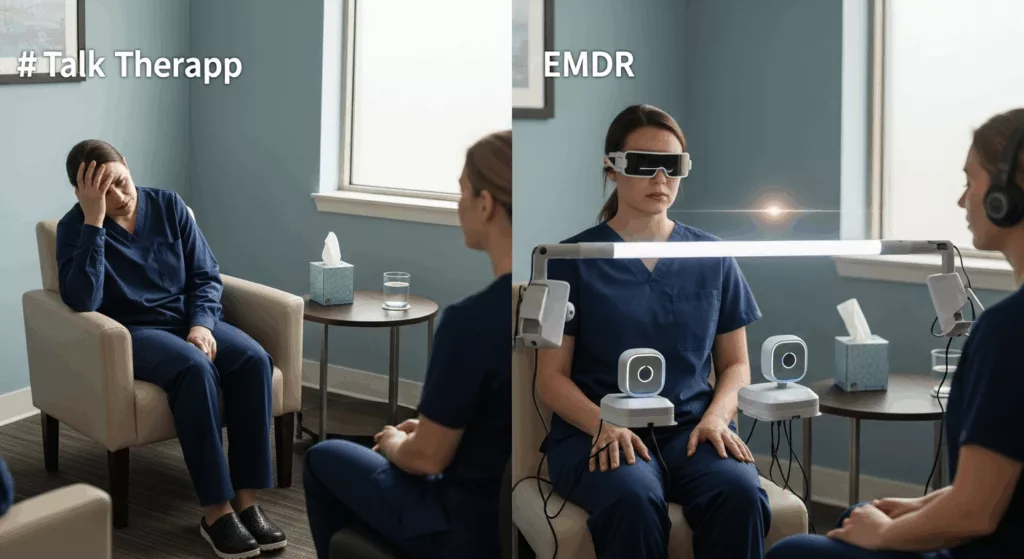
The problem isn’t your resilience or commitment to healing. The issue lies in how traditional therapy approaches trauma. While talking through experiences has value, it often keeps you intellectually engaged with traumatic memories without addressing how they’re stored in your nervous system.
Why Traditional Therapy Falls Short for Trauma-Exposed Helpers
Traditional talk therapy operates on the assumption that understanding and discussing trauma will naturally lead to healing. For many helping professionals, this approach creates a frustrating cycle of intellectual awareness without emotional relief.
The Talking Trap
When you spend months or years discussing the same traumatic incidents—whether it’s losing patients, witnessing violence, or experiencing workplace abuse—your brain continues processing these memories as current threats. Each detailed recounting can actually reinforce the neural pathways associated with trauma rather than healing them.
Research shows that healthcare workers experience secondary trauma at alarming rates, yet many receive generic talk therapy that wasn’t designed for their specific needs. You’re not just processing single incidents—you’re dealing with cumulative exposure to human suffering.
Why Helpers Need Different Approaches
Helping professionals face unique challenges that traditional therapy often misses:
- Cumulative trauma exposure: Years of witnessing suffering creates complex layers of traumatic stress
- Professional identity conflicts: “I help others heal, so why can’t I heal myself?”
- Hypervigilance requirements: Your job demands constant alertness, making it hard to “turn off”
- Emotional compartmentalization: You’ve learned to suppress feelings to function, making them harder to access in therapy
- Time constraints: Demanding schedules make lengthy talk therapy processes impractical
Sarah’s experience mirrors thousands of Florida helpers who’ve discovered that understanding trauma isn’t the same as healing from it. She could articulate exactly why losing young patients affected her, but that knowledge didn’t stop the 3 AM panic attacks.
The Science Behind EMDR: How It Differs from Talk Therapy
Eye Movement Desensitization and Reprocessing (EMDR) works differently than traditional therapy because it targets how traumatic memories are stored and processed neurologically. Instead of just talking about trauma, EMDR helps your brain reprocess these memories so they no longer trigger intense emotional and physical reactions.
How EMDR Works in Your Brain
During traumatic experiences, your brain’s information processing system becomes overwhelmed. Memories get “stuck” in your nervous system with the original emotions, body sensations, and beliefs intact. Every time something reminds you of the trauma, your brain responds as if the threat is happening right now.
EMDR uses bilateral stimulation—typically guided eye movements—to activate your brain’s natural healing mechanisms. This process helps move traumatic memories from your emotional brain (amygdala) to your thinking brain (prefrontal cortex), where they can be integrated as past experiences rather than present threats.
The APA guidelines on EMDR therapy recognize it as an evidence-based treatment for trauma, with effectiveness rates comparable to or better than other trauma therapies.
EMDR vs Talk Therapy: Key Differences
Understanding these differences helps explain why many Florida helpers find EMDR vs talk therapy comparisons favor the former:
- Processing method: EMDR bypasses lengthy verbal processing, working directly with how memories are stored
- Session focus: Rather than discussing trauma details extensively, EMDR targets specific traumatic images and beliefs
- Emotional regulation: EMDR includes built-in techniques to help you stay emotionally regulated during processing
- Treatment duration: Many clients see significant improvements in 6-12 sessions compared to months or years of talk therapy
- Body integration: EMDR addresses physical symptoms of trauma, not just thoughts and emotions
For helping professionals like nurses, social workers, and teachers, this efficiency matters. You need treatment that fits your schedule and creates measurable change quickly.
EMDR Success Rates: Research Evidence for Healthcare Workers and Caregivers
The research supporting EMDR for trauma treatment is extensive, with particular relevance for helping professionals dealing with occupational trauma exposure.
Clinical Research Findings
A peer-reviewed study on EMDR effectiveness found that 84-90% of participants no longer met PTSD criteria after treatment. For healthcare workers specifically, studies show EMDR effectively addresses:
- Intrusive memories of patient deaths or medical emergencies
- Hypervigilance and sleep disturbances
- Emotional numbing and compassion fatigue
- Secondary trauma from repeated exposure to suffering
- Work-related anxiety and avoidance behaviors
Speed of Results
Unlike traditional therapy where progress might take months to become apparent, EMDR often produces noticeable changes within the first few sessions. Many Florida helpers report:
- Sleeping through the night after 3-4 sessions
- Reduced intrusive thoughts about traumatic cases
- Improved emotional regulation at work
- Decreased physical symptoms like headaches and muscle tension
- Enhanced ability to be present with family and friends
This rapid improvement matters for helping professionals who can’t afford to be emotionally unavailable for extended periods while healing.
Long-term Effectiveness
Follow-up studies show EMDR’s benefits maintain over time. NIMH research on PTSD treatment indicates that clients who complete EMDR treatment maintain their gains years later, without the need for ongoing “maintenance” therapy sessions.
For Florida’s helping professionals, this means you can complete treatment, return to your work fully present and effective, and trust that your healing will last.
What to Expect: EMDR Treatment Process for Busy Professionals
Understanding the EMDR process helps busy helping professionals prepare for trauma therapy for caregivers that fits their demanding schedules.
Phase 1-2: Preparation and Assessment
Your first 1-2 sessions focus on history-taking and building coping resources. This isn’t about diving into trauma details—instead, your therapist helps you develop emotional regulation skills and identify specific traumatic memories to target.
For helping professionals, this phase often reveals patterns of cumulative trauma exposure you might not have connected to your current symptoms.
Phase 3-6: Active Processing
This is where the bilateral stimulation happens. You’ll focus on specific traumatic images while following your therapist’s finger movements or listening to alternating sounds. Sessions typically last 60-90 minutes, and many busy professionals schedule these during lunch breaks or after shifts.
During processing, you might notice:
- Changes in how distressing the memory feels
- New perspectives or insights emerging naturally
- Physical sensations shifting or resolving
- Negative beliefs about yourself transforming into healthier ones
Phase 7-8: Integration and Future Planning
Final phases focus on strengthening positive beliefs and preparing you for future challenges. Many Florida helpers appreciate this forward-looking approach—you’re not just healing from past trauma but building resilience for ongoing exposure in your helping profession.
Scheduling Flexibility for Helpers
Recognizing that healthcare workers, teachers, and other helpers often work non-traditional schedules, many EMDR therapist Florida practitioners offer:
- Evening and weekend appointments
- Telehealth options for convenience
- Intensive session formats for faster progress
- Flexible scheduling to accommodate shift work
Finding Qualified EMDR Therapists in Florida: Certification vs. Basic Training
Not all EMDR providers offer the same level of expertise. Understanding the differences ensures you receive quality evidence-based therapy Florida practitioners provide.
EMDR Certification Levels
The EMDR International Association maintains strict training standards:
- Basic EMDR Training: Initial 50-hour training program
- EMDR Certified Therapist: Additional supervised practice and consultation
- EMDR Approved Consultant: Advanced certification for training other therapists
For complex trauma cases common among helping professionals, seek therapists with full certification rather than just basic training.
Additional Specializations to Look For
When seeking trauma treatment for helpers, consider therapists with additional training in:
- Complex PTSD and dissociative disorders
- Secondary/vicarious trauma
- Healthcare worker-specific trauma
- Personality disorders often co-occurring with trauma
- Substance use issues that sometimes develop as coping mechanisms
Questions to Ask Potential EMDR Therapists
- Are you EMDR certified or just trained?
- How much experience do you have treating helping professionals?
- Do you understand the unique challenges facing healthcare workers/teachers/social workers?
- Can you provide flexible scheduling for shift workers?
- Do you offer telehealth options?
- What’s your approach to complex trauma vs. single-incident trauma?
At Healing Speak Counseling, we specialize in treating helping professionals who haven’t found relief through traditional talk therapy. Our certified trauma specialists understand the unique challenges facing Florida’s caregivers and helpers.
Insurance Coverage and Telehealth Options for EMDR in Florida
Accessing specialized trauma treatment shouldn’t create financial hardship for helping professionals already facing demanding careers.
Insurance Coverage for EMDR
Most major insurance plans in Florida cover EMDR when provided by licensed therapists for trauma-related conditions. Coverage typically includes:
- Aetna, Blue Cross/Blue Shield, Cigna
- Florida Blue and United Healthcare
- Medicare and Medicare Advantage plans
- Many employer-sponsored health plans
Before starting treatment, verify your specific benefits and any prior authorization requirements.
Telehealth EMDR: Convenience Without Compromise
Many Florida helpers worry that telehealth EMDR won’t be as effective as in-person treatment. Research shows online EMDR can be equally effective when provided by properly trained therapists using appropriate technology.
Benefits of telehealth EMDR include:
- No commute time between shifts
- Privacy of receiving treatment from home
- Access to specialized therapists regardless of geographic location
- Flexibility for unpredictable healthcare schedules
- Reduced exposure concerns during illness outbreaks
Making Treatment Accessible
Quality trauma treatment should be accessible to all helping professionals. Look for practices that offer:
- Multiple insurance network participation
- Sliding scale fees when appropriate
- Flexible payment options
- HSA/FSA acceptance
- Transparent pricing without surprise fees
Our experience at Healing Speak shows that when helpers can access appropriate trauma treatment quickly, they return to their caring roles more effectively and sustainably. We’ve seen nurses like Sarah transform from emotionally exhausted and hypervigilant to present and engaged—both at work and home.
Your Next Steps: Moving Beyond Traditional Talk Therapy
If you’re a helping professional in Florida who’s tried traditional therapy without sufficient relief, EMDR offers a research-backed alternative that addresses trauma at the neurological level.
Consider EMDR if you experience:
- Intrusive memories about work-related traumatic events
- Hypervigilance that won’t turn off after shifts
- Sleep disturbances or nightmares
- Emotional numbing or compassion fatigue
- Avoidance of certain patients, cases, or work situations
- Physical symptoms without medical explanations
The journey from trauma-affected to trauma-informed helper doesn’t require years of talking about your pain. With proper EMDR treatment, you can process traumatic experiences, reclaim your emotional well-being, and continue your important work from a place of strength rather than survival.
At Healing Speak, we understand that helpers need efficient, effective treatment that honors both your time constraints and the complexity of your trauma exposure. We’re here to help you find peace again—not through endless talking, but through evidence-based approaches that create real, lasting change.
Ready to explore whether EMDR might be right for you? Understanding trauma therapy signs can help you recognize when it’s time to move beyond traditional approaches and try something that actually works.
Have you tried traditional talk therapy for work-related trauma without finding the relief you need? What questions do you have about EMDR treatment for helping professionals in Florida?


