
As a healthcare professional, you’ve likely witnessed colleagues receive conflicting diagnoses—labeled with personality disorders when trauma responses were the real culprit. This misunderstanding can derail treatment for years, leaving dedicated caregivers and empaths struggling with shame instead of receiving the trauma-informed care they deserve. Understanding the distinction between personality disorders vs trauma responses isn’t just academic—it’s critical for providing effective treatment that actually works.
The stakes couldn’t be higher. When trauma responses get mislabeled as personality pathology, clients endure years of ineffective treatment while their true healing needs remain unaddressed. For helping professionals already experiencing burnout and secondary trauma, this diagnostic confusion can compound their suffering and delay recovery.
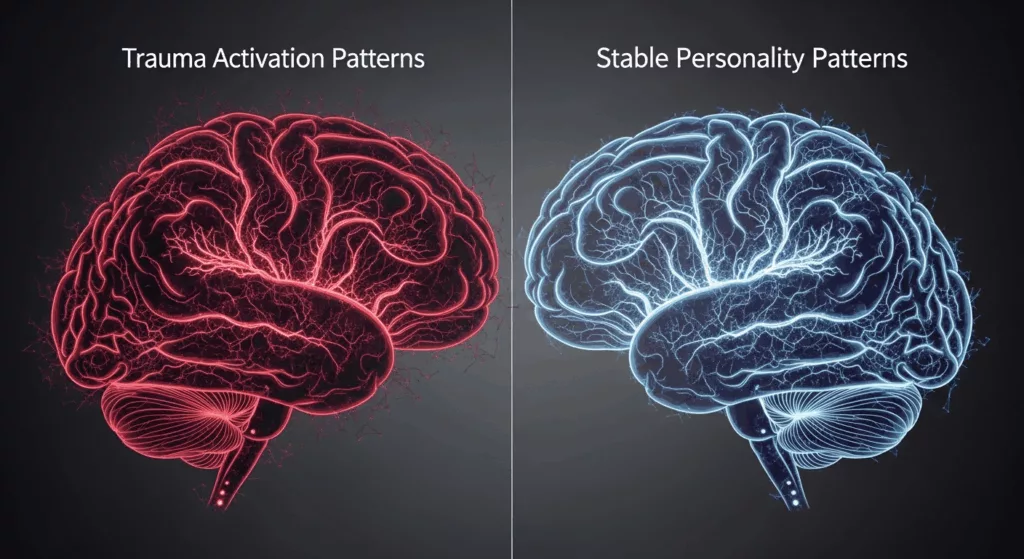
The Critical Distinction: Why Accurate Assessment Matters for Helping Professionals
The difference between personality disorders and trauma responses lies in their origins, duration, and treatment implications. Trauma responses are adaptive survival mechanisms that develop in response to specific overwhelming experiences. These responses served a protective function during dangerous situations but may now interfere with daily functioning.
Personality disorders, by contrast, represent enduring patterns of inner experience and behavior that deviate significantly from cultural expectations. According to the National Institute of Mental Health PTSD resource, these patterns are pervasive, inflexible, and cause significant distress or impairment.
For helping professionals, this distinction becomes particularly complex. Nurses, physicians, therapists, and other caregivers often develop what appears to be personality-related difficulties—hypervigilance, emotional numbness, interpersonal problems—that are actually trauma response symptoms from years of exposure to human suffering.
The Cost of Misdiagnosis
When trauma responses get misidentified as personality disorders, several problematic outcomes emerge:
- Treatment resistance: Interventions designed for personality disorders won’t address underlying trauma
- Increased shame: Clients internalize the message that their struggles represent character flaws
- Prolonged suffering: Without trauma-informed therapy, symptoms persist or worsen
- Professional consequences: Healthcare workers may face disciplinary action for behaviors rooted in unaddressed trauma
Understanding these differences becomes essential for anyone working in mental health, particularly when treating fellow helping professionals who may be reluctant to acknowledge their own trauma histories.
Understanding Trauma Responses: How Your Nervous System Adapts to Survive
Trauma responses represent your nervous system’s brilliant adaptation to overwhelming experiences. When faced with threats beyond your capacity to cope, your brain creates protective mechanisms designed to ensure survival. These responses can appear immediately after traumatic events or emerge gradually over time, particularly with repeated exposure to distressing situations.
Common Trauma Response Symptoms
Trauma response symptoms often cluster around three main categories, each representing different survival strategies:
Hyperarousal responses keep you perpetually alert to danger:
- Hypervigilance and constant scanning for threats
- Exaggerated startle response
- Sleep disturbances and insomnia
- Irritability and angry outbursts
- Difficulty concentrating
Hypoarousal responses involve shutting down to cope with overwhelm:
- Emotional numbness and detachment
- Dissociation and feeling disconnected from yourself
- Fatigue and low energy
- Depression and hopelessness
- Memory problems and brain fog
Re-experiencing symptoms involve the past intruding into the present:
- Flashbacks and intrusive memories
- Nightmares and disturbing dreams
- Emotional flashbacks without clear memories
- Physical sensations related to past trauma
- Intense reactions to trauma reminders
Complex Trauma vs Personality Disorder Presentations
Complex trauma—resulting from repeated, prolonged exposure to traumatic events—can be particularly difficult to distinguish from personality disorders. Healthcare professionals experiencing complex trauma may exhibit:
- Unstable relationships due to trust issues from workplace betrayals
- Identity confusion after years of putting others’ needs first
- Emotional dysregulation from chronic stress and secondary trauma
- Self-harm behaviors as coping mechanisms for overwhelming feelings
- Chronic feelings of emptiness after giving so much to others
These presentations often overlap with borderline personality disorder criteria, leading to frequent misdiagnosis. However, research on complex trauma and personality disorders suggests that many individuals diagnosed with personality disorders actually have complex PTSD.
Personality Disorders: Persistent Patterns Beyond Trauma Reactions
True personality disorders involve enduring patterns of thinking, feeling, and behaving that remain relatively stable across time and situations. These patterns typically emerge by early adulthood and cause significant distress or functional impairment.
Key Characteristics of Personality Disorders
Personality disorders share several defining features that distinguish them from trauma responses:
Pervasive patterns: Difficulties appear across multiple life domains—work, relationships, self-image—rather than being triggered by specific trauma reminders.
Stability over time: While symptoms may fluctuate in intensity, the underlying patterns remain consistent from adolescence or early adulthood onward.
Ego-syntonic nature: Individuals often view their patterns as part of their identity rather than as symptoms to be treated.
Interpersonal focus: Most personality disorders significantly impact how individuals relate to others and perceive relationships.
Common Personality Disorders in Healthcare Settings
Certain personality disorders may be overdiagnosed in healthcare professionals when trauma responses are misunderstood:
Borderline Personality Disorder (BPD) involves intense, unstable relationships, identity disturbance, and emotional dysregulation. However, these same symptoms can result from complex trauma, particularly in empaths who’ve experienced narcissistic abuse in workplace relationships.
Avoidant Personality Disorder features social inhibition, feelings of inadequacy, and hypersensitivity to criticism. Healthcare professionals with social anxiety from trauma may receive this diagnosis when their symptoms actually stem from past experiences of workplace harassment or bullying.
Narcissistic Personality Disorder is sometimes incorrectly assigned to healthcare professionals who develop defensive grandiosity as protection against feelings of inadequacy from traumatic professional experiences.
Common Misdiagnoses: When Trauma Gets Labeled as Personality Pathology
Several factors contribute to the frequent misdiagnosis of trauma responses as personality disorders, particularly among helping professionals who may minimize their own trauma histories.
Why Misdiagnosis Occurs
Presentation similarities: Trauma responses and personality disorders can look remarkably similar, especially when trauma exposure has been chronic or began early in life.
Stigma around trauma: Healthcare professionals may be reluctant to disclose traumatic experiences, fearing professional consequences or perceived weakness.
Limited assessment time: Rushed evaluations may miss the connection between current symptoms and past traumatic experiences.
Professional culture: Healthcare environments that stigmatize vulnerability may discourage honest reporting of trauma histories.
Helping Professionals Burnout and Misdiagnosis
Helping professionals burnout often involves trauma responses that get misinterpreted as personality pathology. Physicians, nurses, and therapists experiencing chronic workplace stress may develop:
- Emotional exhaustion misidentified as depression or mood disorders
- Cynicism and detachment labeled as antisocial traits
- Hypervigilance around patient safety seen as obsessive-compulsive features
- Interpersonal difficulties viewed as borderline personality traits
These responses represent normal reactions to abnormal levels of stress and trauma exposure, not personality pathology. Understanding this distinction is crucial for effective intervention.
The Role of Narcissistic Abuse
Healthcare professionals frequently experience narcissistic abuse from colleagues, supervisors, or patients. This specific form of psychological trauma can create symptoms that closely mimic personality disorders:
- Identity confusion from constant gaslighting
- Emotional dysregulation from chronic invalidation
- Relationship difficulties due to damaged trust
- Self-doubt and perfectionism from persistent criticism
When these trauma responses from narcissistic abuse get misdiagnosed as personality disorders, it compounds the original harm and delays appropriate treatment.
Evidence-Based Assessment: EMDR and Brainspotting in Differential Diagnosis
Accurate differential diagnosis between personality disorders and trauma responses requires comprehensive assessment using evidence-based approaches. Advanced therapeutic techniques can both assess and treat trauma-related symptoms effectively.
The Role of EMDR Therapy
EMDR therapy Florida practitioners use this gold-standard treatment not only for trauma processing but also as a diagnostic tool. During EMDR assessment, clinicians can observe how symptoms respond to trauma-focused interventions:
- Trauma-based symptoms typically improve with EMDR processing
- Personality disorder features remain more stable
- Treatment response helps clarify diagnosis
- Resource installation can differentiate between trauma and personality patterns
For healthcare professionals in Florida, Telehealth EMDR in Florida: Evidence-Based Trauma Healing offers accessible treatment options that can both assess and address underlying trauma.
Brainspotting for Complex Assessment
Brainspotting offers unique advantages for assessing complex trauma vs personality disorder presentations:
Subcortical access: Brainspotting accesses trauma stored below conscious awareness, revealing hidden trauma histories that may not emerge in traditional interviews.
Body-based assessment: Physical responses during brainspotting sessions can indicate trauma activation patterns distinct from personality features.
Dual attunement: The therapist’s somatic awareness helps identify trauma responses that might otherwise be missed.
Trauma-Informed Assessment Principles
Effective trauma-informed therapy assessment involves several key principles supported by SAMHSA trauma-informed care guidelines:
- Safety first: Create physical and emotional safety before exploring difficult symptoms
- Trustworthiness: Build therapeutic alliance through consistency and transparency
- Peer support: Recognize the healing potential of shared experiences
- Collaboration: Include clients as partners in assessment and treatment planning
- Choice: Prioritize client choice and control throughout the process
- Cultural humility: Consider cultural factors in symptom presentation and interpretation
These principles become particularly important when assessing helping professionals who may have complex relationships with mental health treatment due to their professional roles.
Treatment Implications: Why Getting It Right Changes Everything
The treatment approaches for personality disorders and trauma responses differ significantly. Getting the diagnosis right determines whether interventions will be effective or potentially harmful.
Trauma-Focused Treatment Approaches
When symptoms stem from trauma responses, evidence-based trauma treatments offer the most effective interventions:
EMDR therapy helps reprocess traumatic memories, reducing their emotional charge and allowing for adaptive resolution. APA evidence-based treatments for PTSD consistently show EMDR’s effectiveness for trauma recovery.
Brainspotting accesses and processes trauma stored in the subcortical brain, particularly effective for complex trauma presentations common among helping professionals.
Trauma-focused CBT combines cognitive behavioral techniques with trauma-specific interventions, helping clients develop coping skills while processing traumatic experiences.
Somatic approaches address trauma’s impact on the nervous system, helping regulate hyperarousal and hypoarousal responses.
Personality Disorder Treatment Modifications
When personality disorders are accurately diagnosed, treatment approaches focus on different goals:
DBT therapy teaches skills for emotional regulation, interpersonal effectiveness, and distress tolerance. For healthcare professionals with borderline features, these skills can be particularly valuable for managing workplace stress.
Schema therapy addresses underlying cognitive and emotional patterns that maintain personality disorder symptoms.
Mentalization-based treatment focuses on developing capacity to understand mental states underlying behavior.
Integrated Treatment Approaches
Many individuals, particularly those with complex presentations, benefit from integrated approaches that address both trauma and personality factors:
- Trauma processing to address underlying traumatic experiences
- Skills training to manage current symptoms and improve functioning
- Relational work to address interpersonal patterns
- Somatic interventions to regulate nervous system responses
For healthcare professionals dealing with workplace trauma and personality-related difficulties, integrated approaches often provide the most comprehensive healing. Healing from Narcissistic Abuse in Healthcare Settings explores these complex dynamics in detail.
The Importance of Specialized Care
Healthcare professionals require specialized understanding of their unique risk factors and challenges. Effective treatment must address:
Professional identity issues: How trauma affects their sense of competence and calling to help others
Workplace dynamics: Navigating toxic healthcare environments while maintaining professional effectiveness
Secondary trauma: Processing the cumulative impact of exposure to patient suffering
Perfectionism and control: Addressing maladaptive patterns that may have developed as coping mechanisms
Moving Forward: A Path to Accurate Diagnosis and Effective Treatment
Understanding the distinction between personality disorders vs trauma responses empowers both clinicians and clients to pursue more effective treatment. For helping professionals, this knowledge can be particularly liberating—recognizing that your struggles may reflect normal responses to abnormal situations rather than character defects.
Key Assessment Questions
When evaluating symptoms, consider these crucial questions:
- Did symptoms begin after specific traumatic experiences or gradually emerge over time?
- Are difficulties primarily trauma-triggered or present across all situations?
- How do symptoms respond to trauma-focused interventions?
- What role might workplace trauma or narcissistic abuse play in current presentations?
- Are there cultural factors that might influence symptom expression or interpretation?
The Role of Self-Advocacy
Healthcare professionals must become advocates for their own mental health needs. This includes seeking clinicians who understand complex trauma and won’t automatically attribute symptoms to personality pathology. Trauma-Informed Self-Advocacy for Florida Empaths: A Guide provides practical strategies for this process.
Building Resilience Through Understanding
Accurate understanding of your symptoms—whether they stem from trauma responses or personality patterns—provides the foundation for effective healing. This knowledge helps reduce shame, guide treatment choices, and build realistic expectations for recovery.
For empaths and helping professionals, recognizing trauma responses as adaptive survival mechanisms rather than personal failures can be profoundly healing. Your hypervigilance in patient care settings, your emotional numbness after difficult cases, your interpersonal struggles with colleagues—these may reflect your nervous system’s attempts to protect you rather than inherent personality flaws.
Recovery begins with compassionate understanding of how trauma has affected your life and relationships. Mindfulness DBT Skills: Grounding Techniques for Stress can provide immediate tools for managing symptoms while you pursue comprehensive trauma-informed treatment.
Finding Specialized Support in Florida
If you’re a healthcare professional in Florida struggling with symptoms that may stem from trauma responses, specialized support is available. Evidence-based trauma treatments like EMDR and Brainspotting, delivered through secure telehealth platforms, can help you determine whether your difficulties reflect trauma responses or personality patterns—and provide appropriate treatment regardless.
Remember, seeking help isn’t a sign of weakness—it’s a professional responsibility to yourself and your patients. You deserve the same compassionate, expert care you provide to others. The journey from confusion and suffering to clarity and healing is possible when you have the right support and understanding.
Are you ready to explore whether your struggles might reflect trauma responses rather than personality pathology? Consider reaching out to a specialist who understands the complex needs of helping professionals and can provide the accurate assessment and effective treatment you deserve.