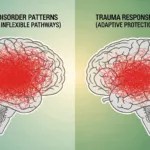
You’ve dedicated your life to caring for others, but lately, you feel like you’re watching your own life from the outside—going through the motions of helping while feeling increasingly disconnected from yourself and your emotions. This experience, known as caregiver dissociation, affects countless healthcare workers, therapists, teachers, and other helping professionals who develop dissociative disorders in caregivers as a protective response to overwhelming stress and secondary trauma.
Dissociation in caregiving professionals isn’t a sign of weakness—it’s your mind’s attempt to protect you from emotional overload. However, when this protective mechanism becomes your default state, it can leave you feeling empty, detached, and unable to connect with the very compassion that drew you to helping others in the first place.

Understanding Dissociation in Caregiving Professionals
Dissociation occurs when your mind creates distance between your conscious awareness and your thoughts, feelings, memories, or sense of identity. For caregivers, this often develops as a response to witnessing repeated trauma, experiencing chronic stress, or managing overwhelming emotional demands without adequate support.
Healthcare worker dissociation manifests differently than other forms of trauma responses. Unlike the acute stress reactions seen in single-incident trauma, caregiver dissociation typically develops gradually through repeated exposure to others’ pain and suffering.
Research published in the National Center for Biotechnology Information shows that dissociative symptoms in healthcare workers during COVID-19 increased significantly, with many professionals reporting feeling “disconnected” from their usual emotional responses and experiencing a sense of “going through the motions” during patient care.
The Caregiver’s Unique Vulnerability
Caregivers face a perfect storm of factors that contribute to dissociative responses:
- Emotional labor demands: Constantly managing your emotional state to provide comfort and support
- Vicarious trauma exposure: Absorbing the trauma and pain of those you help
- Professional expectations: Pressure to remain composed and competent regardless of personal impact
- Chronic stress activation: Prolonged activation of stress response systems without adequate recovery time
- Identity fusion: When your sense of self becomes so intertwined with your role that personal needs disappear
This combination creates an environment where dissociation becomes an adaptive survival mechanism—until it stops being adaptive and starts interfering with your ability to function effectively in both professional and personal relationships.
Warning Signs: When Compassion Leads to Disconnection
Recognizing caregiver trauma symptoms requires understanding that dissociation exists on a spectrum. Early warning signs often masquerade as dedication or professionalism, making them easy to dismiss or rationalize away.
Emotional Warning Signs
The first indicators often appear in your emotional life:
- Emotional numbing: Feeling “nothing” in situations that would normally evoke strong emotions
- Compartmentalization gone extreme: Inability to access emotions even when appropriate and safe
- Compassion fatigue: Feeling irritated or indifferent toward those you’re supposed to help
- Emotional flatness: Friends or family commenting that you seem “different” or “distant”
Cognitive Symptoms
Your thinking patterns may shift in subtle but significant ways:
- Mental fog: Difficulty concentrating or making decisions that used to feel automatic
- Memory gaps: Periods of work or personal time that feel hazy or unclear
- Autopilot functioning: Completing tasks without conscious awareness of doing them
- Detached observation: Watching yourself work as if observing someone else
Physical Manifestations
Your body often signals dissociation before your mind recognizes it:
- Depersonalization: Feeling disconnected from your own body or physical sensations
- Derealization: The world around you feels unreal, dreamlike, or foggy
- Chronic fatigue: Exhaustion that doesn’t improve with rest
- Somatic symptoms: Unexplained physical complaints like headaches, digestive issues, or muscle tension
According to the American Psychological Association on caregiver burnout, these symptoms often co-occur with traditional burnout symptoms but represent a deeper level of psychological self-protection that requires specialized intervention.
The Science Behind Secondary Trauma and Dissociation
Understanding the neurobiological mechanisms underlying caregiver dissociation helps normalize the experience and points toward effective treatment approaches. Secondary trauma treatment must address both the psychological and physiological changes that occur in helping professionals exposed to chronic stress.
Neurobiological Changes in Caregiver Brains
Chronic exposure to others’ trauma creates measurable changes in brain structure and function:
- Prefrontal cortex alterations: The brain’s executive center becomes less active, affecting decision-making and emotional regulation
- Limbic system dysregulation: The emotional processing centers become hypervigilant or shut down entirely
- Default mode network disruption: The brain networks responsible for self-reflection and introspection become fragmented
- Stress hormone imbalances: Chronic cortisol elevation followed by depletion affects memory, mood, and physical health
Research from the National Center for Biotechnology Information on secondary traumatic stress among healthcare workers demonstrates that these changes are not permanent—with appropriate intervention, the brain can recover and develop new, healthier response patterns.
The Dissociation-Trauma Cycle
Caregiver dissociation often follows a predictable cycle:
- Trauma exposure: Witnessing or hearing about traumatic events through your work
- Emotional overwhelm: Initial strong emotional reactions to others’ pain
- Protective dissociation: Mind creates distance to prevent emotional overload
- Functional continuation: Ability to continue working despite internal disconnection
- Reinforcement: Success in “getting through” difficult situations reinforces dissociative responses
- Generalization: Dissociation becomes the default response to any emotional intensity
Breaking this cycle requires specialized intervention that addresses both the trauma exposure and the dissociative coping mechanisms that have become entrenched.
Evidence-Based Treatment Approaches for Caregiver Dissociation
Effective treatment for dissociative disorders in caregivers requires approaches specifically designed to address the unique challenges faced by helping professionals. Traditional talk therapy often falls short because it doesn’t directly address the neurobiological changes underlying dissociation.
Trauma-Focused Cognitive Behavioral Therapy
This specialized form of CBT addresses both the cognitive patterns and trauma exposure underlying caregiver dissociation:
- Cognitive restructuring: Identifying and challenging beliefs about professional obligations and self-worth
- Trauma processing: Safely working through accumulated vicarious trauma experiences
- Grounding techniques: Developing skills to reconnect with present-moment awareness
- Boundary setting: Learning to maintain professional effectiveness while protecting personal well-being
Dialectical Behavior Therapy (DBT) Skills
DBT Skills Groups: Evidence-Based Support for FL Healthcare Workers offers comprehensive training in emotion regulation that’s particularly valuable for caregivers experiencing dissociation:
- Distress tolerance: Managing intense emotions without disconnecting
- Emotional regulation: Recognizing and responding appropriately to emotional states
- Mindfulness practices: Staying present and connected to immediate experience
- Interpersonal effectiveness: Maintaining relationships while protecting emotional boundaries
Somatic Approaches
Body-based interventions are crucial for addressing the physical components of dissociation:
- Body awareness training: Reconnecting with physical sensations and body signals
- Breathing techniques: Regulating the nervous system through controlled breathing
- Movement therapy: Using gentle movement to restore mind-body connection
- Progressive muscle relaxation: Learning to recognize and release physical tension
Specialized Therapy Techniques: EMDR and Brainspotting for Helpers
EMDR for caregivers represents one of the most effective approaches for addressing the underlying trauma that fuels dissociative responses. These advanced techniques go beyond traditional talk therapy to create neurobiological changes that restore healthy emotional processing.
EMDR Therapy for Caregiver Trauma
Eye Movement Desensitization and Reprocessing (EMDR) helps caregivers process accumulated trauma without re-traumatization:
- Dual attention stimulus: Bilateral stimulation helps the brain process stuck traumatic material
- Resource installation: Building internal resources and resilience before processing trauma
- Targeting vicarious trauma: Addressing specific incidents and cumulative stress exposure
- Future templating: Preparing for challenging situations with healthier responses
According to Mayo Clinic research on EMDR therapy effectiveness, this approach shows significant success in treating trauma-related dissociation, particularly when combined with other stabilization techniques.
Brainspotting for Deep Trauma Processing
Brainspotting accesses trauma stored in deeper brain structures that may not respond to other approaches:
- Subcortical processing: Reaching trauma held in primitive brain areas
- Natural healing capacity: Allowing the brain’s innate wisdom to guide healing
- Somatic awareness: Integrating body sensations with emotional processing
- Minimal retraumatization: Gentle approach that doesn’t require detailed trauma recounting
Combining Techniques for Maximum Effectiveness
The most effective treatment often combines multiple approaches:
- Stabilization phase: Building safety and coping skills before trauma processing
- Trauma processing: Using EMDR or Brainspotting to address stored traumatic material
- Integration phase: Developing new patterns and preventing relapse into dissociation
- Maintenance: Ongoing support and skill refinement
For comprehensive guidance on treatment options, explore Evidence-Based Trauma Therapy: What Research Shows Works to understand which approaches might be most beneficial for your specific situation.
Building Resilience: Prevention Strategies for Caregiving Professionals
While treatment is essential for existing dissociative symptoms, prevention strategies can help caregivers maintain connection and emotional availability throughout their careers. Caregiver burnout therapy often includes these proactive approaches.
Professional Boundaries and Self-Care
Effective boundary setting goes beyond simple self-care recommendations:
- Emotional boundaries: Learning to care without absorbing others’ emotions
- Time boundaries: Protecting personal time and avoiding excessive overtime
- Physical boundaries: Maintaining appropriate professional distance
- Mental boundaries: Leaving work concerns at work
Trauma-Informed Self-Advocacy
Caregivers must learn to advocate for their own needs within helping systems. Trauma-Informed Self-Advocacy for Florida Empaths: A Guide provides specific strategies for protecting your well-being while maintaining professional effectiveness.
Regular Mental Health Maintenance
Just as physical health requires regular maintenance, mental health needs consistent attention:
- Regular therapy: Even when not in crisis, ongoing support prevents accumulation of trauma
- Peer support groups: Connection with others who understand the unique challenges of helping work
- Mindfulness practices: Daily activities that maintain present-moment awareness
- Regular self-assessment: Monitoring your emotional state and stress levels
Organizational Support Systems
Individual resilience must be supported by systemic changes:
- Trauma-informed workplace policies: Organizations recognizing and addressing secondary trauma
- Adequate staffing: Preventing overwork and emotional overwhelm
- Mental health resources: Easy access to specialized trauma treatment
- Debriefing protocols: Regular processing of difficult cases or events
The SAMHSA guidance on trauma recovery for healthcare professionals emphasizes the importance of both individual and organizational approaches to preventing and treating caregiver trauma.
Finding Specialized Help: What to Look For
Not all therapists understand the unique challenges faced by caregivers experiencing dissociation. When seeking treatment, look for providers who offer:
- Specialized training: Certification in trauma treatment and dissociative disorders
- Understanding of helper culture: Familiarity with the demands and expectations of caregiving professions
- Evidence-based approaches: EMDR, Brainspotting, or other proven trauma treatments
- Flexible scheduling: Understanding that caregivers often work non-traditional hours
- Insurance accessibility: Making specialized care financially accessible
Consider whether Group vs Individual Therapy for Healthcare Trauma: Which Works? might help you determine the best treatment format for your situation and preferences.
Key Takeaways for Healing Dissociation
Recovery from caregiver dissociation is possible with the right support and treatment approaches:
- Dissociation is adaptive: Your mind protected you from overwhelming stress, but now needs help learning new responses
- Specialized treatment works: EMDR, Brainspotting, and trauma-focused approaches create lasting change
- You can reconnect: With proper treatment, you can restore your ability to feel and connect while maintaining professional effectiveness
- Prevention is possible: Learning healthy boundaries and self-care can prevent future dissociative episodes
- You’re not alone: Many caregivers experience these challenges and recover with appropriate support
Remember that seeking help for dissociative symptoms doesn’t mean you’re failing as a caregiver—it means you’re taking responsibility for maintaining your ability to help others effectively while protecting your own well-being. The compassion you show others deserves to be turned inward as you embark on your own healing journey.
If you’re experiencing dissociative symptoms related to your caregiving work, consider reaching out to a specialized trauma therapist who understands the unique challenges you face. Recovery is possible, and you don’t have to navigate this journey alone. What steps will you take today to begin reconnecting with yourself and reclaiming your emotional availability?