

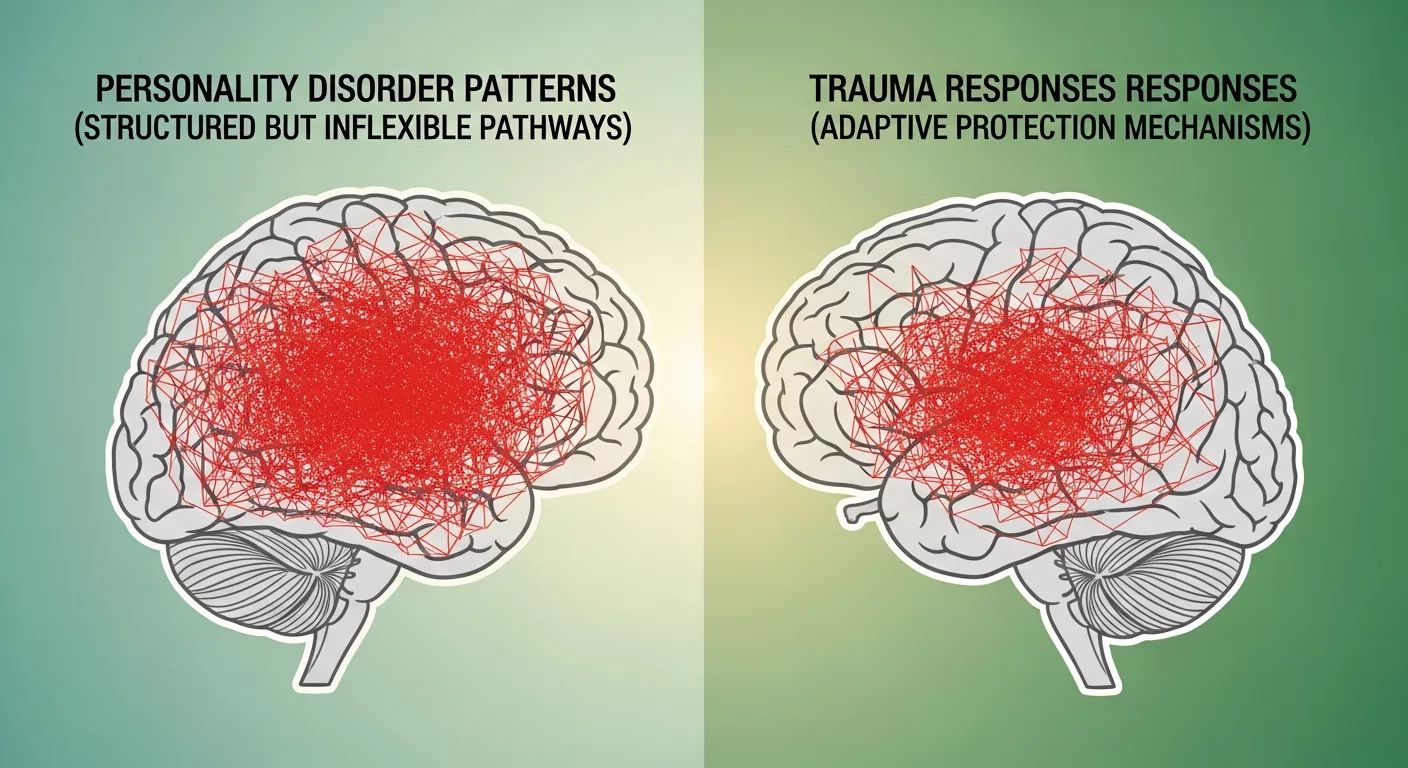
As a helping professional, you’ve likely witnessed the devastating impact of misdiagnosis—when complex trauma responses are mislabeled as personality disorders, or vice versa. This critical distinction between personality disorders vs trauma responses can mean the difference between effective treatment and years of therapeutic frustration. Understanding these differences isn’t just academic—it’s essential for providing appropriate care and achieving meaningful recovery outcomes.
The overlap between trauma responses and personality disorder symptoms creates a diagnostic minefield that even experienced clinicians navigate carefully. When someone presents with emotional instability, relationship difficulties, and self-destructive behaviors, are we seeing the structured patterns of a personality disorder or the adaptive responses to overwhelming trauma? Getting this wrong can lead to ineffective treatment approaches and prolonged suffering.

Understanding the Fundamental Differences: Structure vs. Response
The core distinction between personality disorders and trauma responses lies in their underlying nature and development. Personality disorders represent pervasive, inflexible patterns of thinking, feeling, and behaving that deviate significantly from cultural expectations. These patterns are stable across time and situations, typically emerging by early adulthood and causing significant distress or impairment.
Trauma responses, on the other hand, are adaptive reactions to overwhelming experiences that exceed our capacity to cope. These responses—while potentially disruptive—serve a protective function and often mirror personality disorder symptoms in their presentation.
Key Structural Differences
Personality disorders involve:
- Pervasive patterns across multiple life domains
- Stability over time and across situations
- Early onset, typically by early adulthood
- Inflexibility in response to changing circumstances
- Ego-syntonic nature (feels consistent with one’s sense of self)
Trauma responses involve:
- Specific reactions to identifiable stressors or triggers
- Variability based on safety and environmental factors
- Direct connection to traumatic experiences
- Potential for significant improvement with appropriate treatment
- Ego-dystonic nature (feels foreign or distressing to one’s sense of self)
According to the American Psychiatric Association’s definition of personality disorders, these conditions require evidence of an enduring pattern that is inflexible and pervasive. This is fundamentally different from trauma responses, which are often context-dependent and can show remarkable improvement when the underlying trauma is addressed.
Common Misdiagnoses: When Trauma Gets Labeled as Personality Pathology
The misdiagnosis of trauma responses as personality disorders is unfortunately common, particularly affecting women, people of color, and survivors of childhood abuse. Several factors contribute to this diagnostic confusion, leading to what experts call “misdiagnosis trauma”—the additional harm caused by receiving inappropriate mental health labels and treatments.
Borderline Personality Disorder vs. Complex PTSD
Perhaps no misdiagnosis is more common or damaging than labeling complex PTSD as Borderline Personality Disorder (BPD). The symptom overlap is striking:
- Emotional dysregulation and intense mood swings
- Fear of abandonment and unstable relationships
- Identity disturbance and chronic emptiness
- Self-destructive behaviors and suicidal ideation
- Dissociative symptoms under stress
However, the underlying mechanisms differ significantly. In complex PTSD, these symptoms represent trauma responses to prolonged, repeated trauma, often beginning in childhood. The person’s nervous system has adapted to survive in dangerous environments, creating hypervigilance, emotional numbing, and relationship difficulties as protective mechanisms.
In contrast, BPD involves more pervasive identity and interpersonal difficulties that aren’t necessarily tied to specific traumatic experiences. While trauma often plays a role in BPD development, the disorder involves deeper structural issues with identity formation and emotional regulation.
Narcissistic Personality Disorder vs. Trauma-Related Grandiosity
Survivors of childhood abuse, particularly emotional abuse and neglect, may develop grandiose self-concepts as a defense against overwhelming shame and vulnerability. This trauma-related grandiosity can be misdiagnosed as Narcissistic Personality Disorder (NPD).
The key difference lies in the underlying emotional experience. True NPD involves a stable pattern of grandiosity with limited capacity for empathy. Trauma-related grandiosity, however, often coexists with deep shame, empathic capacity, and genuine remorse when harm is caused to others.
Key Diagnostic Markers: Evidence-Based Identification Methods
Accurate diagnosis requires careful assessment of several key factors that distinguish personality disorders from trauma responses. Mental health professionals use specific criteria and assessment tools to make these important distinctions.
Timeline and Development Patterns
One of the most critical diagnostic markers is the timeline of symptom development:
Personality Disorder Indicators:
- Symptoms present by early adulthood
- Consistent patterns across multiple relationships and settings
- Minimal variation in symptoms over time without treatment
- Early behavioral problems often noted in childhood or adolescence
Trauma Response Indicators:
- Clear onset following traumatic experiences
- Symptoms may vary significantly based on triggers and safety
- Periods of better functioning when trauma triggers are absent
- More recent development of problematic patterns
Response to Environmental Changes
How someone responds to changes in their environment provides crucial diagnostic information. Trauma survivors often show remarkable improvement when removed from traumatic environments or when triggers are reduced. Their symptoms may fluctuate significantly based on perceived safety and support.
Personality disorders, while not unchangeable, tend to show more stable patterns regardless of environmental factors. The person’s interpersonal difficulties and emotional dysregulation persist across different relationships and settings.
Relationship to Self and Others
The research on trauma and personality disorder comorbidity reveals important differences in how individuals relate to themselves and others:
Trauma survivors often maintain capacity for:
- Genuine empathy and concern for others
- Remorse and responsibility for harm caused
- Desire for healthy relationships despite current difficulties
- Periods of stable self-concept when triggered
Personality disorders may involve:
- More consistent interpersonal difficulties across relationships
- Limited insight into impact on others (though this varies by disorder)
- Stable but potentially distorted self-concept
- Patterns that feel ego-syntonic despite causing problems
The Neuroscience Behind Each: How Brain Changes Differ
Recent advances in neuroscience have revealed distinct brain changes associated with trauma responses versus personality disorders, providing biological markers that support clinical observations.
Trauma-Related Brain Changes
Trauma exposure creates specific neurobiological changes designed to enhance survival:
Hyperactive Amygdala: The brain’s alarm system becomes oversensitive, triggering fight-or-flight responses to relatively minor stressors. This explains the hypervigilance and emotional reactivity seen in trauma survivors.
Disrupted Prefrontal Cortex: The brain’s executive center, responsible for rational thinking and emotional regulation, becomes less active during stress. This makes it difficult to think clearly or regulate emotions when triggered.
Altered Hippocampus: Changes in this memory center can affect how traumatic memories are stored and retrieved, contributing to flashbacks, nightmares, and dissociative symptoms.
The NIMH’s comprehensive guide to PTSD details how these brain changes represent adaptive responses that can be reversed with appropriate treatment.
Personality Disorder Neurobiology
Personality disorders show different patterns of brain structure and function:
Structural Differences: Some personality disorders are associated with differences in brain structure that appear more stable and pervasive than trauma-related changes.
Neurotransmitter Patterns: Different personality disorders show varying patterns of neurotransmitter function, affecting mood regulation, impulse control, and social cognition.
Network Connectivity: Brain imaging reveals differences in how various brain networks communicate in personality disorders, affecting everything from emotional regulation to self-perception.
Importantly, these differences don’t make personality disorders untreatable, but they do suggest that treatment approaches may need to be longer-term and more comprehensive than trauma-focused interventions alone.
Treatment Approaches: Why the Distinction Matters for Recovery
Getting the diagnosis right dramatically impacts treatment effectiveness. Trauma responses and personality disorders require different therapeutic approaches, and using the wrong treatment can actually worsen symptoms or prolong suffering.
Trauma-Informed Therapy Approaches
When symptoms stem from trauma responses, trauma-informed therapy approaches are most effective:
EMDR (Eye Movement Desensitization and Reprocessing): This evidence-based treatment helps the brain reprocess traumatic memories, reducing their emotional impact and allowing for natural healing. EMDR is particularly effective for trauma survivors who have tried traditional talk therapy without success.
Brainspotting: This advanced brain-based therapy accesses trauma stored in the subcortical brain, making it especially useful for complex trauma and dissociative disorders.
Trauma-Focused CBT: Combines cognitive-behavioral techniques with trauma-specific interventions to address PTSD symptoms while developing healthy coping strategies.
Somatic Therapies: Address the body-based symptoms of trauma, helping to regulate the nervous system and restore a sense of safety.
Personality Disorder Treatment Approaches
Personality disorders typically require longer-term, more intensive interventions:
Dialectical Behavior Therapy (DBT): Developed specifically for Borderline Personality Disorder, DBT teaches skills for emotion regulation, distress tolerance, interpersonal effectiveness, and mindfulness.
Schema Therapy: Addresses the deep-rooted patterns and early maladaptive schemas that contribute to personality disorders.
Mentalization-Based Therapy: Focuses on developing the capacity to understand mental states underlying behavior.
Long-term Psychodynamic Therapy: Explores unconscious patterns and early relationships that contribute to personality disorder symptoms.
The Dangers of Mismatched Treatment
Using personality disorder treatments for trauma responses can:
- Pathologize normal trauma reactions
- Create shame and self-blame in trauma survivors
- Delay appropriate trauma processing
- Reinforce feelings of being “fundamentally flawed”
Conversely, using trauma-focused treatments alone for personality disorders may:
- Miss underlying structural issues
- Provide temporary relief without lasting change
- Fail to address pervasive interpersonal patterns
- Leave individuals vulnerable to relapse
When Both Conditions Coexist
Complicating matters further, personality disorders and trauma responses can coexist in the same individual. Many people with personality disorders have significant trauma histories, and trauma survivors may develop personality disorder features over time.
Integrated Treatment Approaches
When both conditions are present, treatment must address both the trauma responses and the underlying personality structure:
Sequential Treatment: Some approaches address trauma symptoms first to stabilize the individual, then focus on personality patterns.
Integrated Treatment: Other models address both simultaneously, recognizing their interconnected nature.
Phase-Based Treatment: Many effective treatments use phases—first establishing safety and stability, then processing trauma, and finally integrating new patterns and skills.
At Healing Speak, we specialize in these complex cases, offering both trauma-focused interventions and personality disorder treatments as needed.
When to Seek Specialized Assessment: Red Flags for Misdiagnosis
Certain warning signs suggest that a misdiagnosis may have occurred or that a more thorough assessment is needed.
Signs You May Have Been Misdiagnosed
- Treatment isn’t working: If you’ve been in treatment for a personality disorder for an extended period without significant improvement, trauma may be the underlying issue.
- Symptoms fluctuate significantly: If your symptoms vary dramatically based on stress, relationships, or environmental factors, trauma responses may be involved.
- You have a significant trauma history: If traumatic experiences weren’t thoroughly explored during your initial assessment, they may be driving symptoms attributed to personality pathology.
- You feel blamed or pathologized: If treatment leaves you feeling fundamentally flawed rather than empowered to heal, a trauma-informed approach may be more appropriate.
- Medication isn’t helping: While medication can be helpful for both conditions, trauma responses often respond better to therapy than medication alone.
Finding the Right Professional
Seeking assessment from a trauma-informed professional who understands both trauma and personality disorders is crucial. Look for providers who:
- Have specific training in trauma assessment and treatment
- Understand the overlap between trauma and personality disorders
- Use comprehensive assessment tools
- Take detailed trauma histories
- Avoid rushing to diagnosis
- Consider cultural and contextual factors
The Mayo Clinic’s PTSD symptoms and causes resource emphasizes the importance of thorough assessment by qualified professionals.
The Role of Cultural and Social Factors
Cultural background, gender, race, and socioeconomic status significantly influence both how trauma presents and how it’s diagnosed. Unfortunately, bias in mental health diagnosis means that certain groups are more likely to receive personality disorder diagnoses when trauma may be the primary issue.
Gender Bias in Diagnosis
Women are disproportionately diagnosed with Borderline Personality Disorder, while men with similar symptoms may receive different diagnoses. This reflects both diagnostic bias and different cultural expectations about emotional expression.
Racial and Cultural Considerations
People of color, particularly Black women, are more likely to be diagnosed with personality disorders and less likely to have their trauma histories adequately explored. Cultural trauma, historical trauma, and systemic oppression may manifest in ways that are misinterpreted as personality pathology.
For healthcare workers dealing with these issues, specialized treatment approaches that understand both professional and cultural contexts are essential.
Moving Forward: Hope for Healing
Regardless of whether your symptoms stem from trauma responses, personality disorders, or both, healing is possible. The key is getting the right assessment and treatment approach for your specific situation.
What Accurate Diagnosis Means for Treatment
When diagnosis is accurate:
- Treatment can target the root causes of symptoms
- You understand your experiences in a meaningful context
- Hope is restored through appropriate interventions
- Recovery timelines become more realistic
- Self-blame and shame can begin to heal
The Importance of Second Opinions
If you’re not improving with current treatment or feel your diagnosis doesn’t fit your experience, seeking a second opinion from a trauma-informed specialist can be life-changing. Many clients come to specialized practices after years of ineffective treatment, finally finding relief when their trauma is properly addressed.
Insurance and Accessibility Considerations
Quality assessment and treatment shouldn’t be available only to those who can pay out of pocket. Many specialized trauma treatment providers, including telehealth therapy options, accept major insurance plans. Understanding your insurance coverage for trauma therapy can help you access the specialized care you need.
Key Takeaways for Helping Professionals
As a helping professional, understanding the distinction between personality disorders vs trauma responses is crucial for several reasons:
- Assessment matters: Take time for comprehensive evaluation that includes detailed trauma history
- Context is crucial: Consider cultural, social, and environmental factors that may influence presentation
- Treatment matching is essential: Ensure therapeutic approaches match the underlying condition
- Hope and healing are possible: Both trauma responses and personality disorders can improve with appropriate treatment
- Collaboration enhances outcomes: Work with colleagues who specialize in areas outside your expertise
Conclusion: The Path to Accurate Diagnosis and Effective Treatment
The distinction between personality disorders vs trauma responses isn’t always clear-cut, but understanding the differences is essential for effective treatment. When trauma responses are misidentified as personality pathology, individuals may spend years in ineffective treatment, feeling blamed and hopeless about their capacity to heal.
Conversely, when personality disorders are misidentified as trauma responses alone, individuals may not receive the comprehensive, long-term treatment needed for stable recovery. The key is thorough, unbiased assessment by qualified professionals who understand both trauma and personality disorders.
If you’re a helping professional struggling with symptoms that haven’t responded to traditional treatment, or if you’re questioning a previous diagnosis, consider seeking evaluation from a trauma-informed specialist. Everyone deserves accurate diagnosis and effective treatment—including those who help others heal.
Remember, whether your symptoms stem from trauma responses, personality disorders, or both, healing is not only possible but probable with the right approach. The journey may be complex, but with proper understanding and treatment, you can find the peace and stability you deserve.
Are you ready to explore whether your symptoms might be trauma responses rather than personality pathology? Or do you suspect that a client’s diagnosis might not be capturing the full picture? Taking that first step toward specialized assessment could be the beginning of a more effective path to healing.


