
If you’re a healthcare professional or caregiver who has tried traditional therapy without lasting relief from trauma symptoms, you’re not alone—and it’s not your fault. Research shows that while talk therapy has its place, trauma often requires specialized, evidence-based trauma treatment approaches that work with both your brain and body’s natural healing processes. The difference between feeling stuck in your pain and experiencing genuine healing often comes down to using the right therapeutic intervention at the right time.
Traditional mental health care fails many people, particularly those in helping professions who carry the weight of others’ pain while struggling with their own unresolved trauma. Big box therapy platforms hire anyone with a license, regardless of specialization, leaving you with generic approaches that don’t address the root causes of trauma. You deserve better—you deserve trauma therapy that works.
Why Traditional Talk Therapy Often Falls Short for Trauma Recovery
Understanding why conventional therapy sometimes misses the mark helps explain why specialized approaches are necessary. Trauma isn’t just a story to be told—it’s a complex neurobiological response that affects how your brain processes memories, emotions, and threat detection.
Traditional talk therapy operates primarily through the prefrontal cortex—the rational, thinking part of your brain. However, traumatic memories are often stored in deeper brain structures like the amygdala and hippocampus, areas that don’t respond well to logic or verbal processing alone. This is why you might understand your trauma intellectually but still experience nightmares, flashbacks, hypervigilance, or emotional numbness.
Common limitations of traditional approaches include:
- Over-reliance on verbal processing without addressing somatic responses
- Insufficient attention to how trauma affects the nervous system
- Generic approaches that don’t account for complex trauma histories
- Limited training in specialized trauma interventions
- Tendency to let clients talk without structured resolution techniques
Healthcare workers and caregivers face unique challenges because your professional training often conflicts with your personal healing needs. You’re taught to compartmentalize, push through difficult emotions, and prioritize others’ wellbeing over your own. These adaptive strategies in your work environment can actually hinder trauma recovery when applied to your personal healing journey.
The SAMHSA trauma-informed care guidelines emphasize that effective trauma treatment must address the whole person, not just symptoms. This requires specialized knowledge and training that goes far beyond basic therapy skills.
The Science Behind Evidence-Based Trauma Treatment: What Research Shows
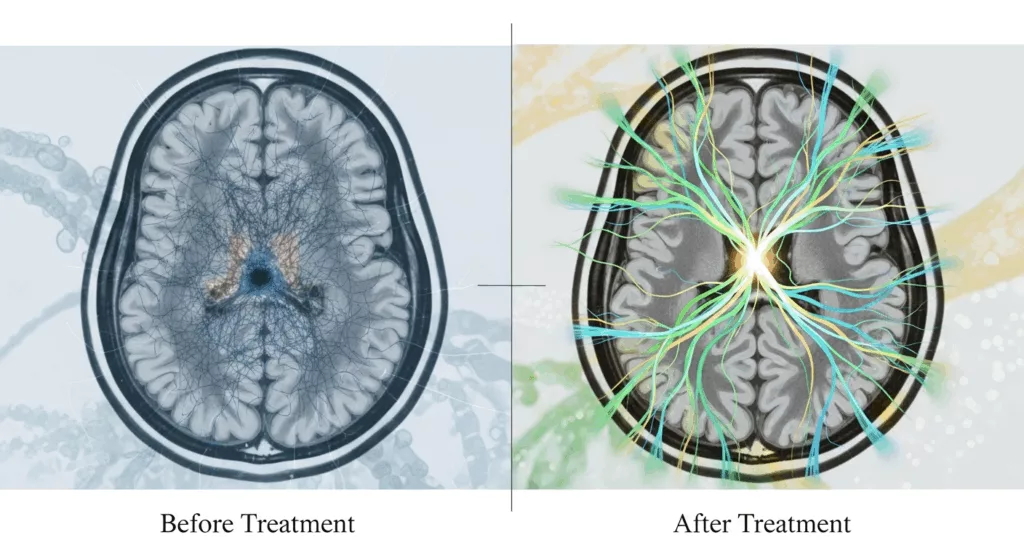
Evidence-based trauma treatment isn’t just a buzzword—it represents decades of rigorous research into what actually helps people heal from traumatic experiences. These approaches are grounded in neuroscience, showing measurable changes in brain structure and function after treatment.
Research consistently demonstrates that trauma affects three key brain areas: the prefrontal cortex (executive functioning), the limbic system (emotional processing), and the brainstem (survival responses). Effective trauma therapy must address all three levels, not just cognitive understanding.
Studies published in leading journals show that specialized trauma interventions produce significantly better outcomes than traditional therapy alone. A comprehensive meta-analysis found that trauma-focused treatments showed effect sizes of 1.2 to 1.8—considered large effects in psychological research—compared to 0.3 to 0.5 for generic counseling approaches.
Key research findings include:
- Trauma-specific therapies reduce symptoms by 60-80% in most clients
- Neuroimaging shows actual brain changes after effective treatment
- Specialized approaches work faster than traditional therapy
- Body-based interventions address trauma stored in the nervous system
- Bilateral stimulation techniques help integrate traumatic memories
The research on evidence-based PTSD treatments published by the National Center for Biotechnology Information confirms that specific therapeutic modalities consistently outperform generic approaches for trauma recovery.
EMDR: Rewiring Traumatic Memories Through Bilateral Stimulation
Eye Movement Desensitization and Reprocessing (EMDR) stands as one of the most researched and effective trauma treatments available. EMDR therapy uses bilateral stimulation—typically eye movements—to help your brain reprocess traumatic memories in a way that reduces their emotional charge and intrusive impact.
Unlike traditional therapy that focuses on talking through trauma, EMDR works directly with how memories are stored and retrieved in your brain. During traumatic experiences, memories can become “stuck” in your limbic system, causing you to re-experience the trauma as if it’s happening now rather than recognizing it as a past event.
How EMDR works:
- Preparation: Your therapist helps you develop coping skills and resources
- Assessment: Specific traumatic memories are identified and targeted
- Desensitization: Bilateral stimulation helps reprocess the memory
- Installation: Positive beliefs replace negative trauma-based beliefs
- Body scan: Physical sensations related to trauma are addressed
- Closure: You return to a stable state at session end
- Reevaluation: Progress is assessed at the next session
For healthcare workers, EMDR is particularly effective because it doesn’t require extensive verbal processing—something many medical professionals struggle with due to training that emphasizes emotional compartmentalization. The APA guidelines on EMDR therapy recognize it as a first-line treatment for PTSD.
Research shows that 84-90% of single-trauma survivors no longer meet PTSD criteria after just three 90-minute EMDR sessions. For complex trauma, treatment takes longer but remains highly effective. Many clients report significant improvement after 6-12 sessions, compared to years of traditional therapy with limited progress.
At Healing Speak, we specialize in EMDR for healthcare workers, understanding the unique trauma exposures and barriers facing medical professionals.
What to Expect During EMDR Treatment
EMDR sessions feel different from traditional therapy. You’ll focus on specific traumatic memories while following your therapist’s finger movements with your eyes. This bilateral stimulation mimics REM sleep patterns, helping your brain process the memory naturally.
Many clients worry that EMDR will make trauma worse or force them to relive painful experiences. In reality, most people find EMDR less emotionally overwhelming than talk therapy because the bilateral stimulation helps regulate your nervous system during processing.
Common experiences during EMDR include shifts in how you think about the trauma, decreased emotional intensity when remembering the event, new insights or perspectives, and reduction in trauma-related symptoms like nightmares or hypervigilance.
Brainspotting and Somatic Approaches: Healing Trauma in the Body
Brainspotting represents a newer evolution in trauma treatment, developed from EMDR but focusing on the deep brain structures where trauma is stored. This approach recognizes that “where you look affects how you feel”—specific eye positions can access traumatic material stored in the subcortical brain.
Unlike EMDR’s structured protocol, brainspotting follows your brain’s natural healing process. Your therapist helps you find “brainspots”—eye positions that activate traumatic material—and then supports your nervous system as it processes and releases the stored trauma.
Somatic approaches complement brainspotting by addressing how trauma lives in your body. Trauma doesn’t just affect your mind—it creates lasting changes in your nervous system, muscle tension, breathing patterns, and overall physical functioning.
Benefits of somatic trauma treatment:
- Addresses trauma stored below conscious awareness
- Works with your body’s natural healing wisdom
- Effective for preverbal or complex developmental trauma
- Helps regulate the nervous system
- Reduces physical symptoms of trauma
- Doesn’t require detailed trauma disclosure
For healthcare professionals who struggle with traditional talk therapy, these body-based approaches often feel more natural and effective. Your medical training gives you an advantage in understanding how trauma affects physiological functioning.
The Window of Tolerance Concept
Somatic approaches emphasize working within your “window of tolerance”—the zone where you can process difficult material without becoming overwhelmed (hyperarousal) or shutting down (hypoarousal). Traditional therapy often pushes people outside this window, making trauma worse rather than better.
Skilled trauma therapists help expand your window of tolerance gradually, building your capacity to handle difficult emotions and sensations without becoming dysregulated. This creates lasting resilience rather than just symptom management.
Cognitive Processing Therapy and Prolonged Exposure: Structured Paths Forward
Cognitive Processing Therapy (CPT) and Prolonged Exposure (PE) represent two additional evidence-based approaches that work particularly well for certain types of trauma and personality styles. These trauma treatment methods offer structured, protocol-driven approaches to healing.
CPT helps you examine and change unhelpful thoughts related to your trauma. Rather than just talking about what happened, CPT systematically addresses “stuck points”—ways of thinking that keep you trapped in trauma responses. Common stuck points include self-blame, safety concerns, trust issues, and control beliefs.
CPT typically involves:
- Education about trauma and PTSD symptoms
- Writing and processing impact statements
- Identifying and challenging stuck points
- Developing balanced, helpful thinking patterns
- Homework assignments to practice new skills
Prolonged Exposure works by gradually and systematically helping you approach trauma-related memories, feelings, and situations you’ve been avoiding. This isn’t about forcing you to relive trauma, but rather helping your nervous system learn that these memories and situations are no longer dangerous.
PE includes imaginal exposure (recounting traumatic memories in a safe therapeutic environment) and in-vivo exposure (gradually approaching safe but avoided situations). For a nurse who was assaulted by a patient, in-vivo exposure might involve gradually returning to patient care settings with appropriate support and safety measures.
Who Benefits Most from Structured Approaches
Healthcare professionals often respond well to CPT and PE because these approaches align with your scientific training. You appreciate the structured protocols, homework assignments, and measurable progress markers. These therapies also work well if you’re comfortable with a more directive therapeutic approach.
However, these methods aren’t appropriate for everyone. If you have complex trauma, personality disorders, or severe dissociation, other approaches like EMDR or brainspotting might be more effective initially.
The ISTSS effective PTSD treatments guidelines help clinicians match the right therapy to each individual’s specific needs and presentation.
Choosing the Right Evidence-Based Treatment for Your Trauma Recovery
Selecting the most effective trauma therapy depends on several factors: your trauma history, current symptoms, personal preferences, and individual strengths. There’s no one-size-fits-all approach, which is why working with specialists who understand multiple modalities is crucial.
Consider EMDR if you:
- Have specific traumatic incidents that continue to intrude
- Prefer less talking and more processing
- Want relatively quick results
- Have tried talk therapy without lasting improvement
- Experience flashbacks, nightmares, or triggered responses
Consider brainspotting if you:
- Have complex or developmental trauma
- Feel disconnected from your body or emotions
- Prefer following your natural healing process
- Have difficulty accessing or verbalizing trauma memories
- Want a gentler, less structured approach
Consider CPT or PE if you:
- Prefer structured, goal-oriented approaches
- Want to understand the cognitive aspects of your trauma
- Are motivated to do homework and practice exercises
- Have specific trauma-related thinking patterns to address
- Respond well to educational and directive interventions
Many people benefit from combining approaches or transitioning between different modalities as their healing progresses. What matters most is finding a therapist who specializes in trauma and has training in multiple evidence-based approaches.
Red Flags in Trauma Treatment
Not all trauma therapy is created equal. Be cautious of therapists who:
- Use only traditional talk therapy for trauma symptoms
- Lack specialized trauma training or certifications
- Push you to disclose details before establishing safety
- Don’t understand trauma’s effects on the nervous system
- Promise quick fixes or guaranteed outcomes
- Don’t tailor treatment to your specific needs
Quality trauma treatment takes time and requires specialized expertise. The NIMH PTSD treatment information emphasizes the importance of working with trained professionals who use evidence-based approaches.
The Importance of Therapist Specialization
Unlike big box therapy platforms that hire anyone with a license, effective trauma treatment requires specialized training and certification. Look for therapists who are:
- Certified Clinical Trauma Professionals (CCTP)
- Trained in multiple evidence-based trauma modalities
- Experienced with your specific type of trauma
- Knowledgeable about how trauma affects helping professionals
- Committed to ongoing education and training
At Healing Speak, our providers are certified specialists in treating complex trauma, understanding the unique needs of healthcare workers and caregivers who have tried traditional therapy without success.
Your Path Forward: Practical Next Steps
Understanding evidence-based trauma treatment is the first step—taking action is what creates change. If you’re a healthcare professional or caregiver struggling with unresolved trauma, you don’t have to continue suffering in silence.
Immediate steps you can take:
- Assess your current treatment: Is your therapy creating lasting change or just providing temporary relief?
- Research specialized providers: Look for therapists certified in trauma treatment, not just licensed
- Consider your preferences: Do you prefer structured approaches or more intuitive processing?
- Check insurance coverage: Many specialized trauma treatments are covered by insurance
- Schedule consultations: Most trauma specialists offer brief consultations to assess fit
Remember, seeking trauma treatment isn’t a sign of weakness—it’s a sign of wisdom. You wouldn’t ignore a physical injury, and emotional wounds deserve the same attention and specialized care.
Questions to ask potential trauma therapists:
- What specific trauma certifications do you hold?
- Which evidence-based modalities do you use?
- How do you tailor treatment to healthcare professionals?
- What’s your typical treatment timeline for trauma recovery?
- Do you offer flexible scheduling for healthcare workers?
For Florida healthcare workers, specialized trauma treatment is available with evening and weekend hours to accommodate your demanding schedule.
Breaking Free from Trauma’s Hold
Evidence-based trauma treatment offers hope for healthcare professionals and caregivers who have felt stuck in their pain despite trying traditional therapy. Whether through EMDR’s memory reprocessing, brainspotting’s deep brain work, or structured approaches like CPT and PE, healing is possible when you use the right tools.
Your trauma symptoms—nightmares, hypervigilance, emotional numbness, relationship difficulties—aren’t character flaws or signs of weakness. They’re normal responses to abnormal experiences. With specialized, evidence-based treatment, you can reclaim your life and find the peace you deserve.
The research is clear: trauma therapy that works exists. The question isn’t whether you can heal, but whether you’ll take the step to access the specialized care that can make healing possible.
Don’t wait for trauma symptoms to resolve on their own—they won’t. Don’t settle for therapy that just lets you talk without creating real change. You deserve evidence-based treatment from specialists who understand complex trauma and know how to help healthcare workers heal.
At Healing Speak, we help those who don’t think they can be helped. Our certified trauma specialists use EMDR, brainspotting, and other evidence-based approaches designed specifically for healthcare workers and caregivers. We accept most major insurance plans and offer telehealth throughout Florida with evening and weekend appointments.
Your healing journey doesn’t have to wait for a better time or less stress in your life. It can start today with a single phone call to a trauma specialist who understands your unique needs and has the training to help you heal.
Ready to experience trauma therapy that actually works? Contact Healing Speak at (561) 932-5342 to learn how evidence-based trauma treatment can help you reclaim your life and find lasting peace.