You’ve tried bubble baths and meditation apps, but you’re still running on empty after another 12-hour shift in Florida’s demanding healthcare system. Research shows that 76% of nurses report burnout, yet most self-care advice ignores the unique psychological demands of nursing. The truth is, traditional self-care approaches often fail healthcare professionals because they don’t address the complex trauma, compassion fatigue, and emotional labor that define your daily reality. This comprehensive guide explores science-backed self-care for nurses Florida strategies that actually work within the constraints of your demanding schedule and unique professional challenges.
Why Traditional Self-Care Fails Florida’s Overworked Nurses
Generic self-care advice wasn’t designed for professionals who witness human suffering daily while managing life-or-death decisions. Florida’s healthcare system presents unique challenges that compound typical nursing stress: hurricane season disruptions, high tourist populations straining emergency services, and one of the nation’s fastest-growing elderly populations requiring intensive care.
Traditional self-care assumes you have predictable schedules, emotional energy reserves, and the luxury of “leaving work at work.” But as a nurse, you carry the weight of patient outcomes home with you. You may find yourself checking on patients mentally hours after your shift ends, or losing sleep over difficult cases.
The problem with bubble bath self-care is that it treats symptoms, not causes. When you’re experiencing nurse burnout prevention challenges, you need interventions that address the neurological impact of chronic stress and trauma exposure. Your nervous system is stuck in hypervigilance mode, making it nearly impossible to truly relax with superficial activities.
Florida nurses face additional stressors including:
- Higher patient-to-nurse ratios compared to other states
- Increased workplace violence in healthcare settings
- Natural disaster preparedness and response duties
- Diverse patient populations requiring cultural competency
- High cost of living creating financial stress
These factors create a perfect storm for compassion fatigue and secondary trauma that requires specialized approaches, not generic wellness tips.
The Science Behind Effective Self-Care for Healthcare Professionals
Effective healthcare worker mental health strategies must address the neurobiological impact of chronic stress and trauma exposure. When you’re constantly in fight-or-flight mode, your brain’s threat detection system becomes hyperactive while your rest-and-digest functions shut down.
Research published by the National Center for Biotechnology Information shows that burnout prevention strategies for nurses must target three key areas: autonomic nervous system regulation, cognitive processing of difficult experiences, and social support systems.
Understanding Your Stress Response System
Your autonomic nervous system has two main branches: sympathetic (accelerator) and parasympathetic (brakes). Nursing work keeps your sympathetic system chronically activated. Evidence-based self-care techniques must specifically target parasympathetic activation to restore balance.
Polyvagal theory explains why some self-care activities feel impossible when you’re burned out. Your vagus nerve, which controls your body’s relaxation response, becomes less responsive to gentle interventions when you’re chronically stressed. This is why meditation might feel agitating rather than calming when you’re overwhelmed.
The Neurobiology of Compassion Fatigue
Compassion fatigue isn’t just emotional exhaustion—it’s a neurological condition. Mirror neurons fire when you witness patient suffering, literally creating shared neural experiences. Over time, this constant activation can lead to changes in brain structure and function similar to PTSD.
This explains why traditional self-care feels inadequate. Your brain needs specific interventions that address trauma processing, not just relaxation. EMDR therapy and other specialized trauma treatments can help reset these neural pathways.
Evidence-Based Self-Care Strategies That Fit Your Florida Schedule
Practical nurse stress management strategies must work within your real-life constraints: unpredictable schedules, physical exhaustion, and limited time between shifts. These research-backed techniques are designed specifically for healthcare professionals.
Micro-Recovery Techniques (2-5 minutes)
Between patient rooms, you can implement these evidence-based interventions:
Box Breathing with Extended Exhales: Inhale for 4 counts, hold for 4, exhale for 6-8 counts, hold for 2. The extended exhale specifically activates your vagus nerve and parasympathetic response. Research shows just 2 minutes can lower cortisol levels.
Progressive Muscle Release: Start with your shoulders—the place nurses hold the most tension. Tense for 5 seconds, then completely release. Notice the contrast. This technique helps your nervous system remember how to relax.
Grounding Through Your Feet: Feel your feet in your shoes, pressing into the ground. This simple technique activates your body’s natural stability response and can interrupt anxious thoughts quickly.
Shift Transition Rituals (10-15 minutes)
The transition between work and home is crucial for Florida healthcare professionals. Without proper decompression, you carry work stress into your personal time.
The Car Decompression Protocol: Before starting your car, sit quietly for 2 minutes. Take 10 deep breaths, consciously releasing each patient encounter. Visualize leaving work energy at the hospital. This creates a psychological boundary between professional and personal life.
Bilateral Stimulation Walk: Based on EMDR principles, alternate tapping your thighs while walking to your car or around your home. This bilateral movement helps process difficult experiences and reduce their emotional charge.
Daily Maintenance Practices (20-30 minutes)
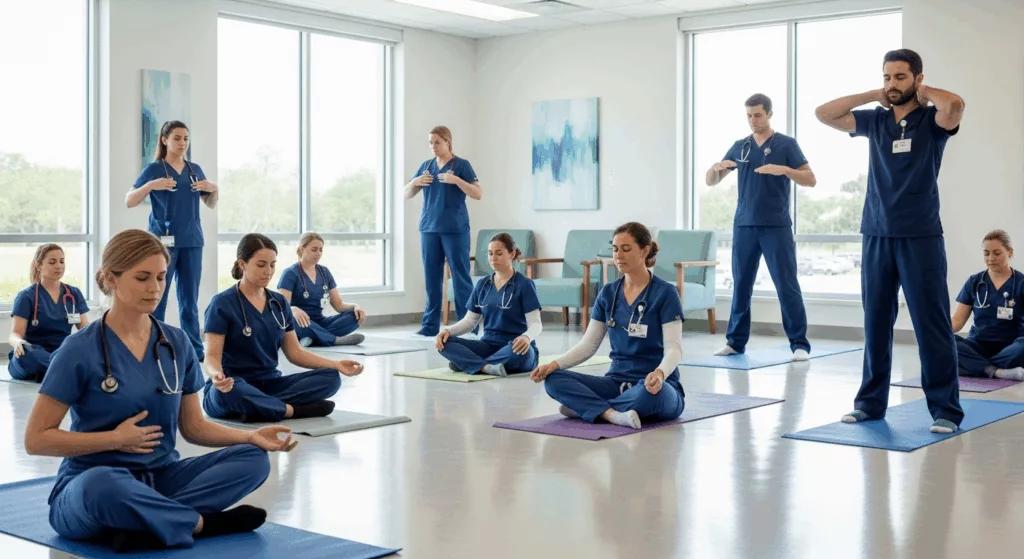
Trauma-Informed Yoga: Unlike regular yoga, trauma-informed practice emphasizes choice and body autonomy. Focus on poses that open the chest and release hip tension—areas where healthcare workers store chronic stress.
Expressive Writing: Spend 15 minutes writing about difficult patient encounters without editing. Research shows this helps process secondary trauma and prevents it from becoming stuck in your nervous system.
Cold Exposure Therapy: End showers with 30-90 seconds of cold water. This activates your vagus nerve and builds resilience to stress. Start gradually and increase duration as tolerated.
Managing Compassion Fatigue: Specialized Techniques for Empathic Nurses
Compassion fatigue is an occupational hazard of nursing that requires targeted intervention. Unlike general burnout, compassion fatigue specifically affects your ability to empathize and connect with patients—core skills that drew you to nursing.
The Window of Tolerance Concept
Your window of tolerance is your optimal zone of arousal where you can think clearly and respond appropriately. Chronic stress narrows this window, making you either hypervigilant or emotionally numb. Recognizing when you’re outside your window is the first step in self-regulation.
Signs you’re above your window (hyperaroused):
- Feeling overwhelmed by routine tasks
- Irritability with patients or colleagues
- Racing thoughts or difficulty concentrating
- Physical tension or restlessness
Signs you’re below your window (hypoaroused):
- Feeling disconnected from patients
- Numbness or emptiness
- Difficulty making decisions
- Fatigue that rest doesn’t resolve
Specialized Compassion Fatigue Interventions
The Professional Self-Compassion Practice: When you make a clinical error or have a difficult patient outcome, practice the same compassion you’d show a colleague. Place your hand on your heart and say, “This is a moment of suffering. Suffering is part of healthcare. May I be kind to myself in this moment.”
Boundary Visualization: Imagine a protective barrier around yourself before entering difficult patient situations. This isn’t about caring less—it’s about maintaining professional effectiveness while protecting your emotional well-being.
Meaning-Making Activities: Regularly reflect on why you became a nurse and the positive impact you’ve made. Keep a file of thank-you notes or positive feedback to review during difficult periods.
Building Resilience in Florida’s Demanding Healthcare Environment
Resilience isn’t about being tough enough to handle anything—it’s about developing flexible responses to challenges and recovering more quickly from setbacks. The CDC’s workplace health promotion guidelines for healthcare workers emphasize that resilience is a learnable skill set.
The Four Pillars of Nursing Resilience
Physical Foundation: Your body is your primary tool as a nurse. Prioritize sleep hygiene by creating a dark, cool environment and avoiding screens before bed. Even 20-30 minutes of movement daily can significantly impact your stress resilience.
Cognitive Flexibility: Practice reframing difficult situations. Instead of “This patient is impossible,” try “This patient is struggling, and their behavior reflects their pain.” This shift reduces your stress response and improves patient relationships.
Emotional Regulation: Develop a toolkit of emotion regulation strategies. The STOP technique (Stop, Take a breath, Observe what’s happening, Proceed with intention) can interrupt reactive responses during challenging situations.
Social Connection: Prioritize relationships with colleagues who understand your experience. Consider joining professional support groups or connecting with other nurses through the Florida Center for Nursing workforce initiatives.
Building Your Personal Resilience Plan
Create a written plan that includes:
- Early warning signs that you’re approaching burnout
- Specific interventions for different stress levels
- Support people you can contact when struggling
- Professional resources available to you
- Non-negotiable self-care practices
Review and update this plan regularly, treating it as seriously as any clinical protocol.
Florida-Specific Resources and Environmental Factors
Florida’s unique environment offers specific opportunities for self-care for nurses Florida that other states don’t provide. The year-round warm weather, coastal access, and natural environments can be powerful tools in your self-care arsenal.
Leveraging Florida’s Natural Environment
Beach Therapy: Research shows that negative ions from ocean waves can improve mood and reduce stress hormones. Even 15 minutes walking on the beach can reset your nervous system. If you can’t get to the ocean, listen to wave sounds during your commute.
Sunshine Vitamin D: Florida’s abundant sunshine is crucial for mental health, but healthcare workers often work indoors during peak daylight hours. Make time for brief sun exposure during breaks, even if it’s just stepping outside the hospital.
Nature Immersion: Florida’s state parks and natural areas provide opportunities for forest bathing—a Japanese practice proven to reduce cortisol and boost immune function. Locations like Everglades National Park or local nature preserves offer restorative environments.
Florida Healthcare System Resources
Many Florida hospital systems now offer employee assistance programs specifically designed for healthcare workers. These may include:
- Peer support programs
- Mental health services
- Stress management workshops
- Mindfulness and meditation classes
- Financial counseling services
The American Nurses Association workplace health and safety resources provide additional support and advocacy for nursing professionals.
When Self-Care Isn’t Enough: Recognizing the Need for Professional Support
Sometimes, despite your best self-care efforts, professional help is necessary. Recognizing this isn’t failure—it’s professional wisdom. Just as you wouldn’t expect a patient to heal from a serious injury without medical intervention, complex trauma and burnout often require specialized treatment.
Warning Signs That Professional Help Is Needed
Seek professional support if you experience:
- Persistent sleep problems lasting more than two weeks
- Using substances to cope with work stress
- Feeling emotionally numb or disconnected from patients
- Intrusive thoughts about patient outcomes or workplace incidents
- Relationship problems stemming from work stress
- Physical symptoms without medical explanation
- Thoughts of leaving nursing despite loving the profession
Understanding Complex Trauma in Healthcare
Many nurses develop what’s called “complex trauma” from repeated exposure to human suffering. This isn’t the same as PTSD from a single incident—it’s the cumulative effect of ongoing traumatic stress. Research shows that childhood trauma often drives healthcare career choices, making nurses particularly vulnerable to retraumatization in their professional roles.
Signs of complex trauma include:
- Difficulty regulating emotions
- Negative self-concept
- Problems with relationships
- Loss of meaning or spiritual connection
- Physical symptoms and illness
Specialized Treatment Options
When self-care isn’t sufficient, consider trauma therapy beyond traditional talk therapy. Evidence-based treatments specifically designed for healthcare workers include:
EMDR (Eye Movement Desensitization and Reprocessing): Particularly effective for processing difficult patient outcomes and workplace traumatic incidents. EMDR telehealth services make this treatment accessible throughout Florida.
Specialized Trauma Treatment: Look for therapists who understand healthcare culture and the unique stressors of nursing. Generic therapy may not address the specific challenges of medical decision-making, patient loss, and professional responsibility.
Burnout-Specific Interventions: Some therapists specialize in distinguishing between burnout, depression, and trauma to ensure you receive appropriate treatment.
Finding the Right Support
When seeking professional help, look for therapists who:
- Understand healthcare culture and nursing-specific stressors
- Have experience treating healthcare professionals
- Use evidence-based approaches for trauma and burnout
- Offer flexible scheduling for shift workers
- Accept your insurance or offer sliding scale fees
Remember that seeking help demonstrates the same professional judgment you use when consulting specialists for complex patient cases.
Creating Your Personalized Self-Care Action Plan
Effective self-care for nurses requires a systematic approach tailored to your specific needs, schedule, and stressors. Generic advice won’t work—you need a personalized plan that fits your reality.
Assessment: Know Your Current State
Before creating your plan, honestly assess where you are:
- Rate your current stress level (1-10)
- Identify your primary stressors (workload, difficult patients, workplace conflict, personal issues)
- Recognize your stress signals (physical, emotional, behavioral)
- Evaluate your current coping strategies
- Assess your support systems
Building Your Toolkit
Select 2-3 techniques from each category:
- Emergency interventions (for acute stress moments)
- Daily maintenance (regular practices to build resilience)
- Weekly restoration (deeper recovery activities)
- Professional development (skills to improve work satisfaction)
Start small and build gradually. It’s better to consistently practice one technique than to attempt five and abandon them all.
Implementation Strategy
Success requires realistic implementation:
- Link new habits to existing routines
- Set reminders on your phone or smartwatch
- Track your practice without judgment
- Adjust techniques based on what works
- Celebrate small wins and progress
Remember that self-care is a practice, not perfection. Some days you’ll manage more than others, and that’s normal.
Key Takeaways for Florida Nurses
Science-based self-care for nurses goes far beyond generic wellness advice. Your unique professional challenges require specialized interventions that address the neurobiological impact of healthcare work.
Essential points to remember:
- Traditional self-care fails because it doesn’t address trauma and chronic stress
- Effective interventions must target your nervous system and trauma processing
- Micro-recovery techniques can fit into your busy schedule
- Compassion fatigue requires specialized treatment approaches
- Florida’s environment offers unique self-care opportunities
- Professional help is sometimes necessary and demonstrates wisdom, not weakness
Your well-being directly impacts your ability to provide excellent patient care. Investing in evidence-based self-care isn’t selfish—it’s professional responsibility.
If you’re struggling with burnout, compassion fatigue, or the emotional weight of healthcare work, remember that specialized help is available. At Healing Speak Counseling, we understand the unique challenges facing Florida’s healthcare professionals. Our evidence-based approaches, including EMDR and specialized trauma treatment, are designed specifically for helpers who are struggling to help themselves.
What self-care strategy will you implement first? Your patients—and your well-being—depend on your willingness to care for yourself with the same dedication you show them.