
After spending years caring for others through a global pandemic, many healthcare workers find that traditional talk therapy isn’t addressing the complex trauma they’ve experienced—but specialized EMDR for healthcare workers protocols designed for medical professionals are showing remarkable results. While standard therapy approaches often fall short when treating the unique combination of moral injury, vicarious trauma, and chronic stress that medical professionals face, Eye Movement Desensitization and Reprocessing (EMDR) offers a targeted, evidence-based solution that addresses trauma at its neurological roots.
Why Healthcare Workers Need Specialized Trauma Treatment
Healthcare workers face a perfect storm of traumatic stressors that civilian populations rarely encounter. The combination of life-and-death decisions, patient suffering, workplace violence, and moral distress creates a unique psychological profile that requires specialized intervention.
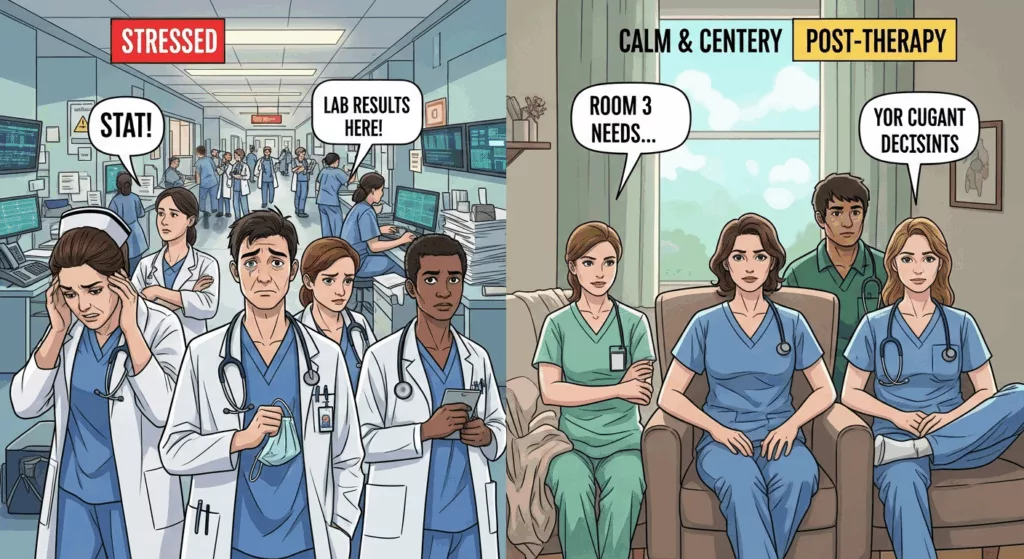
Traditional therapy often focuses on cognitive processing and talk-based interventions. However, trauma experienced by healthcare workers frequently bypasses rational thought processes and becomes stored in the body’s nervous system. When a nurse watches a patient die despite their best efforts, or when a physician must make impossible choices about resource allocation, these experiences create physiological imprints that talking alone cannot resolve.
The pandemic intensified these challenges exponentially. Healthcare workers reported unprecedented levels of burnout, moral injury, and trauma symptoms that traditional mental health approaches struggled to address effectively. Many found themselves experiencing:
- Intrusive images of patient deaths or medical emergencies
- Hypervigilance and difficulty relaxing even when off-duty
- Emotional numbing or disconnection from loved ones
- Physical symptoms like headaches, insomnia, and gastrointestinal issues
- Guilt about patient outcomes or workplace decisions
These symptoms often resist traditional talk therapy because they stem from trauma’s impact on the brain’s emotional processing centers. Healthcare worker trauma therapy needs to address both the cognitive and somatic aspects of traumatic stress to create lasting healing.
How EMDR Protocols Adapt for Medical Professional Trauma
EMDR therapy has been modified specifically to address the unique trauma patterns seen in healthcare workers. Standard EMDR protocols focus on processing discrete traumatic events, but medical professional EMDR often requires addressing cumulative trauma exposure and ongoing workplace stressors.
Resource Development and Stabilization
Before processing traumatic memories, EMDR therapists working with healthcare workers spend significant time developing internal resources. Medical professionals often struggle with self-care and boundary-setting, making the stabilization phase crucial. This might include:
- Developing body-based coping skills for high-stress shifts
- Creating mental “containers” for traumatic imagery between sessions
- Building resilience resources that can be accessed during medical emergencies
- Addressing perfectionism and self-blame patterns common in medical culture
Targeting Complex Trauma Networks
Unlike single-incident trauma, healthcare worker trauma often involves interconnected networks of difficult experiences. EMDR therapy for nurses might address not just a specific patient death, but the entire constellation of experiences surrounding healthcare delivery—workplace bullying, moral distress about systemic issues, and family stress from demanding schedules.
Specialized protocols help identify and process these trauma networks systematically. Therapists might use “cluster” approaches, processing related traumatic memories together, or focus on recurring themes like helplessness, responsibility, or witnessing suffering.
Addressing Moral Injury Specifically
Moral injury occurs when individuals are forced to act against their moral beliefs or witness events that violate their sense of right and wrong. In healthcare settings, this might involve being unable to provide adequate care due to resource constraints, witnessing preventable deaths, or feeling forced to prioritize some patients over others.
EMDR protocols for moral injury incorporate specific targeting strategies that address self-blame, guilt, and loss of meaning. The bilateral stimulation characteristic of EMDR helps process these complex moral emotions that often resist purely cognitive interventions.
Evidence-Based Outcomes: EMDR Success Rates for Healthcare Workers
Research on EMDR effectiveness for healthcare worker trauma demonstrates significant improvements across multiple outcome measures. Studies specifically examining EMDR with medical professionals show:
- 67-85% reduction in PTSD symptoms after 6-12 sessions
- Significant decreases in anxiety, depression, and burnout scores
- Improved sleep quality and reduction in physical symptoms
- Enhanced job satisfaction and reduced turnover intentions
- Decreased substance use and maladaptive coping behaviors
One landmark study followed 120 emergency department nurses through a 12-week EMDR protocol. Results showed that 78% no longer met criteria for PTSD at completion, with gains maintained at six-month follow-up. Particularly noteworthy was the improvement in work-related functioning—participants reported feeling more emotionally available to patients and colleagues after treatment.
Neurobiological Changes
Brain imaging studies reveal how EMDR creates measurable changes in trauma processing. In healthcare workers, these changes are particularly important because job performance depends on calm decision-making under pressure. EMDR helps:
- Reduce amygdala hyperactivation during stress
- Improve prefrontal cortex regulation of emotional responses
- Normalize sleep patterns and stress hormone production
- Enhance memory consolidation and reduce intrusive imagery
Addressing Unique Healthcare Trauma: Moral Injury and Vicarious Trauma
Healthcare workers face two specific types of trauma that civilian populations rarely encounter: moral injury and vicarious trauma. These require specialized treatment approaches within the EMDR framework.
Moral Injury Treatment Protocols
Moral injury involves deep wounds to one’s sense of right and wrong. For healthcare workers, this might stem from:
- Being forced to provide substandard care due to resource limitations
- Witnessing colleague incompetence or misconduct
- Making treatment decisions based on insurance coverage rather than medical need
- Feeling complicit in systemic healthcare inequities
EMDR protocols for moral injury incorporate meaning-making and values clarification alongside trauma processing. Therapists help clients separate personal responsibility from systemic failures, while maintaining professional integrity and purpose.
Vicarious Trauma Recovery
Vicarious trauma occurs when exposure to others’ suffering creates secondary traumatization. Healthcare workers absorb patient trauma through constant exposure to pain, fear, and death. This cumulative exposure can fundamentally alter worldview and emotional regulation.
EMDR for healthcare workers addressing vicarious trauma focuses on:
- Processing accumulated “witness trauma” from patient care
- Restoring emotional boundaries between self and patients
- Rebuilding hope and meaning in medical work
- Developing sustainable compassion practices
EMDR vs. Traditional Therapy: Why Standard Approaches Fall Short
Traditional talk therapy, while valuable, often proves insufficient for healthcare worker trauma because it primarily engages cognitive processing systems. Trauma, however, is stored in subcortical brain regions that don’t respond well to purely verbal interventions.
Limitations of Standard Therapy for Medical Professionals
Healthcare workers frequently report frustration with traditional therapy approaches:
- Cognitive focus: Understanding trauma doesn’t eliminate its emotional and physical impact
- Time intensity: Busy medical schedules require efficient, targeted interventions
- Cultural mismatch: Many therapists don’t understand medical culture and its unique stressors
- Symptom management: Traditional therapy often focuses on coping rather than resolution
One emergency physician described her experience: “I knew exactly why I was having panic attacks—I could analyze every trigger and stressor. But knowing didn’t stop my body from going into fight-or-flight every time my pager went off.”
How EMDR Targets Trauma Differently
EMDR works by engaging the brain’s natural healing mechanisms through bilateral stimulation (typically eye movements). This process helps:
- Desensitize traumatic memories while preserving important information
- Integrate fragmented trauma memories into coherent narratives
- Reduce physiological reactivity to trauma triggers
- Install positive resources and coping strategies at a somatic level
The efficiency of EMDR is particularly important for healthcare workers. Complex trauma in healthcare workers often requires intensive treatment, but EMDR’s structured approach can create significant change in fewer sessions than traditional therapy.
Integration with Other Approaches
Effective healthcare burnout treatment often combines EMDR with complementary approaches:
- Somatic therapies to address body-based trauma symptoms
- Mindfulness training for present-moment awareness
- Cognitive restructuring for workplace stress management
- Group therapy for peer support and normalization
Some practitioners integrate Emotional Freedom Technique or other complementary approaches to enhance EMDR’s effectiveness. The key is matching interventions to individual needs while maintaining evidence-based practice standards.
Finding EMDR-Certified Therapists Who Understand Healthcare Culture
Not all EMDR therapists are equipped to work effectively with healthcare workers. Medical professionals need therapists who understand both trauma treatment and healthcare culture—including shift work, medical hierarchy, life-and-death responsibility, and professional identity issues.
Essential Qualifications to Look For
When seeking trauma therapy for physicians or other medical professionals, consider therapists with:
- EMDR certification through EMDR International Association
- Specific training in healthcare worker trauma
- Understanding of medical culture and professional demands
- Experience treating complex trauma and moral injury
- Flexibility with scheduling for healthcare worker shifts
Additionally, look for therapists who understand the unique challenges faced by nursing and medical professionals, including workplace violence, ethical dilemmas, and the emotional labor of caring for suffering patients.
Questions to Ask Potential Therapists
Before beginning treatment, healthcare workers should ask potential EMDR therapists:
- What percentage of your practice involves healthcare workers?
- How do you adapt EMDR protocols for medical professionals?
- Do you understand moral injury and vicarious trauma?
- Can you accommodate my shift schedule and on-call requirements?
- What’s your approach to treating cumulative trauma exposure?
Treatment Considerations for Healthcare Workers
Effective EMDR treatment for medical professionals requires several special considerations:
- Confidentiality concerns: Healthcare workers may worry about professional repercussions
- Schedule flexibility: Irregular shifts and on-call duties require adaptable scheduling
- Crisis protocols: Clear plans for managing acute symptoms during demanding work periods
- Professional identity: Maintaining sense of competence while addressing trauma symptoms
Some healthcare workers benefit from specialized programs that combine individual EMDR with group support. Evidence-based approaches to healthcare worker dissociation often integrate multiple therapeutic modalities for comprehensive care.
What to Expect from EMDR Treatment
Healthcare workers beginning EMDR often wonder what the treatment process looks like. Understanding the phases can help normalize the experience and set appropriate expectations.
Initial Assessment and Preparation
The first phase involves comprehensive assessment of trauma history, current symptoms, and work-related stressors. Therapists will identify specific traumatic memories or ongoing triggers affecting job performance and personal well-being.
Preparation includes developing coping resources and stabilization techniques. This is particularly important for healthcare workers who may need to function in high-stress environments between sessions.
Processing and Integration
Active EMDR processing involves focusing on traumatic memories while engaging in bilateral stimulation. Healthcare workers often process medical emergencies, patient deaths, workplace conflicts, or moral injury situations.
The goal isn’t to forget these experiences but to reduce their emotional intensity and integrate them into a coherent life narrative. A successfully processed trauma memory becomes “just another memory” rather than a source of ongoing distress.
Return to Professional Functioning
Many healthcare workers report improved job performance after EMDR treatment. They describe feeling more present with patients, less anxious during emergencies, and better able to maintain emotional boundaries while providing compassionate care.
The treatment often restores sense of professional purpose and meaning, helping healthcare workers reconnect with their calling to heal and serve others.
Key Takeaways for Healthcare Workers
EMDR offers healthcare workers a targeted, efficient approach to trauma recovery that addresses both symptoms and underlying neurobiological impacts. Unlike traditional therapy, EMDR works directly with trauma’s effects on the nervous system, creating lasting change in fewer sessions.
The specialized protocols developed for medical professionals address unique challenges like moral injury, vicarious trauma, and cumulative stress exposure. Research demonstrates significant improvements in PTSD symptoms, job satisfaction, and overall functioning.
Finding an EMDR therapist who understands healthcare culture is crucial for treatment success. The combination of trauma expertise and medical culture knowledge creates optimal conditions for healing.
Taking the Next Step Toward Healing
If you’re a healthcare worker struggling with trauma symptoms that haven’t responded to traditional therapy, EMDR may offer the targeted intervention you need. The evidence is clear: specialized trauma treatment can restore both personal well-being and professional effectiveness.
At Healing Speak, we understand the unique challenges facing medical professionals. Our specialized approaches to healthcare worker trauma combine EMDR with other evidence-based techniques tailored to your specific needs and schedule.
You’ve dedicated your career to healing others—isn’t it time to prioritize your own healing? Evidence-based coping strategies and trauma-focused therapy can help you reclaim both your personal peace and professional passion.
Contact us today to learn more about how EMDR for healthcare workers can help you move from surviving to thriving in both your personal life and medical career. You deserve the same quality of care you provide to your patients.