

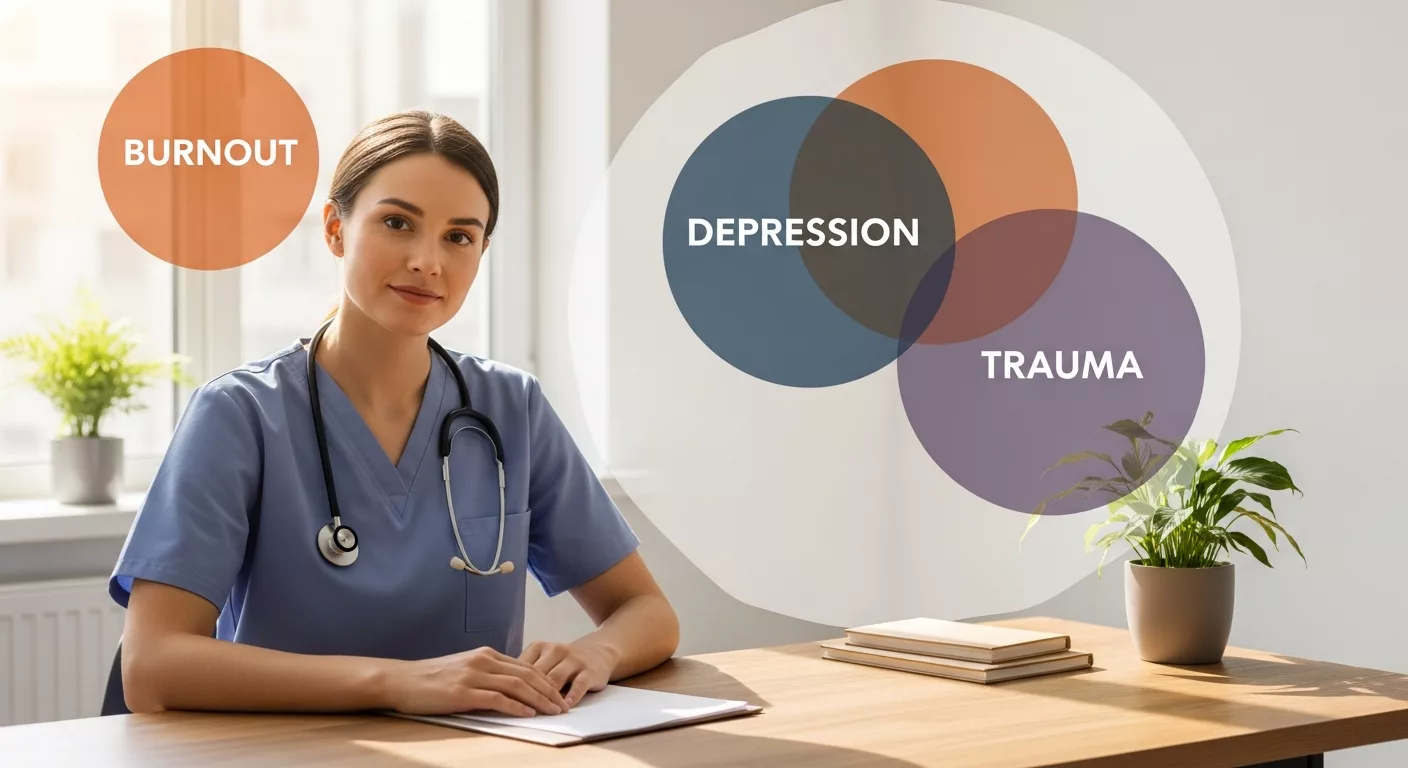
As a healthcare worker, you’ve been feeling emotionally drained, disconnected, and overwhelmed for months. Your primary care doctor suggested antidepressants, but something feels incomplete about that diagnosis. Could this be burnout from your demanding caregiving role, clinical depression, or perhaps unresolved trauma surfacing under chronic stress? Understanding the distinction between burnout vs depression vs trauma isn’t just academic—it’s crucial for getting the right treatment that actually works.
The symptoms can look remarkably similar on the surface: exhaustion, mood changes, difficulty concentrating, and a sense of disconnection from work or relationships. But these three conditions have different root causes, different progression patterns, and most importantly, they respond to different treatment approaches. Getting the wrong diagnosis can mean months or years of ineffective treatment while you continue to suffer.

The Critical Importance of Accurate Mental Health Diagnosis
Mental health diagnosis isn’t about labeling—it’s about finding the right roadmap to recovery. When healthcare providers rush to conclusions or rely solely on surface symptoms, they miss the underlying mechanisms driving your distress. This is particularly problematic for helping professionals who often experience a complex interplay of work-related stress, personal trauma history, and underlying mood disorders.
The APA guidelines for diagnosing depression emphasize the importance of differential diagnosis—carefully distinguishing between conditions that share similar symptoms but require different treatment approaches. This process becomes even more critical when dealing with empaths and caregivers who may minimize their own symptoms or attribute everything to work stress.
Consider Sarah, a nurse practitioner who came to therapy convinced she had depression. She’d been taking antidepressants for six months with minimal improvement. Through careful assessment, we discovered her symptoms weren’t present across all areas of life—they were specifically tied to work environments that reminded her of childhood medical trauma. This wasn’t depression requiring medication management; it was unresolved trauma requiring specialized trauma therapy approaches.
Understanding Burnout: When Compassion Becomes Exhaustion
Burnout is now officially recognized by the World Health Organization burnout classification as an occupational phenomenon resulting from chronic workplace stress that hasn’t been successfully managed. For helping professionals, burnout often develops gradually through three distinct stages:
The Three Dimensions of Burnout
Emotional Exhaustion: This goes beyond normal tiredness. You feel emotionally drained by contact with other people, particularly those you’re supposed to help. The thought of facing another patient, client, or student feels overwhelming. You may notice yourself becoming more irritable with people you care about, both at work and at home.
Depersonalization: You start developing cynical attitudes toward the people you serve. Patients become “cases,” students become “problems,” and you find yourself emotionally distancing from their suffering. This protective mechanism helps you get through the day but leaves you feeling disconnected from your purpose.
Reduced Personal Accomplishment: You begin questioning your competence and the value of your work. Despite objective evidence of your skills, you feel ineffective and doubt your ability to make a difference. This dimension often hits helping professionals particularly hard because it attacks their core professional identity.
Burnout vs Other Conditions
What makes burnout distinct is its relationship to work context. Unlike depression, which affects multiple life domains, burnout symptoms are primarily work-related. You might feel energized and engaged in personal activities while feeling completely depleted at work. This contextual specificity is a key diagnostic indicator.
Burnout also tends to develop gradually over months or years of chronic stress, unlike trauma responses which can be triggered by specific incidents. However, burnout can make you more vulnerable to developing depression or can unmask underlying trauma responses that were previously manageable.
Recognizing Depression: Beyond Temporary Sadness
Clinical depression affects approximately 8.5% of adults in the United States annually, according to National Institute of Mental Health depression resources. For helping professionals, depression can be particularly challenging to recognize because many symptoms overlap with normal responses to stressful work environments.
Key Depression Symptoms That Persist Across Contexts
Unlike burnout, depression affects multiple areas of life simultaneously. You might notice persistent low mood, loss of interest in activities you previously enjoyed (including hobbies unrelated to work), changes in appetite or sleep patterns, and feelings of worthlessness that extend beyond your professional role.
Cognitive Symptoms: Depression often involves persistent negative thinking patterns about yourself, your future, and the world around you. You might experience difficulty concentrating, making decisions, or remembering details. These cognitive changes affect both work and personal situations.
Physical Symptoms: Depression frequently manifests through physical complaints: chronic fatigue that doesn’t improve with rest, headaches, digestive issues, or unexplained aches and pains. These symptoms persist regardless of your work schedule or stress levels.
Social and Behavioral Changes: You may withdraw from friends and family, avoid social activities, or neglect personal care. Unlike burnout-related social withdrawal (which is often limited to work relationships), depression-related isolation affects personal relationships as well.
Depression in Helping Professionals
Healthcare workers, teachers, and other caregivers face elevated depression risks due to several factors: exposure to human suffering, high-stakes decision-making, irregular schedules, and workplace cultures that discourage seeking help. The stigma around mental health in healthcare settings often prevents early intervention, allowing depression to worsen over time.
Many helping professionals also struggle with what researchers call “empathic distress”—absorbing the emotional pain of those they serve. While this empathy is essential for effective caregiving, it can become overwhelming without proper support and self-care strategies.
Trauma’s Hidden Impact: How Past Experiences Shape Present Symptoms
Trauma responses can be the most challenging to identify because they don’t always look like the dramatic PTSD presentations often portrayed in media. For many helping professionals, trauma symptoms emerge gradually or are triggered by specific workplace situations that remind them of past experiences.
Complex Trauma in Caregiving Professionals
Understanding Complex PTSD: Symptoms, Causes, And Recovery becomes particularly relevant for helping professionals who may have experienced childhood trauma, medical trauma, or repeated exposure to traumatic situations in their work environment.
Complex trauma often manifests through:
- Hypervigilance in medical settings: Extreme alertness or anxiety in hospitals, clinics, or other healthcare environments
- Emotional dysregulation: Intense emotional reactions that seem disproportionate to current situations
- Intrusive memories or flashbacks: Vivid recollections of past traumatic experiences triggered by current work situations
- Avoidance behaviors: Unconsciously avoiding certain patients, procedures, or work situations that trigger trauma responses
- Dissociation: Feeling disconnected from your body or emotions, especially during stressful work situations
Workplace Trauma and Retraumatization
Healthcare and helping environments can inadvertently recreate traumatic dynamics, particularly for professionals with histories of medical trauma, abuse, or neglect. The power dynamics, life-and-death situations, and exposure to human suffering can trigger unresolved trauma responses that may have been dormant for years.
This is especially relevant for professionals dealing with narcissistic abuse in healthcare settings, where workplace trauma compounds personal trauma history, creating complex symptom presentations that require specialized treatment approaches.
Key Differences and Overlapping Symptoms: A Clinical Perspective
Understanding the nuanced differences between burnout, depression, and trauma requires looking beyond surface symptoms to underlying patterns, triggers, and contextual factors. Here’s a comprehensive comparison from a clinical perspective:
Symptom Onset and Progression
Burnout typically develops gradually over months or years, with symptoms worsening during high-stress periods and improving during time off work. The progression follows a predictable pattern: initial enthusiasm, stagnation, frustration, and finally apathy.
Depression can emerge gradually or suddenly, but symptoms persist regardless of external circumstances. Even positive life events don’t provide lasting relief from depressive symptoms, and the condition often follows episodic patterns with periods of remission and recurrence.
Trauma responses can be immediate following a traumatic event or delayed, sometimes emerging years later. Symptoms often fluctuate based on exposure to triggers and may seem to appear “out of nowhere” when activated by specific reminders.
Response to Rest and Time Off
This is one of the most reliable differential indicators. Burnout symptoms typically improve significantly during vacations or extended time away from work. You might feel like “yourself again” during personal time, only to experience symptom return when work resumes.
Depression symptoms persist regardless of work schedule or time off. Vacations may provide temporary distraction, but core symptoms like low mood, sleep disturbance, and loss of interest continue.
Trauma symptoms may actually worsen during downtime when you have more mental space to process experiences. Alternatively, they may improve when you’re away from triggers but return intensely when re-exposed to triggering situations.
Relationship Impact Patterns
Burnout primarily affects work relationships initially, though chronic burnout can eventually impact personal relationships through emotional exhaustion spillover.
Depression affects all relationship types simultaneously. You may withdraw from friends, family, and colleagues equally, experiencing reduced capacity for emotional connection across all domains.
Trauma responses often create specific relationship difficulties related to trust, intimacy, and safety. You might function well in some relationships while struggling intensely in others that somehow mirror past traumatic dynamics.
Evidence-Based Treatment Approaches: EMDR, Brainspotting, and Beyond
Effective treatment depends entirely on accurate diagnosis. Each condition responds to different therapeutic approaches, and using the wrong intervention can actually worsen symptoms or delay recovery.
Burnout Treatment Strategies
Burnout treatment focuses on addressing systemic workplace factors while building individual resilience. Evidence-Based Self-Care for Florida Nurses That Actually Works provides specific strategies that go beyond superficial wellness advice.
Effective burnout interventions include:
- Workload management: Developing realistic boundaries and saying no to non-essential demands
- Values clarification: Reconnecting with your original motivation for entering the helping profession
- Stress inoculation training: Building resilience for handling future stressful situations
- Organizational consultation: Sometimes addressing burnout requires changing workplace systems, not just individual coping
Depression Treatment Approaches
Depression treatment often requires a combination of psychotherapy and sometimes medication management. Cognitive Behavioral Therapy (CBT) and Dialectical Behavior Therapy (DBT) have strong evidence bases for treating depression, particularly when combined with lifestyle modifications.
For helping professionals, depression treatment must account for occupational factors while addressing underlying biological and psychological contributors. This might include:
- Cognitive restructuring: Identifying and changing negative thinking patterns that maintain depression
- Behavioral activation: Gradually re-engaging in meaningful activities and relationships
- Interpersonal therapy: Addressing relationship difficulties that contribute to or result from depression
- Medication consultation: When appropriate, working with psychiatrists who understand the unique pressures of helping professions
Trauma Treatment Modalities
Trauma treatment requires specialized approaches that address how traumatic experiences are stored and processed in the brain and body. Traditional talk therapy alone is often insufficient for trauma recovery.
EMDR (Eye Movement Desensitization and Reprocessing) is considered the gold standard for trauma treatment. Research on EMDR effectiveness for trauma treatment demonstrates its ability to help the brain reprocess traumatic memories, reducing their emotional impact and allowing for natural healing.
For helping professionals seeking EMDR therapy Florida offers numerous qualified practitioners, but finding someone who understands the unique trauma experiences of healthcare workers and caregivers is crucial for effective treatment.
Brainspotting is another powerful trauma treatment that accesses trauma stored in subcortical brain regions. This approach can be particularly effective for complex trauma that doesn’t respond well to traditional therapy approaches.
Somatic approaches address how trauma is held in the body, helping to restore nervous system regulation and reduce physical trauma symptoms like hypervigilance, dissociation, and chronic tension.
Integrated Treatment for Complex Presentations
Many helping professionals present with combinations of burnout, depression, and trauma symptoms. This requires sophisticated treatment planning that addresses multiple conditions simultaneously while avoiding symptom exacerbation.
Integrated treatment might involve:
- Stabilization phase: Building coping skills and emotional regulation before processing trauma
- Trauma processing: Using EMDR, Brainspotting, or other specialized techniques to address underlying trauma
- Integration phase: Developing sustainable self-care practices and workplace strategies
- Maintenance: Ongoing support to prevent relapse and maintain gains
Getting the Right Help: A Path Forward
If you’re struggling to understand whether your symptoms represent burnout, depression, trauma, or some combination, the most important step is seeking assessment from a qualified mental health professional who understands the unique challenges facing helping professionals.
Look for providers who offer:
- Specialized training in trauma treatment, not just general therapy experience
- Understanding of healthcare culture and the specific stressors facing helping professionals
- Evidence-based approaches like EMDR, Brainspotting, or other trauma-focused modalities
- Comprehensive assessment that considers work context, trauma history, and current symptoms
The SAMHSA mental health workforce resources provide additional guidance for helping professionals seeking mental health support.
Remember that seeking help isn’t a sign of weakness—it’s a professional responsibility. Just as you wouldn’t ignore physical symptoms that affected your ability to provide care, mental health symptoms deserve the same attention and treatment.
Key Takeaways for Helping Professionals
Understanding the differences between burnout vs depression vs trauma isn’t just academic—it’s essential for getting effective treatment. Burnout is primarily work-related and improves with time away from stressful environments. Depression affects all life areas and persists regardless of circumstances. Trauma responses are often triggered by specific reminders and require specialized treatment approaches.
The most important thing to remember is that accurate diagnosis leads to effective treatment. If you’ve been struggling with symptoms that haven’t improved with standard approaches, consider whether you might need specialized assessment and treatment for trauma or complex presentations.
You dedicated your career to helping others heal. You deserve the same level of specialized, compassionate care for your own recovery. Whether you’re dealing with burnout, depression, trauma, or a combination of these conditions, effective treatment is available—and you don’t have to figure it out alone.
Are you ready to get the accurate diagnosis and specialized treatment you deserve? Take the first step toward understanding what you’re really dealing with so you can finally get the help that actually works.


