
You’ve finally found a trauma specialist who offers EMDR or Brainspotting—evidence-based treatments that could be the breakthrough you need—but now you’re wondering if your insurance will cover these specialized approaches. As a healthcare professional or caregiver, you understand the importance of proper treatment, yet navigating insurance for trauma therapy can feel overwhelming when you’re already managing so much. The good news is that does insurance cover EMDR therapy has a largely positive answer, especially in Florida where mental health parity laws provide strong protections for specialized trauma treatments.
Most major insurance plans in Florida do cover EMDR therapy when provided by licensed mental health professionals, as it’s recognized as an evidence-based treatment for PTSD and trauma. However, the coverage landscape involves specific requirements, documentation needs, and strategic approaches that can significantly impact your out-of-pocket costs and access to care.
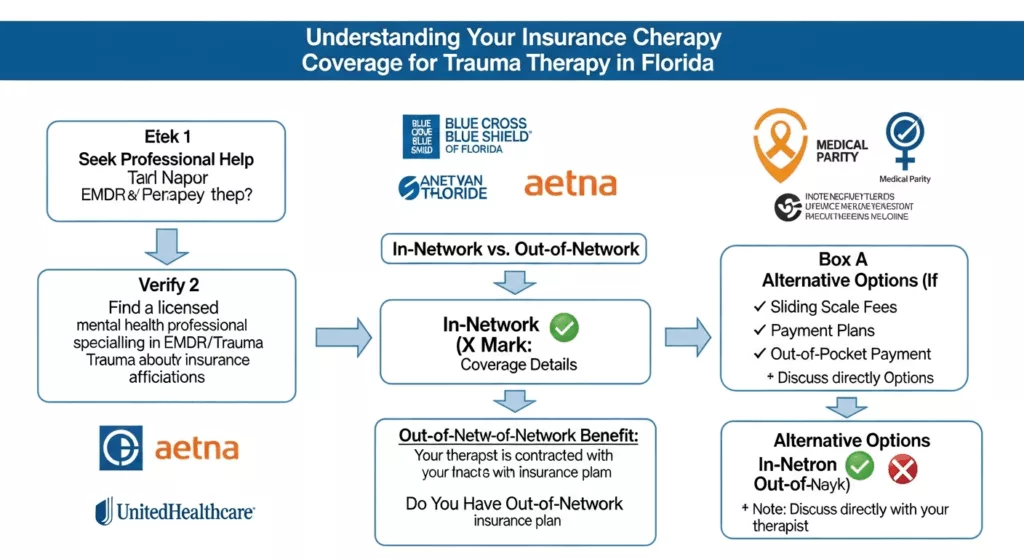
Understanding Insurance Coverage for Specialized Trauma Therapies
Mental health parity laws fundamentally changed how insurance companies must cover psychological treatments. Under the Mental Health Parity and Addiction Equity Act, insurance plans cannot impose more restrictive limitations on mental health benefits than they do on medical or surgical benefits.
For trauma therapy specifically, this means your insurance plan must cover evidence-based treatments like EMDR and Brainspotting at the same level they would cover other medical procedures. The key factor isn’t the specific technique being used—it’s whether the treatment is being provided by a qualified, licensed professional for a covered diagnosis.
What Makes a Treatment “Covered”:
- The therapy is provided by an in-network licensed mental health professional
- You have a qualifying diagnosis (PTSD, anxiety disorder, depression, etc.)
- The treatment is considered medically necessary
- Your plan includes mental health benefits (most do under ACA requirements)
EMDR therapy has particularly strong insurance support because it’s recognized by major organizations including the American Psychological Association, Department of Veterans Affairs, and World Health Organization as a first-line treatment for PTSD. This extensive research backing makes it easier for providers to justify medical necessity to insurance companies.
How Mental Health Parity Affects Your Coverage
Mental health parity means your insurance company cannot:
- Require higher copayments for therapy than for medical visits
- Impose stricter session limits on mental health treatment
- Use more restrictive prior authorization requirements
- Apply different deductible structures to mental health services
This protection extends to specialized trauma treatments. If your plan covers individual therapy sessions, it must cover those sessions whether they involve traditional talk therapy, EMDR, or other evidence-based approaches.
EMDR and Brainspotting: What Florida Insurance Plans Typically Cover
Florida’s insurance landscape is particularly favorable for trauma therapy coverage. Major insurers operating in the state—including Aetna, Blue Cross Blue Shield, Cigna, Florida Blue, and UnitedHealthcare—generally provide robust mental health coverage that includes specialized trauma treatments.
EMDR Coverage in Florida:
Most Florida insurance plans cover EMDR therapy without requiring separate approval for the technique itself. Since EMDR is delivered within standard individual therapy sessions, it’s typically billed using the same codes as traditional therapy. Your provider will use diagnostic codes that reflect your specific conditions—such as PTSD, anxiety disorder, or depression—rather than billing for “EMDR” as a separate service.
Brainspotting Coverage Considerations:
Brainspotting coverage can be slightly more complex because it’s a newer technique with less widespread recognition among insurance reviewers. However, when provided by licensed professionals for covered diagnoses, it’s typically covered under the same therapy benefit structure as other individual therapy services.
The EMDR International Association insurance coverage guide provides detailed information about how different insurers approach coverage for trauma-focused treatments, which can be invaluable when advocating for your benefits.
Common Coverage Scenarios in Florida
HMO Plans: Typically require referrals from your primary care provider and restrict you to in-network providers. However, once approved, they often have lower copayments and may not require you to meet a deductible for mental health services.
PPO Plans: Offer more flexibility in choosing providers and don’t require referrals. You can see out-of-network providers, though at higher cost. These plans often have higher deductibles but provide more autonomy in treatment decisions.
High-Deductible Health Plans (HDHPs): May require you to pay the full cost until you meet your deductible, but HSA funds can be used for qualified mental health expenses, including trauma therapy.
Navigating Pre-Authorization and Documentation Requirements
While many insurance plans don’t require pre-authorization for initial mental health treatment, some may require it for ongoing specialized trauma therapy, particularly if you’re seeking intensive treatment or have been in therapy for an extended period.
When Pre-Authorization Might Be Required:
- Treatment extending beyond a certain number of sessions (often 12-20 sessions)
- Intensive outpatient programs or specialized trauma programs
- Treatment for certain diagnoses that insurers flag for review
- Out-of-network providers in some circumstances
Essential Documentation for Coverage
Your therapist plays a crucial role in ensuring proper documentation for insurance coverage. Quality documentation should include:
Initial Assessment Documentation:
- Clear diagnostic formulation with appropriate DSM-5 codes
- Trauma history and current symptom presentation
- Functional impairment caused by symptoms
- Treatment goals and projected timeline
- Medical necessity justification for specialized trauma treatment
Ongoing Treatment Notes:
- Session-by-session progress documentation
- Specific interventions used (EMDR, cognitive processing, etc.)
- Patient response to treatment
- Adjustments to treatment plan based on progress
- Continued medical necessity justification
As someone who understands the healthcare system, you may recognize that thorough documentation serves multiple purposes—it not only supports insurance coverage but also ensures continuity of care and tracks treatment effectiveness.
Working with Your Provider to Maximize Insurance Benefits
The relationship between you and your trauma therapist extends beyond the therapeutic work itself—it includes collaborative insurance navigation. Experienced trauma specialists understand the insurance landscape and can help position your treatment for optimal coverage.
Questions to Ask Your Therapist:
- Are you in-network with my specific insurance plan?
- What diagnostic codes will you use, and why?
- How do you document medical necessity for EMDR or specialized trauma treatment?
- What’s your typical treatment timeline for cases similar to mine?
- How do you handle insurance reviews or requests for additional information?
Your therapist should be transparent about their billing practices and willing to work with your insurance company when questions arise. At practices like Healing Speak, providers understand that healthcare workers and caregivers need efficient, solution-focused treatment that maximizes insurance benefits.
Optimizing Your Insurance Benefits
Timing Considerations:
If you’re considering starting trauma therapy, timing can impact your out-of-pocket costs. Early in the year, you may not have met your deductible, meaning higher initial costs. Later in the year, if you’ve met your deductible through other medical expenses, your therapy sessions may have lower copayments.
Using Flexible Spending Accounts:
FSAs and HSAs can cover mental health treatment costs, including copayments, deductibles, and coinsurance for trauma therapy. This can effectively reduce your costs by 20-30% depending on your tax bracket.
Understanding Your Mental Health Benefits:
Review your plan’s Summary of Benefits and Coverage specifically for mental health provisions. Look for:
- Mental health copayment amounts
- Whether mental health services count toward your medical deductible
- Annual session limits (if any)
- Crisis intervention coverage
- Coverage for different types of providers (LCSW, psychologist, psychiatrist)
Out-of-Network Options and Financial Planning Strategies
Sometimes the most qualified trauma specialist for your specific needs may be out-of-network with your insurance plan. This doesn’t automatically mean the treatment is unaffordable, but it does require strategic financial planning.
Out-of-Network Benefits:
Many PPO plans include out-of-network mental health benefits, typically covering 50-70% of “reasonable and customary” charges after you meet a higher deductible. The key is understanding what your plan considers reasonable and customary for your geographic area.
Some insurance plans offer “gap exception” provisions, where they’ll cover an out-of-network provider at in-network rates if there are no in-network providers with appropriate specialization within a reasonable distance. For specialized trauma treatment, this exception may apply if you can demonstrate that available in-network providers don’t have adequate training in EMDR, Brainspotting, or treatment of complex trauma.
Financial Planning for Trauma Treatment
Cost Estimation Strategies:
- Request a superbill template from potential providers to estimate insurance reimbursement
- Contact your insurance company with specific provider information for benefits verification
- Understand your plan’s calendar year vs. plan year structure for deductible resets
- Factor in potential treatment duration (EMDR typically ranges from 6-20 sessions)
Payment Planning Options:
- Payment plans offered by the practice
- Healthcare credit cards with promotional financing
- Using HSA/FSA funds strategically throughout the year
- Coordinating treatment timing with other planned medical expenses
Many specialized trauma therapy practices, understanding the financial challenges their clients face, offer sliding scale fees or payment plans for qualified individuals. This is particularly common among providers who work with healthcare professionals and caregivers, recognizing the financial pressures these professionals often experience.
Telehealth Coverage for Trauma-Informed Care in Florida
The expansion of telehealth coverage has revolutionized access to specialized trauma treatment in Florida. For busy healthcare professionals and caregivers, telehealth offers the convenience of receiving evidence-based trauma therapy without the time constraints of traditional in-office appointments.
Florida Telehealth Coverage Standards:
Florida insurance regulations require that telehealth services be covered at the same level as in-person services when provided by qualified, licensed professionals. This means your copayment, deductible, and coinsurance for telehealth EMDR sessions should be identical to in-person sessions.
The CMS guidelines on mental health coverage provide federal standards that support telehealth mental health services, ensuring that specialized trauma treatments like EMDR and Brainspotting remain accessible through remote delivery.
Advantages of Telehealth for Trauma Treatment
Accessibility Benefits:
- Access to specialized trauma therapists anywhere in Florida
- Reduced travel time and transportation costs
- Flexible scheduling including evening and weekend appointments
- Treatment from the comfort and privacy of your own space
Clinical Effectiveness:
Research demonstrates that telehealth delivery of trauma treatments like EMDR maintains clinical effectiveness comparable to in-person treatment. For many clients, the increased comfort and reduced logistical barriers of telehealth actually improve treatment engagement and outcomes.
This is particularly relevant for healthcare professionals who may struggle to find time in their demanding schedules for traditional therapy appointments. Understanding how childhood trauma influences career choices can provide additional insight into why healthcare workers often need specialized trauma treatment approaches.
Insurance Considerations for Telehealth
Technology Requirements:
Insurance companies may require that telehealth sessions use HIPAA-compliant platforms and meet certain technical standards. Reputable therapy practices invest in secure, professional telehealth technology that meets these requirements.
Licensing and Coverage:
Your therapist must be licensed in Florida to provide telehealth services to Florida residents. This ensures that insurance coverage applies and that you receive appropriate clinical oversight and consumer protections.
Specialized Trauma Treatment Insurance: Advanced Considerations
For healthcare professionals dealing with complex trauma presentations—such as those described in our discussion of Brainspotting vs EMDR approaches—understanding the nuances of specialized trauma treatment insurance becomes crucial.
Complex Trauma Coverage:
Insurance companies are increasingly recognizing Complex PTSD and developmental trauma as distinct conditions requiring specialized treatment approaches. This recognition supports coverage for longer treatment durations and intensive trauma-focused interventions.
Dissociative Disorder Coverage:
Coverage for dissociative disorders, which often co-occur with complex trauma, may require more detailed documentation and justification. However, when properly documented by experienced providers, these conditions typically receive appropriate coverage under mental health benefits.
Working with Insurance for Ongoing Authorization
Some trauma treatments require ongoing authorization reviews, particularly for extended treatment courses. Understanding this process helps you advocate effectively for continued coverage:
Preparation for Reviews:
- Document specific symptoms and functional impairments
- Track measurable progress indicators
- Maintain clear treatment goals and timelines
- Understand your plan’s appeal process if coverage is denied
The Kaiser Family Foundation mental health coverage analysis provides comprehensive data about how different types of employer-sponsored plans handle mental health benefits, which can inform your coverage expectations.
Maximizing Your Insurance Benefits: Practical Action Steps
Before Starting Treatment:
- Contact your insurance company to verify mental health benefits and understand your specific coverage details
- Confirm that potential providers are in-network with your specific plan (not just the insurance company)
- Understand your deductible status and how mental health services apply
- Ask about any pre-authorization requirements for ongoing treatment
During Treatment:
- Keep detailed records of all treatment-related expenses
- Stay informed about your progress and treatment goals
- Communicate openly with your provider about insurance concerns
- Save all documentation related to your treatment authorization
If Issues Arise:
- Understand your plan’s appeal process
- Request detailed explanations of any coverage denials
- Work with your provider to submit additional documentation if needed
- Consider contacting your state insurance commissioner if you encounter violations of mental health parity laws
Red Flags in Insurance Coverage
Be aware of potential issues that might indicate problems with your coverage:
- Being told that EMDR or trauma therapy requires separate authorization when regular therapy doesn’t
- Higher copayments for mental health than for medical visits
- Arbitrary session limits that don’t apply to other medical treatments
- Denials based on the specific therapeutic technique rather than medical necessity
These situations may indicate violations of mental health parity requirements and warrant further investigation or advocacy.
Key Takeaways: Your Insurance Coverage for EMDR and Trauma Therapy
Bottom Line: Most major insurance plans in Florida do cover EMDR therapy and other evidence-based trauma treatments when provided by licensed professionals for covered diagnoses. The key is understanding your specific benefits and working with qualified providers who understand insurance navigation.
Essential Actions:
- Verify your mental health benefits before starting treatment
- Choose in-network providers when possible to minimize costs
- Work with your therapist to ensure proper documentation
- Understand your rights under mental health parity laws
- Consider telehealth options for increased flexibility and access
Remember: Mental health parity laws provide strong protections for your right to receive appropriate trauma treatment. Your insurance company cannot discriminate against mental health treatment or impose more restrictive limitations than they do on medical care.
As a healthcare professional or caregiver, you understand the importance of evidence-based treatment. When it comes to trauma therapy, that same principle applies to insurance coverage—focus on qualified providers who use proven techniques and understand how to navigate the insurance system effectively.
The investment in proper trauma treatment, whether through EMDR, Brainspotting, or other specialized approaches, can provide profound benefits not just for your personal healing, but also for your ability to continue caring for others effectively. Understanding your insurance coverage removes one barrier to accessing the specialized care you deserve.
If you’re ready to explore evidence-based trauma treatment options that work with your insurance coverage, consider reaching out to specialized providers who understand both the clinical and financial aspects of trauma care. Your healing journey is important, and proper insurance coverage can make specialized trauma treatment both accessible and affordable.