
As a healthcare professional or caregiver in Florida, you’ve likely heard about EMDR’s remarkable success rates for trauma treatment—but navigating insurance coverage EMDR therapy Florida can feel overwhelming when you’re already struggling with the effects of secondary trauma or burnout. The good news is that most major insurance providers in Florida do cover EMDR therapy when certain criteria are met, making this life-changing treatment accessible to those who need it most.
EMDR (Eye Movement Desensitization and Reprocessing) has become a gold-standard treatment for trauma, with extensive research backing its effectiveness. However, understanding how to navigate insurance coverage, find qualified providers, and maximize your benefits requires specific knowledge that many healthcare professionals and caregivers lack when they need it most.
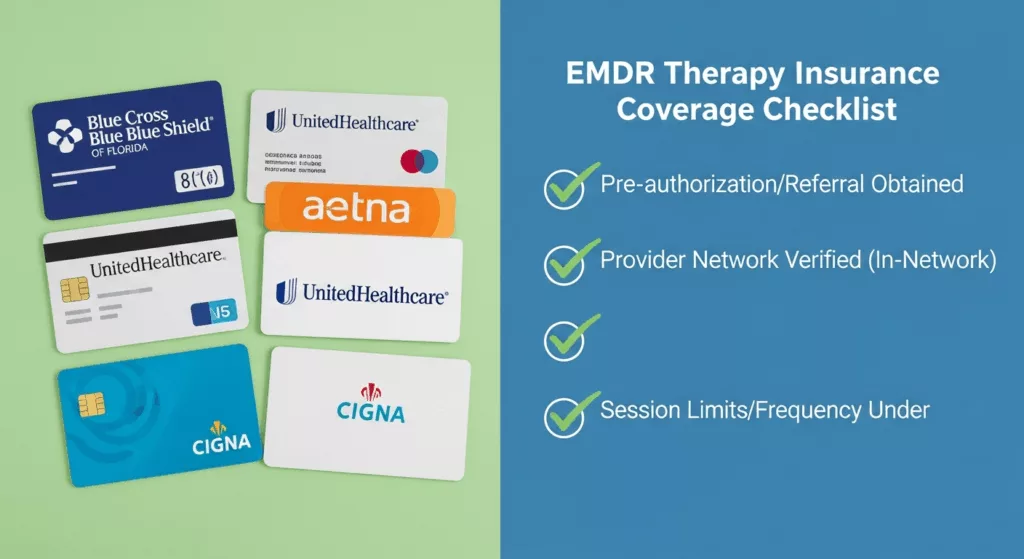
In this comprehensive guide, you’ll discover exactly which Florida insurance providers cover EMDR therapy, how to verify your benefits before your first session, what to do if you face coverage denials, and practical strategies to find qualified EMDR therapists who accept your insurance. Most importantly, you’ll learn how to maximize your mental health benefits to get the trauma treatment you deserve.
Understanding EMDR and Trauma Therapy Insurance Coverage in Florida
EMDR therapy insurance coverage in Florida operates under the same mental health parity laws that govern all mental health treatment. These federal laws require insurance companies to provide equal coverage for mental health services, including specialized trauma therapies like EMDR, as they do for medical and surgical procedures.
The key to understanding your coverage lies in recognizing that EMDR is not considered experimental or alternative therapy. The APA guidelines for EMDR therapy clearly establish it as an evidence-based treatment for PTSD and trauma-related conditions.
Most Florida insurance providers cover EMDR therapy when it’s provided by licensed mental health professionals for the treatment of:
- Post-Traumatic Stress Disorder (PTSD)
- Acute stress reactions
- Trauma-related anxiety disorders
- Complex trauma conditions
- Dissociative disorders related to trauma
However, coverage requirements vary significantly between providers. Some insurance companies require pre-authorization for EMDR therapy, while others may limit the number of covered sessions or require that you’ve tried other therapies first.
Understanding these nuances is crucial for empaths and helping professionals who often experience complex trauma that requires specialized treatment approaches beyond traditional talk therapy.
Florida-Specific Mental Health Coverage Laws
Florida has specific statutes that enhance mental health coverage beyond federal requirements. Florida mental health coverage requirements mandate that insurance providers offer comprehensive mental health benefits, including coverage for evidence-based trauma therapies.
These state laws are particularly beneficial for healthcare workers and caregivers who may have experienced work-related trauma or burnout. Florida’s enhanced coverage requirements mean that insurance companies cannot arbitrarily deny coverage for EMDR therapy when it’s medically necessary.
Major Insurance Providers That Cover EMDR Therapy in Florida
The landscape of EMDR therapy insurance Florida coverage includes most major providers, though each has specific requirements and processes. Here’s a comprehensive breakdown of the primary insurance companies operating in Florida and their approach to EMDR coverage:
Blue Cross Blue Shield of Florida (Florida Blue)
Florida Blue is one of the most comprehensive providers for mental health insurance benefits Florida residents can access. They typically cover EMDR therapy under their behavioral health benefits when provided by licensed professionals for approved diagnoses.
Coverage details for Florida Blue include:
- No pre-authorization required for initial sessions with in-network providers
- Coverage extends to LCSW, LMFT, and psychologist providers certified in EMDR
- Standard copayment applies, typically ranging from $15-$40 for in-network services
- Annual deductible may apply depending on your specific plan
Aetna
Aetna provides robust coverage for trauma therapy, recognizing EMDR as a first-line treatment for PTSD and trauma-related conditions. Their coverage includes both individual and intensive EMDR sessions when medically necessary.
Key Aetna coverage features:
- Pre-authorization may be required for extended treatment plans
- Coverage includes telehealth EMDR sessions with qualified providers
- Annual session limits typically range from 12-26 sessions, with extensions available
- Out-of-network benefits available with higher copayments
UnitedHealthcare
As one of Florida’s largest insurance providers, UnitedHealthcare offers comprehensive trauma therapy insurance coverage through their behavioral health network. They’ve been particularly progressive in covering evidence-based trauma treatments.
UnitedHealthcare EMDR coverage includes:
- Extensive network of EMDR-certified therapists throughout Florida
- Coverage for both standard and intensive EMDR protocols
- Pre-authorization typically not required for initial assessment and treatment planning
- Strong telehealth coverage, particularly valuable for rural Florida residents
Cigna
Cigna has developed specific protocols for covering specialized trauma therapies, recognizing that traditional talk therapy isn’t always sufficient for complex trauma cases.
Cigna’s approach to EMDR coverage:
- Streamlined prior authorization process for EMDR therapy
- Coverage includes group EMDR sessions when appropriate
- Extended coverage available for complex trauma cases
- Integration with Employee Assistance Programs for additional support
Medicare and Medicare Advantage Plans
Medicare coverage for EMDR therapy follows Medicare coverage for psychotherapy services guidelines. Original Medicare Part B covers EMDR therapy when provided by qualified mental health professionals.
Medicare Advantage plans often provide enhanced mental health benefits beyond traditional Medicare, including:
- Lower copayments for therapy sessions
- Extended annual session limits
- Coverage for telehealth EMDR sessions
- Additional mental health resources and support services
How to Verify Your EMDR Therapy Benefits Before Your First Session
Verifying your insurance coverage EMDR therapy Florida benefits requires a systematic approach to avoid unexpected costs and treatment delays. This process is especially important for healthcare professionals and caregivers who may have unique insurance considerations through their employers.
Essential Questions to Ask Your Insurance Provider
When contacting your insurance company, come prepared with specific questions to ensure you get accurate information:
- Coverage Verification: “Is EMDR therapy covered under my mental health benefits for PTSD and trauma-related conditions?”
- Provider Networks: “Can you provide a list of EMDR-certified therapists in my area who are in-network?”
- Authorization Requirements: “Do I need pre-authorization for EMDR therapy, and if so, what’s the process?”
- Session Limits: “How many EMDR sessions are covered annually, and can this be extended if medically necessary?”
- Cost Structure: “What are my copayment, coinsurance, and deductible responsibilities for EMDR therapy?”
- Telehealth Coverage: “Are EMDR sessions covered when provided via telehealth platforms?”
Documentation You’ll Need
To streamline the verification process and ensure accurate information, gather these documents before contacting your insurance provider:
- Your insurance card with member ID and group number
- Summary of Benefits and Coverage (SBC) document
- Any prior mental health treatment records
- Diagnosis information if you’ve already been evaluated
- Employee handbook if you have employer-sponsored insurance
Getting Pre-Authorization When Required
Some insurance plans require pre-authorization for EMDR therapy. This process typically involves:
- Initial evaluation by a licensed mental health professional
- Completion of treatment planning documentation
- Submission of clinical justification for EMDR therapy
- Review by the insurance company’s clinical team
- Approval notification with authorized session limits
Understanding this process helps prevent treatment delays and ensures you can begin EMDR therapy as quickly as possible when you’re ready to address your trauma.
What to Do When Insurance Denies EMDR Coverage
Insurance denials for EMDR therapy can feel devastating, especially when you’re already struggling with trauma symptoms. However, denials are often based on incomplete information or administrative errors rather than medical necessity. Understanding your appeal rights and options can help you access the treatment you need.
Common Reasons for EMDR Coverage Denials
Insurance companies may deny EMDR coverage for several reasons, many of which can be successfully appealed:
- Insufficient documentation: Missing clinical justification or treatment history
- Provider credentialing issues: Therapist not recognized as qualified to provide EMDR
- Administrative errors: Incorrect coding or processing mistakes
- Medical necessity questions: Insurer believes other treatments should be tried first
- Benefits exhaustion: Annual session limits already reached
The Appeals Process: Your Step-by-Step Guide
When facing a denial, you have specific rights under Florida law and federal mental health parity legislation:
- Request detailed denial explanation: Ask for written documentation of why coverage was denied
- Gather supporting documentation: Collect clinical records, treatment history, and provider credentials
- File formal appeal: Submit written appeal with supporting evidence within required timeframes
- Request expedited review: If you’re in crisis or experiencing severe symptoms
- Utilize external review: Independent medical review if internal appeals are unsuccessful
Working with Your EMDR Therapist During Appeals
Your EMDR therapist can be a valuable advocate during the appeals process. Many experienced trauma therapists have dealt with insurance appeals and can provide:
- Clinical documentation supporting EMDR medical necessity
- Evidence of previous treatment attempts and outcomes
- Professional credentials and EMDR certification documentation
- Coordination with insurance company clinical reviewers
- Alternative payment arrangements during the appeals process
Finding Qualified EMDR Therapists Who Accept Insurance in Florida
Locating Florida trauma therapist insurance providers who are both qualified in EMDR and accept your insurance requires strategic searching. The combination of specialized training and insurance participation can be challenging to find, but several resources can streamline your search.
Verification of EMDR Therapist Qualifications
Not all therapists who offer EMDR have adequate training. When searching for qualified providers, look for:
- Certification from the EMDR International Association (EMDRIA)
- Licensed mental health professional (LCSW, LMFT, LPC, or licensed psychologist)
- Specialized training in trauma and PTSD treatment
- Experience with complex trauma and dissociative disorders
- Ongoing consultation and advanced EMDR training
Insurance Directory Limitations and Solutions
Insurance company provider directories are often outdated or incomplete. Here’s how to work around these limitations:
Start with insurance directories but don’t rely on them exclusively. Use them as a starting point to identify potential providers in your area.
Contact providers directly to verify current insurance participation and availability. Many qualified EMDR therapists may not appear in online directories but do accept your insurance.
Ask about insurance billing even if a provider isn’t listed in your network. Some therapists can provide documentation for out-of-network reimbursement.
Specialized EMDR Practices and Group Practices
Some practices specialize in trauma treatment and may have multiple EMDR-trained therapists who accept various insurance plans. These practices often have:
- Streamlined insurance verification processes
- Experience with prior authorization requirements
- Backup therapists if your primary provider is unavailable
- Intensive EMDR programs for complex trauma cases
- Coordination with other trauma treatment modalities
At Healing Speak Counseling in West Palm Beach, we understand the unique challenges healthcare professionals and caregivers face when seeking trauma treatment. Our specialized approach combines Telehealth EMDR in Florida with comprehensive insurance navigation support, helping you access the care you need without additional stress.
Maximizing Your Mental Health Benefits for Trauma Treatment
Getting the most value from your mental health insurance benefits requires strategic planning, especially when dealing with complex trauma that may require extended treatment. Understanding how to optimize your coverage can make the difference between partial recovery and complete trauma resolution.
Understanding Your Annual Benefit Structure
Most insurance plans operate on annual benefit cycles with specific limits and reset dates. Key elements to track include:
- Annual session limits: Typically 12-26 sessions per year, but can be extended
- Deductible timing: When your deductible resets and how it applies to mental health services
- Out-of-pocket maximums: The most you’ll pay annually for covered services
- Benefit year timing: Whether your plan follows calendar year or policy anniversary dates
Strategies for Extending Coverage
When standard session limits aren’t sufficient for complex trauma treatment, several strategies can help extend your coverage:
Medical necessity documentation: Work with your therapist to document why extended treatment is medically necessary. This might include evidence that traditional therapy isn’t working for your trauma and specialized EMDR treatment is required.
Crisis intervention coverage: Many plans provide additional sessions during mental health crises or acute symptom episodes.
Concurrent treatment approaches: Combining individual EMDR with group therapy or other covered services to maximize total treatment hours.
Coordinating Multiple Insurance Benefits
Healthcare professionals often have access to multiple insurance benefits that can be coordinated for comprehensive trauma treatment:
- Employee Assistance Programs (EAP): Many healthcare employers offer EAP benefits that provide additional therapy sessions
- Secondary insurance: Spouse’s insurance or supplemental policies that can cover additional costs
- Health Savings Accounts (HSA): Tax-advantaged funds that can be used for mental health treatment costs
- Flexible Spending Accounts (FSA): Pre-tax dollars allocated for healthcare expenses
Telehealth Advantages for Florida Residents
Telehealth coverage has expanded significantly, offering particular advantages for trauma treatment in Florida:
Access to specialized providers: Connect with EMDR-certified therapists throughout Florida, not just your immediate area.
Consistent care: Maintain therapeutic relationships even during travel or schedule changes common in healthcare professions.
Reduced barriers: Eliminate commute time and parking costs, making therapy more accessible for busy healthcare professionals.
Privacy protection: Receive treatment from home, reducing concerns about being seen at mental health facilities.
Many healthcare workers find that addressing dissociation and other trauma symptoms through telehealth EMDR is particularly effective because they can create a safe, controlled environment for processing difficult memories.
Planning for Complex Trauma Treatment
Complex trauma often requires more intensive treatment than single-incident PTSD. When planning your insurance utilization for complex trauma treatment, consider:
- Front-loading sessions: Using more sessions early in treatment when symptoms are most severe
- Intensive formats: Some therapists offer intensive EMDR weekends that may be more cost-effective
- Maintenance planning: Reserving some annual sessions for maintenance and relapse prevention
- Crisis reserves: Keeping some benefits available for unexpected symptom flares
For empaths and caregivers, understanding that trauma treatment is an investment in your ability to continue helping others can help justify the financial and time commitments involved. The DBT skills and other evidence-based approaches often complement EMDR therapy, providing a comprehensive treatment package that addresses both trauma symptoms and the emotional regulation challenges common among helping professionals.
Key Takeaways for EMDR Insurance Coverage in Florida
Navigating insurance coverage EMDR therapy Florida doesn’t have to be overwhelming when you have the right information and strategies. Most major insurance providers do cover EMDR therapy when it’s medically necessary and provided by qualified professionals.
Remember these essential points:
- EMDR is covered by most major Florida insurance providers including Florida Blue, Aetna, UnitedHealthcare, and Cigna
- Pre-authorization requirements vary by provider, so verify your specific plan details before beginning treatment
- Insurance denials can often be successfully appealed with proper documentation and clinical support
- Telehealth EMDR coverage has expanded significantly, increasing access to qualified providers
- Strategic planning can help you maximize your annual mental health benefits for comprehensive trauma treatment
For healthcare professionals and caregivers dealing with secondary trauma or burnout, accessing specialized EMDR treatment through insurance can be life-changing. The key is understanding your rights, preparing proper documentation, and working with qualified providers who understand both trauma treatment and insurance navigation.
Taking the Next Step Toward Trauma Recovery
If you’re ready to explore EMDR therapy for trauma recovery, don’t let insurance concerns delay your healing journey. The trauma symptoms that may be affecting your work performance, relationships, and overall well-being deserve specialized attention from qualified professionals who understand complex trauma.
At Healing Speak Counseling, we specialize in helping healthcare professionals and caregivers navigate both trauma recovery and insurance coverage complexities. Our team understands the unique challenges faced by empaths and helping professionals, and we’re committed to making evidence-based trauma treatment accessible through your insurance benefits.
Remember, seeking help for trauma isn’t a sign of weakness—it’s a professional necessity that enables you to continue caring for others while taking care of yourself. Your healing matters, both for your own wellbeing and for the patients and loved ones who depend on your care.
Ready to verify your EMDR therapy benefits and begin your healing journey? Contact Healing Speak Counseling at (561) 932-5342 to speak with our insurance specialists and schedule your initial consultation. We’re here to help you navigate every step of the process, from insurance verification to trauma recovery.
What questions do you have about using your insurance benefits for EMDR therapy in Florida? Have you had experiences with insurance coverage for trauma treatment that might help other healthcare professionals in similar situations?