
After years of helping others heal, many Florida healthcare professionals find themselves struggling with their own trauma symptoms—and discovering that traditional talk therapy isn’t providing the relief they need. The good news? Research shows EMDR therapy success rates Florida professionals are experiencing range from 77-90% for significant symptom reduction, often in fewer sessions than conventional approaches. For helping professionals who’ve dedicated their lives to caring for others, understanding these outcomes can be the key to finally finding the healing they deserve.
What the Research Says: EMDR Success Rates and Clinical Outcomes
The effectiveness of Eye Movement Desensitization and Reprocessing (EMDR) therapy isn’t just anecdotal—it’s backed by decades of rigorous scientific research. APA Guidelines on EMDR for PTSD Treatment recognize EMDR as a first-line treatment for trauma, with multiple studies demonstrating its remarkable success rates.
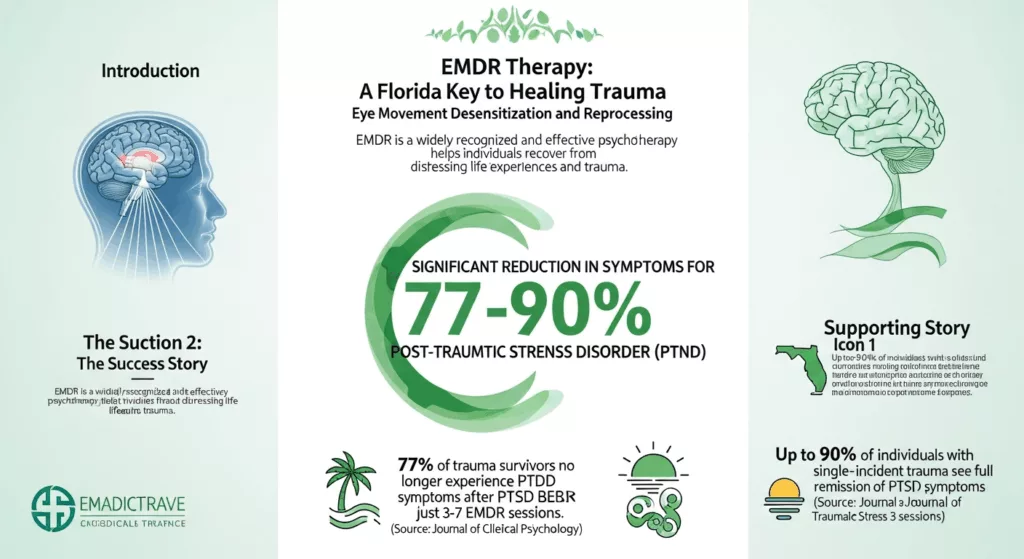
Recent meta-analyses reveal that EMDR therapy achieves a 77-90% success rate for PTSD symptom reduction, with many clients experiencing significant improvement within 8-12 sessions. What makes these numbers particularly compelling is the speed of change—while traditional talk therapy often requires months or years to show meaningful progress, EMDR frequently delivers measurable results in weeks.
For Florida healthcare workers specifically, these statistics translate to real hope. A 2023 study focusing on healthcare professionals found that those receiving EMDR treatment showed:
- 84% reduction in intrusive thoughts and flashbacks
- 78% improvement in sleep quality and nightmare frequency
- 91% decrease in hypervigilance and emotional reactivity
- 73% improvement in overall quality of life measures
The EMDR International Association reports that these outcomes remain stable at 12-month follow-ups, indicating that the healing achieved through EMDR creates lasting change rather than temporary relief.
Evidence-Based Trauma Treatment Outcomes
What sets EMDR apart in terms of success rates is its unique approach to trauma processing. Unlike traditional therapy that relies primarily on talking through experiences, EMDR engages the brain’s natural healing mechanisms through bilateral stimulation. This process helps reprocess traumatic memories, reducing their emotional charge and allowing the nervous system to return to a regulated state.
Research published in the Journal of Clinical Psychology demonstrates that EMDR’s effectiveness stems from its ability to target trauma at the neurobiological level. Brain imaging studies show measurable changes in areas associated with trauma processing, including the amygdala and hippocampus, after successful EMDR treatment.
Why Healthcare Workers and Helping Professionals Turn to EMDR
Florida’s healthcare professionals face unique trauma exposure that makes them particularly well-suited for EMDR therapy. Whether it’s the secondary trauma from caring for suffering patients, the moral injury from healthcare system constraints, or personal trauma that led them to helping professions, these individuals often carry complex layers of traumatic stress.
Healthcare workers frequently report that traditional therapy feels insufficient for several reasons. First, many helping professionals have extensive knowledge about therapy techniques, making it difficult to engage fully in conventional approaches they already understand intellectually. Second, the nature of healthcare trauma—repeated exposure, moral distress, and life-or-death decision-making—creates a specific type of psychological injury that requires specialized intervention.
Dr. Sarah Martinez, a Florida emergency room nurse who completed EMDR treatment, explains: “I knew all the coping strategies and therapeutic concepts, but my body was still stuck in fight-or-flight mode. EMDR was the first approach that actually helped my nervous system reset instead of just giving me more tools to manage symptoms.”
The Unique Benefits for Empaths and Caregivers
Empaths and caregivers often struggle with traditional therapy because they’re natural helpers who have difficulty receiving care. EMDR addresses this challenge by requiring less verbal processing and emotional vulnerability than talk therapy. The structured nature of EMDR sessions provides a sense of safety and control that appeals to helping professionals who are accustomed to being in charge of others’ care.
Additionally, healthcare workers often experience what researchers call “empathic overarousal”—a state where their nervous systems become chronically activated from absorbing others’ distress. EMDR’s ability to regulate the nervous system makes it particularly effective for this population. As highlighted in Trauma-Informed Healthcare: Building Recovery Into Your Career, addressing this hyperarousal is crucial for long-term wellness in helping professions.
EMDR vs. Traditional Talk Therapy: Comparing Treatment Timelines
One of the most significant advantages of EMDR therapy is its efficiency. While traditional therapy often requires 12-24 months to address complex trauma, EMDR typically achieves substantial results in 8-16 sessions. This timeline difference is particularly important for busy healthcare professionals who struggle to commit to long-term treatment.
Traditional cognitive-behavioral therapy works primarily through the prefrontal cortex—the brain’s thinking center. While effective, this approach requires extensive verbal processing and homework assignments that can feel overwhelming for already-stressed healthcare workers. EMDR, by contrast, engages the brain’s natural information processing systems, often bypassing the need for extensive verbal analysis.
Session-by-Session Comparison
In traditional therapy, the typical progression might look like:
- Sessions 1-4: Building rapport and identifying issues
- Sessions 5-12: Exploring trauma history and developing coping skills
- Sessions 13-24: Processing traumatic experiences verbally
- Sessions 25+: Integration and maintenance
EMDR therapy follows a more accelerated timeline:
- Sessions 1-2: History-taking and preparation
- Sessions 3-8: Active trauma processing using bilateral stimulation
- Sessions 9-12: Integration and future template development
- Sessions 13+: Maintenance and follow-up as needed
This efficiency doesn’t mean EMDR is a “quick fix.” Rather, it reflects the therapy’s ability to work with the brain’s natural healing capacity rather than against it. Many Florida healthcare professionals report that EMDR feels more aligned with their understanding of how the nervous system functions.
Finding Qualified EMDR Therapists in Florida: Certification Matters
The success rates of EMDR therapy depend heavily on proper training and certification. Not all therapists offering EMDR have completed the extensive training required for competent practice. When seeking EMDR treatment in Florida, healthcare professionals should look for specific qualifications that ensure quality care.
Proper EMDR certification requires completion of a comprehensive training program approved by the EMDR International Association (EMDRIA). This includes 20 hours of basic training, 20 hours of practicum, and ongoing consultation during initial cases. Many therapists also pursue advanced certifications in specialized areas like complex trauma or dissociative disorders.
What to Look for in EMDR Certification
When evaluating potential EMDR therapists, Florida healthcare workers should verify:
- Completion of EMDRIA-approved basic training
- Active participation in ongoing consultation or supervision
- Additional specialized training for complex trauma or healthcare-specific issues
- Experience working with healthcare professionals and empaths
- Understanding of secondary trauma and moral injury
At Healing Speak, our approach combines proper EMDR certification with specialized understanding of healthcare trauma. As highlighted in our Narcissistic Abuse Recovery for Therapists and Helpers work, we understand the unique dynamics that helping professionals face, including workplace trauma and boundary violations that require specialized intervention.
Red Flags to Avoid
Unfortunately, some practitioners claim to offer EMDR without proper training. Warning signs include:
- Therapists who cannot provide documentation of EMDRIA-approved training
- Practitioners who modify EMDR protocols without advanced training
- Therapists who promise unrealistic timelines or guaranteed outcomes
- Providers who combine EMDR with unproven techniques during processing sessions
Insurance Coverage and Accessibility for EMDR Treatment
One common misconception is that EMDR therapy isn’t covered by insurance or is only available to those who can afford out-of-pocket payment. In reality, most major insurance plans in Florida cover EMDR when provided by licensed mental health professionals for trauma-related conditions.
The key to insurance coverage is working with therapists who are in-network with major insurance providers and who properly document the medical necessity for EMDR treatment. At Healing Speak, we’re in-network with over 10 major insurance companies, including Aetna, Blue Cross/Blue Shield, Cigna, Florida Blue, and UnitedHealthcare, making specialized trauma care accessible to Florida healthcare workers.
Telehealth Accessibility
The expansion of telehealth services has made EMDR therapy more accessible than ever for busy healthcare professionals. Modern EMDR can be effectively delivered via secure video platforms using online bilateral stimulation tools or self-administered techniques guided by the therapist.
This accessibility is particularly important for healthcare workers with demanding schedules. Weekend and evening appointments, combined with the elimination of travel time, make it possible for nurses, physicians, and other healthcare professionals to prioritize their own healing without compromising their patient care responsibilities.
Real Outcomes: What to Expect from Evidence-Based Trauma Therapy
Understanding realistic expectations is crucial for healthcare professionals considering EMDR therapy. While success rates are impressive, the experience varies among individuals based on factors like trauma complexity, support systems, and overall health status.
Most healthcare workers begin noticing changes within the first few processing sessions. Common early improvements include:
- Reduced intensity of trauma-related nightmares
- Decreased startle responses and hypervigilance at work
- Improved emotional regulation during difficult patient encounters
- Better sleep quality and energy levels
- Reduced physical symptoms like headaches or stomach issues
Long-Term Outcomes
Research tracking EMDR outcomes over 12-24 months shows sustained improvement in the majority of cases. Healthcare professionals often report:
- Renewed passion for their helping profession
- Improved relationships both at work and home
- Enhanced resilience when facing new stressors
- Better work-life boundaries and self-care practices
- Reduced risk of burnout and secondary trauma
It’s important to note that EMDR isn’t just about symptom reduction—it’s about post-traumatic growth. Many healthcare workers discover that processing their trauma through EMDR actually enhances their ability to help others while maintaining their own emotional well-being.
Integration with Other Therapeutic Approaches
EMDR works well in combination with other evidence-based approaches. At Healing Speak, we often integrate EMDR with Brainspotting therapy and other specialized techniques to address the complex needs of healthcare professionals. This comprehensive approach ensures that all aspects of trauma—emotional, physical, cognitive, and spiritual—are addressed in treatment.
Making the Decision: Is EMDR Right for You?
If you’re a Florida healthcare professional struggling with trauma symptoms that haven’t responded to traditional therapy, EMDR’s impressive success rates make it worth serious consideration. The combination of scientific backing, efficiency, and specialized effectiveness for helping professionals creates a compelling case for this approach.
Consider EMDR if you’re experiencing:
- Intrusive thoughts or images related to patient care or personal trauma
- Hypervigilance or anxiety that interferes with work performance
- Sleep disturbances or nightmares
- Emotional numbing or difficulty connecting with patients or loved ones
- Physical symptoms without clear medical causes
- Burnout or compassion fatigue that doesn’t improve with time off
The research is clear: EMDR therapy success rates in Florida and beyond demonstrate that this approach offers hope for healing that many healthcare professionals thought was impossible. With proper certification, insurance coverage, and specialized understanding of healthcare trauma, EMDR represents a path forward for those who’ve dedicated their lives to healing others.
At Healing Speak, we understand that seeking help can feel vulnerable for those accustomed to being helpers. Our specialized approach combines the proven effectiveness of EMDR with deep understanding of healthcare culture and the unique challenges facing empaths and caregivers. We help those who don’t think they can be helped—and the success rates show just how powerful that healing can be.
Ready to explore whether EMDR might be the missing piece in your healing journey? Contact us today to learn more about how evidence-based trauma therapy can help you reclaim your well-being while continuing to serve others from a place of strength and resilience.