
If you’re a healthcare worker, therapist, or teacher who feels emotionally drained after every shift, you’re not broken—your nervous system is simply wired to process more deeply. Research shows that 20% of the population has heightened sensory processing sensitivity, yet most workplaces aren’t designed with highly sensitive professionals in mind. This comprehensive guide explores energy protection for highly sensitive professionals through evidence-based strategies that actually work in demanding professional environments.
As helping professionals, you absorb not just the technical demands of your role but also the emotional weight of every person you serve. This guide combines neuroscience research with practical techniques to help you thrive professionally without sacrificing your well-being.
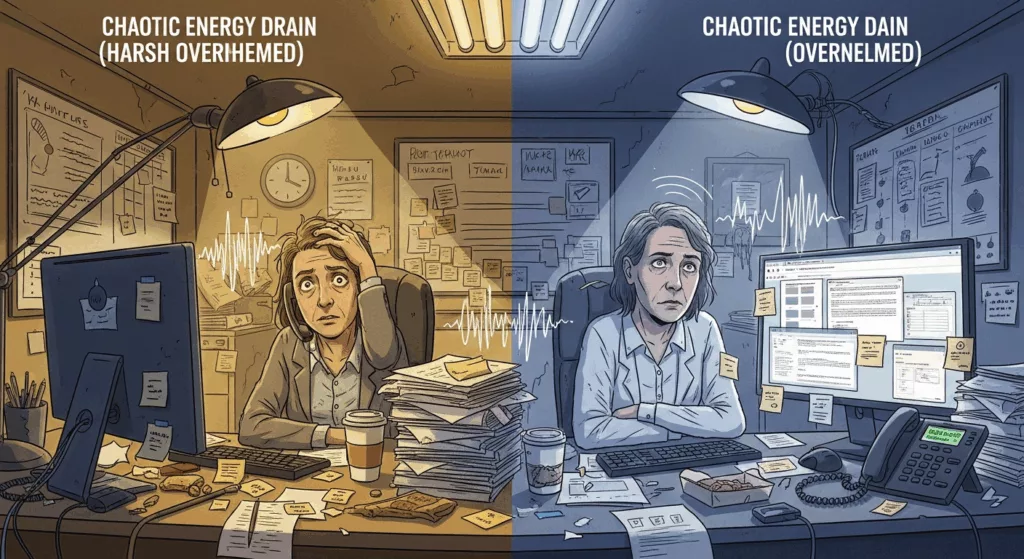
The Neuroscience Behind High Sensitivity in Professional Settings
Understanding the biological basis of high sensitivity helps normalize what you’re experiencing and provides a foundation for effective energy protection strategies. Highly Sensitive People (HSPs) have a more reactive nervous system, processing sensory information more deeply than others.
Dr. Elaine Aron’s groundbreaking research identified that HSPs have increased activation in brain areas associated with awareness, empathy, and sensory processing. This means your brain literally works harder to process the same environmental stimuli that others might barely notice.
In professional settings, this translates to:
- Absorbing clients’ emotional states more intensely
- Feeling overwhelmed by busy, chaotic work environments
- Needing more recovery time between intense interactions
- Being more affected by workplace conflict or tension
- Experiencing decision fatigue more quickly
The Highly Sensitive Person Workplace Challenge
Traditional workplace environments often favor extroverted, less sensitive traits. Open offices, constant interruptions, and high-stress demands can overwhelm your sensitive nervous system. Research from the American Psychological Association shows that workplace stress significantly impacts mental health, with sensitive professionals experiencing these effects more intensely.
Your sensitivity isn’t a weakness—it’s often what makes you exceptionally good at your job. You notice subtle changes in client needs, pick up on emotional nuances others miss, and provide deeply empathetic care. The key is learning to harness this gift without depleting yourself.
Evidence-Based Energy Protection Strategies for HSPs
Effective energy protection for highly sensitive professionals requires more than generic self-care advice. These strategies are specifically designed for sensitive nervous systems in demanding professional environments.
Nervous System Regulation Techniques
Your autonomic nervous system needs active management throughout your workday. These techniques help maintain nervous system balance:
Box Breathing Protocol: Between client interactions, practice 4-4-4-4 breathing (inhale for 4, hold for 4, exhale for 4, hold for 4). This activates your parasympathetic nervous system, creating a natural reset.
Progressive Muscle Release: Tension accumulates in sensitive bodies throughout the day. Every few hours, systematically tense and release muscle groups for 5 seconds each, starting with your feet and moving upward.
Sensory Grounding: Use the 5-4-3-2-1 technique when feeling overwhelmed: identify 5 things you can see, 4 you can touch, 3 you can hear, 2 you can smell, and 1 you can taste. This brings you back to your own sensory experience rather than absorbing others’.
Environmental Modifications
Small changes to your physical environment can significantly impact your energy levels:
- Position your workspace to minimize foot traffic behind you
- Use noise-cancelling headphones during documentation time
- Keep a small plant or calming image visible from your workspace
- Adjust lighting when possible—harsh fluorescents drain sensitive individuals
- Create a “decompression space” even if it’s just a specific chair or corner
Energy Visualization Techniques
While these might sound unconventional, visualization techniques are grounded in neuroscience research on mental rehearsal and stress response:
The Protective Bubble: Before entering challenging interactions, visualize yourself surrounded by a protective bubble that allows compassion to flow out but prevents others’ emotional distress from penetrating your core.
Energy Return Visualization: At the end of each interaction, consciously visualize returning any emotional energy that isn’t yours while keeping the satisfaction of helping.
Creating Sustainable Boundaries Without Compromising Care Quality
One of the biggest fears sensitive professionals have is that protecting their energy might make them less effective helpers. Research actually shows the opposite—professionals who maintain healthy boundaries provide better, more sustainable care.
Emotional Boundaries for Caregivers
Emotional boundaries aren’t walls that block empathy; they’re filters that allow you to feel with clients without taking on their pain as your own.
The Professional Empathy Model: Practice distinguishing between empathetic understanding (“I can see how much pain you’re in”) and emotional absorption (“I feel your pain as if it’s mine”). The first helps clients feel understood; the second depletes you without adding therapeutic value.
Containment Strategies: Develop rituals that contain work emotions within work hours. This might include:
- A brief journaling practice at the end of your shift to “download” the day’s emotional content
- A physical gesture like washing your hands while mentally releasing the day’s accumulated stress
- Changing clothes as a symbolic transition from professional helper to private individual
Setting Limits Without Guilt
Sensitive professionals often struggle with guilt when setting boundaries. Remember that your ability to help others long-term depends on maintaining your own wellbeing.
The Sustainable Helper Framework: Ask yourself, “Can I maintain this level of giving for the next year without burning out?” If not, adjustments aren’t selfish—they’re necessary for continued service.
Practice saying: “I want to give you my full attention. Let me finish this task first so I can be fully present.” This reframes boundaries as improving care quality rather than limiting it.
EMDR and Brainspotting Applications for Professional Overwhelm
When self-help strategies aren’t enough, specialized therapies can help sensitive professionals process accumulated stress and trauma from their work.
How EMDR Helps Sensitive Professionals
EMDR therapy can be particularly effective for processing vicarious trauma—the emotional impact of repeatedly witnessing others’ pain and suffering. Many healthcare workers, therapists, and teachers develop trauma symptoms not from their own experiences but from absorbing their clients’ trauma.
EMDR helps by:
- Processing disturbing images or memories from difficult cases
- Reducing the emotional charge of recurring work-related nightmares
- Addressing negative beliefs about yourself as a helper (“I should be able to handle this”)
- Processing the grief of cases where you couldn’t help enough
Brainspotting for Deep-Seated Professional Stress
Brainspotting accesses trauma stored in deeper brain structures, making it effective for the cumulative stress that builds up over years of helping work. It’s particularly useful when you feel “stuck” in patterns of overwhelm or when traditional talk therapy hasn’t provided relief.
This approach can help with:
- Chronic hypervigilance that won’t “turn off” after work
- Somatic symptoms like tension headaches or digestive issues
- Emotional numbness or disconnection as a protective response
- Difficulty making decisions about your professional future
Building Resilience: Daily Practices for Sensitive Professionals
Resilience for highly sensitive professionals isn’t about becoming tougher—it’s about developing sustainable practices that honor your sensitivity while preventing burnout.
Empath Burnout Prevention Through Micro-Practices
Research on burnout prevention shows that small, consistent practices are more effective than sporadic large interventions.
The Two-Minute Reset: Between appointments or interactions, take two minutes to:
- Take three deep breaths
- Do a quick body scan for tension
- Set an intention for the next interaction
- Remind yourself of your “why” for doing this work
Transition Rituals: Create consistent rituals for transitions between different types of work or between work and home. This helps your sensitive nervous system adjust to different energy requirements.
Sensitive Healthcare Worker Survival Strategies
Healthcare environments present unique challenges for sensitive individuals. The combination of life-and-death decisions, emotional intensity, and fast-paced demands requires specific adaptations:
The Compartmentalization Technique: Mentally assign different types of stress to different “containers.” Emergency situations go in one container, patient suffering in another, workplace politics in a third. This prevents them from blending into one overwhelming mass.
Energy Accounting: Track your energy like a financial budget. High-demand situations are “expensive,” requiring “payment” in the form of recovery time and nurturing activities.
Building Your Support Network
Sensitive professionals need support systems that understand their unique challenges. This includes:
- Finding mentors who are also highly sensitive and successful in their fields
- Connecting with other HSPs in your profession through online communities or local groups
- Educating your supervisor about high sensitivity and how it affects your work style
- Building relationships with colleagues who can provide different perspectives without judgment
When Self-Help Isn’t Enough: Specialized Treatment Options
Sometimes, despite your best efforts, the accumulated stress of helping work requires professional intervention. Recognizing when you need additional support is a sign of self-awareness, not failure.
Signs You May Need Professional Support
Consider seeking specialized therapy if you experience:
- Persistent nightmares about work situations
- Inability to “turn off” worry about clients outside of work hours
- Physical symptoms like chronic headaches, digestive issues, or sleep problems
- Emotional numbness or feeling disconnected from your usual empathy
- Thoughts of leaving your profession despite previously loving the work
- Relationship problems stemming from work-related stress
Specialized Treatment Approaches
Traditional therapy often falls short for sensitive professionals because it doesn’t address the unique challenges of highly sensitive nervous systems in helping roles. Specialized approaches include:
Trauma-Informed Care for Helpers: This approach recognizes that helping professionals often experience vicarious trauma and need treatment that addresses both personal and professional sources of distress.
Somatic Approaches: Since sensitive individuals often store stress in their bodies, therapies that include body-based interventions can be particularly helpful. These might include breathwork, movement therapy, or techniques that help discharge trapped stress energy.
DBT Skills Groups can be particularly beneficial for helping professionals who struggle with emotional regulation, interpersonal boundaries, or distress tolerance in challenging work environments.
Finding the Right Therapist
When seeking professional support, look for therapists who:
- Have experience working with helping professionals
- Understand high sensitivity as a trait, not a disorder
- Are trained in trauma-informed approaches like EMDR or Brainspotting
- Can provide both individual therapy and practical workplace strategies
- Respect your expertise in your own field while offering psychological support
Creating a Sustainable Career Path
Long-term success as a highly sensitive professional requires intentional career planning that honors both your gifts and your limits.
HSP Professional Survival: Long-Term Strategies
Specialization Consideration: Many sensitive professionals thrive when they can specialize in areas that match their natural strengths. This might mean working with specific populations, focusing on particular types of cases, or developing expertise in areas that energize rather than drain you.
Environmental Optimization: As you advance in your career, prioritize work environments that support sensitive individuals. This might include private practice, smaller organizations, or roles with more control over your schedule and client load.
Advocacy and Education: Use your experience to educate others about high sensitivity in professional settings. This helps create more supportive environments for future sensitive professionals.
Balancing Service and Self-Preservation
The ultimate goal is finding a sustainable balance where your natural empathy and depth enhance your professional effectiveness without depleting your personal resources.
Remember that taking care of yourself isn’t separate from taking care of others—it’s the foundation that makes quality care possible. Workplace mental health resources emphasize that employee wellbeing directly impacts the quality of services provided.
Key Takeaways for Energy Protection
Effective energy protection for highly sensitive professionals combines understanding your neurobiological wiring with practical strategies tailored to helping roles:
- Your sensitivity is a professional asset that requires intentional management
- Small, consistent practices are more effective than sporadic large interventions
- Boundaries improve rather than compromise your ability to help others
- Professional support isn’t failure—it’s smart self-management
- Long-term sustainability requires matching your work environment to your sensitive needs
Your highly sensitive nervous system allows you to provide uniquely compassionate, intuitive care. By implementing these evidence-based protection strategies, you can maintain this gift throughout a long, fulfilling career in the helping professions.
If you’re struggling to implement these strategies alone, or if work-related stress is significantly impacting your life, consider seeking support from specialized therapy designed for helping professionals. Remember, getting help isn’t a sign that you can’t handle your job—it’s a sign that you’re committed to doing your job well for years to come.
What resonates most with you from these strategies? Which energy protection technique will you try first in your professional setting?