
You’ve spent years caring for others, but finding time for your own trauma healing feels impossible when you’re working 12-hour shifts or managing back-to-back patients. The good news? Flexible trauma therapy Florida has evolved beyond the traditional 9-to-5 model. Healthcare workers, teachers, and other helping professionals can now access evidence-based treatments like EMDR and Brainspotting through evening sessions, weekend appointments, and secure telehealth platforms designed specifically for your demanding schedule.
Traditional trauma therapy approaches often fail to accommodate the realities of healthcare work. When you’re saving lives during the day, attending to your own psychological wounds shouldn’t require sacrificing sleep or calling in sick. This comprehensive guide explores how Florida’s trauma therapy landscape has adapted to serve those who serve others, offering practical solutions that fit around your unpredictable schedule.
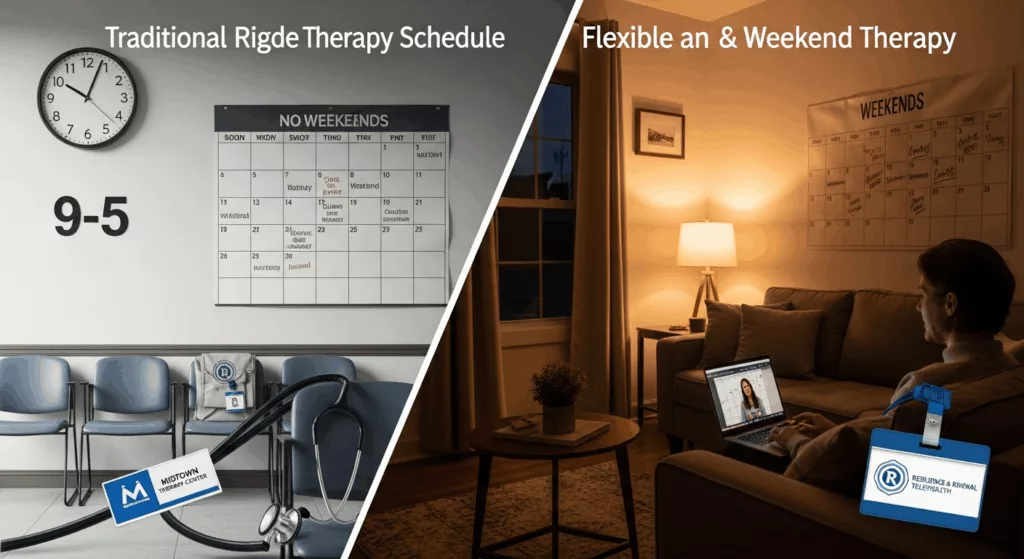
Why Traditional Therapy Schedules Don’t Work for Healthcare Professionals
The standard Monday-through-Friday, 9-to-5 therapy model wasn’t designed for people who work nights, weekends, or rotating shifts. For healthcare workers, this creates a frustrating barrier to accessing the mental health support they desperately need.
The Reality of Healthcare Schedules
Healthcare professionals face unique scheduling challenges that traditional therapy models simply don’t accommodate. Twelve-hour shifts that can extend to fourteen hours with documentation. Mandatory overtime that appears with little notice. On-call requirements that make it impossible to commit to standing weekly appointments.
Night shift workers face additional complications. After working all night, attending a 10 AM therapy session means sacrificing crucial sleep. For many healthcare workers, this choice between rest and mental health care feels impossible to navigate.
The Cost of Delayed Treatment
According to the CDC statistics on adverse childhood experiences, trauma affects long-term health outcomes significantly. For healthcare workers who may already be dealing with personal trauma while simultaneously witnessing patient suffering, delayed treatment compounds the problem.
Secondary trauma from patient care, combined with unresolved personal trauma, creates a perfect storm of psychological distress. Healthcare workers report higher rates of PTSD, depression, and burnout than the general population, yet they face the greatest barriers to accessing appropriate treatment.
Evidence-Based Trauma Therapies That Fit Your Life: EMDR and Brainspotting
When time is precious, you need trauma therapies that work efficiently. Two evidence-based approaches have revolutionized trauma treatment for busy professionals: EMDR therapy Florida practitioners now offer, and Brainspotting, both designed to create significant healing in fewer sessions than traditional talk therapy.
EMDR: Processing Trauma While You Rest
Eye Movement Desensitization and Reprocessing (EMDR) has become the gold standard for trauma treatment, with strong support from the APA guidelines for EMDR therapy. For healthcare workers, EMDR offers several distinct advantages.
EMDR sessions typically range from 60 to 90 minutes, allowing for substantial progress in a single appointment. This makes it ideal for professionals who prefer intensive sessions over frequent brief appointments. The therapy doesn’t require extensive homework or between-session assignments, respecting the limited time healthcare workers have outside of work.
The bilateral stimulation used in EMDR can actually feel restorative rather than draining. Many healthcare workers report feeling more relaxed after EMDR sessions, making it possible to attend sessions even after challenging shifts.
Brainspotting: Deep Healing for Complex Trauma
Brainspotting takes trauma therapy even deeper, accessing areas of the brain where trauma is stored subcortically. For healthcare workers dealing with both personal trauma and secondary trauma from patient care, Brainspotting offers a unique advantage.
This approach is particularly effective for what many healthcare workers experience: trauma that feels “stuck” despite their intellectual understanding of what happened. Brainspotting vs EMDR: Which Trauma Therapy Works Best? provides detailed comparison for those considering both options.
Brainspotting sessions can be tailored to your energy level. On days when you’re exhausted, the therapist can adjust the intensity. On days when you have more emotional capacity, deeper processing can occur.
Telehealth vs. In-Person: Which Flexible Option Works Best for You?
The expansion of telehealth trauma counseling has been a game-changer for healthcare workers. No longer do you need to factor in commute time, parking hassles, or the risk of being seen entering a mental health clinic by colleagues or patients.
Advantages of Telehealth Trauma Therapy
Privacy and Convenience: Attend sessions from your own home, car, or private office. This is especially valuable for healthcare workers who value discretion about their mental health care.
Time Efficiency: Eliminate travel time completely. A one-hour session remains a one-hour commitment, rather than becoming a two-hour block with travel.
Comfort and Safety: Process trauma from a space where you feel completely safe and comfortable. For many people, this accelerates the healing process.
Flexible Scheduling: Telehealth providers often offer more flexible scheduling options, including early morning or late evening sessions that work around shift schedules.
When In-Person Might Be Better
Some healthcare workers prefer in-person sessions for trauma work, particularly if they struggle to create boundaries between work and home. The physical act of traveling to therapy can serve as a helpful transition ritual.
For those dealing with severe dissociation—common among healthcare workers who have learned to compartmentalize trauma—in-person sessions may provide better grounding and safety.
Research from NCBI on telehealth effectiveness for trauma treatment shows comparable outcomes between telehealth and in-person trauma therapy, giving you confidence that either option can be effective.
Evening and Weekend Trauma Therapy: What Florida Options Exist
Evening trauma therapy and weekend therapy appointments have become increasingly available throughout Florida as mental health providers recognize the need for flexible scheduling options.
Evening Therapy Options
Many Florida trauma therapists now offer appointments until 7 PM or 8 PM, accommodating day shift workers who need time to decompress after their shifts. Evening sessions work particularly well for healthcare workers who prefer to address their trauma at the end of their day rather than before work.
For night shift workers, early evening appointments (5 PM to 7 PM) can fit well into their schedule, allowing them to attend therapy before starting their shift while still having time for adequate rest.
Weekend Intensive Options
Weekend therapy appointments have become increasingly popular among healthcare professionals. Saturday and Sunday sessions allow for longer, more intensive work without the pressure of returning to work immediately afterward.
Some Florida trauma therapists offer weekend intensive formats—longer sessions that cover more ground than traditional weekly appointments. This can be particularly effective for healthcare workers who want to make substantial progress without multiple time commitments throughout the week.
Holiday and Time-Off Scheduling
Progressive trauma therapy practices now offer special scheduling during holidays and healthcare workers’ time off. If you have a rare four-day weekend, some therapists will work with you to schedule multiple sessions during that period.
This approach recognizes that healthcare workers often have unpredictable time off that doesn’t align with traditional vacation periods when many therapists take breaks.
Insurance Coverage for Flexible Trauma Therapy Appointments
One of the biggest concerns healthcare workers have about accessing trauma therapy is cost, especially when considering non-traditional scheduling options. The good news is that insurance coverage for evening, weekend, and telehealth trauma therapy has improved significantly.
Insurance Parity for Telehealth
Federal parity laws require most insurance plans to cover telehealth mental health services at the same rate as in-person services. This means your evening telehealth EMDR session should be covered the same as a traditional in-office appointment.
Florida has particularly strong telehealth coverage requirements, making it easier for healthcare workers to access flexible scheduling options without additional out-of-pocket costs.
Navigating Prior Authorization
Some insurance plans require prior authorization for trauma therapies like EMDR or Brainspotting. However, the timing of your sessions (evening, weekend, or telehealth) typically doesn’t affect authorization requirements.
Many trauma therapy practices in Florida have dedicated staff to handle insurance authorization, removing this burden from healthcare workers who are already managing complex schedules.
HSA and FSA Benefits
Healthcare workers with Health Savings Accounts (HSA) or Flexible Spending Accounts (FSA) can use these funds for trauma therapy, including sessions outside traditional hours. This can help bridge any coverage gaps while providing tax advantages.
For a comprehensive guide on insurance navigation, Insurance Coverage for EMDR Therapy in Florida: Complete Guide provides detailed information about maximizing your benefits.
How to Start Trauma Therapy When You’re Already Overwhelmed
The irony isn’t lost on healthcare workers: you need trauma therapy most when you feel least capable of adding another commitment to your schedule. Here’s how to start therapy even when you’re already at your limit.
Start with a Single Session
You don’t need to commit to weekly therapy immediately. Many Florida trauma therapists offer single consultation sessions where you can explore your options and determine what level of commitment feels manageable.
This approach allows you to dip your toe in the water without feeling like you’re making a major life commitment during an already stressful period.
Communicate Your Constraints Upfront
Be honest with potential therapists about your scheduling limitations. The right trauma therapist for healthcare workers will understand your constraints and work with you to create a realistic treatment plan.
Explain your shift schedule, on-call requirements, and any other factors that might affect your availability. A good trauma therapist will help you design a treatment approach that works with your life, not against it.
Consider Intensive Formats
Some trauma therapies work well in intensive formats—longer sessions scheduled less frequently. This might mean a two-hour session every other week instead of weekly hour-long appointments.
For healthcare workers dealing with secondary trauma, this approach can be particularly effective. Secondary Trauma in Teachers: Signs, Science & Recovery explores how helping professionals can address work-related trauma efficiently.
Prepare for Initial Sessions
Your first trauma therapy sessions will likely focus on assessment and safety planning rather than intensive trauma processing. This makes them ideal for times when you’re particularly stressed, as they won’t add to your emotional burden.
Many healthcare workers find that even these initial sessions provide relief, as they finally have a professional space to discuss the unique stressors of their work environment.
Address Dissociation Early
Healthcare workers often develop dissociative coping mechanisms to deal with the emotional demands of their work. While this can be adaptive in the short term, it can interfere with trauma therapy if not addressed.
If you notice that you “zone out” frequently or feel disconnected from your emotions, mention this to your therapist early in treatment. Healthcare Dissociation: Evidence-Based Coping Strategies provides specific techniques for healthcare workers struggling with this issue.
Finding the Right Trauma Therapist for Your Schedule
Not all trauma therapists understand the unique needs of healthcare workers. When searching for flexible trauma therapy in Florida, look for providers who specifically mention accommodating healthcare professionals or shift workers.
Questions to Ask Potential Therapists
Scheduling Flexibility: “Do you offer evening or weekend appointments? How much notice do you need for rescheduling due to work conflicts?”
Experience with Healthcare Workers: “Do you have experience treating healthcare workers? Do you understand secondary trauma and work-related PTSD?”
Crisis Support: “What support is available between sessions if I’m struggling? Do you offer brief check-in calls for clients with demanding jobs?”
Treatment Approach: “Do you offer intensive session formats? Are you trained in EMDR, Brainspotting, or other evidence-based trauma therapies?”
Red Flags to Avoid
Avoid therapists who seem inflexible about scheduling or don’t understand the demands of healthcare work. If a therapist suggests that your work stress is “just part of the job” or minimizes the impact of secondary trauma, look elsewhere.
Be cautious of providers who push for rigid weekly scheduling without considering your work demands, or who don’t seem familiar with trauma-specific treatments beyond traditional talk therapy.
Making the Most of Your Trauma Therapy Sessions
When your therapy time is limited, maximizing each session becomes crucial. Here are strategies specifically for healthcare workers to get the most from their trauma therapy investment.
Preparation Strategies
Schedule Wisely: Don’t schedule trauma therapy immediately before or after particularly demanding shifts. Give yourself buffer time when possible.
Set Intentions: Before each session, spend a few minutes identifying what you most need to address. This helps focus limited time on your highest priorities.
Track Patterns: Keep a brief log of difficult shifts, patient encounters, or personal triggers. This information helps your therapist understand patterns and target interventions effectively.
Between-Session Support
Many trauma therapists offer brief check-in calls or secure messaging for clients with demanding jobs. This can provide crucial support during particularly difficult periods without requiring full appointments.
Some Florida trauma therapy practices offer group support specifically for healthcare workers, providing peer support between individual sessions.
Special Considerations for Different Healthcare Roles
Different healthcare roles present unique trauma exposure and scheduling challenges that affect therapy planning.
Trauma Therapy for Healthcare Workers in Emergency Settings
Emergency room staff, ICU nurses, and paramedics face acute trauma exposure that requires specialized treatment approaches. The unpredictable nature of emergency work makes flexible scheduling absolutely essential.
For emergency healthcare workers, trauma therapy often needs to address both personal trauma history and acute work-related incidents. This dual focus requires therapists experienced in both individual trauma and occupational stress management.
Considerations for Travel Nurses
Travel nurses face unique challenges in maintaining consistent trauma therapy while moving between assignments. Telehealth options become particularly valuable for this population, allowing continuity of care regardless of location.
Many travel nurses benefit from intensive therapy sessions during breaks between assignments, combined with telehealth maintenance sessions during active contracts.
Support for Healthcare Students
Medical and nursing students often experience their first significant trauma exposure during clinical rotations while dealing with academic stress and financial pressure. Evening and weekend therapy options are particularly crucial for this population.
Student healthcare workers may need therapy that addresses both trauma processing and career decision-making, as trauma exposure can significantly impact career choices and professional identity development.
The Future of Flexible Trauma Therapy
The trauma therapy field continues evolving to meet the needs of healthcare workers and other helping professionals. Understanding these trends can help you make informed decisions about your treatment options.
Technology Integration
Virtual reality exposure therapy and app-based trauma interventions are becoming more sophisticated, offering additional support between traditional therapy sessions.
Wearable devices that monitor stress and sleep patterns are being integrated into trauma treatment plans, helping therapists understand the impact of shift work on recovery.
Specialized Programs
More Florida trauma therapy practices are developing specialized programs specifically for healthcare workers, teachers, and other helping professionals. These programs address the unique aspects of work-related trauma while accommodating demanding schedules.
Peer support integration is becoming more common, with trained healthcare workers providing additional support alongside professional trauma therapy.
Key Takeaways for Healthcare Workers Seeking Trauma Therapy
Flexible Options Exist: Evening, weekend, and telehealth trauma therapy options are widely available throughout Florida, specifically designed for healthcare workers’ schedules.
Evidence-Based Treatments Work: EMDR and Brainspotting can provide significant healing in fewer sessions than traditional therapy, making them ideal for busy professionals.
Insurance Coverage Is Available: Most insurance plans cover flexible trauma therapy options at the same rate as traditional appointments.
Specialized Help Is Available: Many trauma therapists now specialize in treating healthcare workers and understand the unique challenges of your profession.
You Don’t Have to Choose: You don’t have to choose between caring for others and caring for yourself. Flexible trauma therapy options make both possible.
Taking the First Step Toward Healing
Your dedication to caring for others is admirable, but it shouldn’t come at the expense of your own mental health. Flexible trauma therapy options in Florida make it possible to address your trauma while maintaining your professional commitments.
The evidence is clear: untreated trauma affects not only your personal well-being but also your ability to provide optimal patient care. By prioritizing your own healing through accessible, evidence-based trauma therapy, you’re actually enhancing your capacity to help others.
Remember, seeking trauma therapy isn’t a sign of weakness—it’s a professional responsibility. Just as you wouldn’t ignore a physical injury that could affect your work performance, addressing psychological trauma ensures you can continue providing the excellent care your patients deserve.
If you’re ready to explore flexible trauma therapy options that work with your schedule, not against it, consider reaching out to trauma specialists who understand the unique demands of healthcare work. Your healing journey doesn’t have to wait for a more convenient time—it can begin now, with options designed specifically for people like you who dedicate their lives to helping others.
Have you found that traditional therapy schedules don’t work with your healthcare career? What flexible options would make trauma therapy more accessible for you?