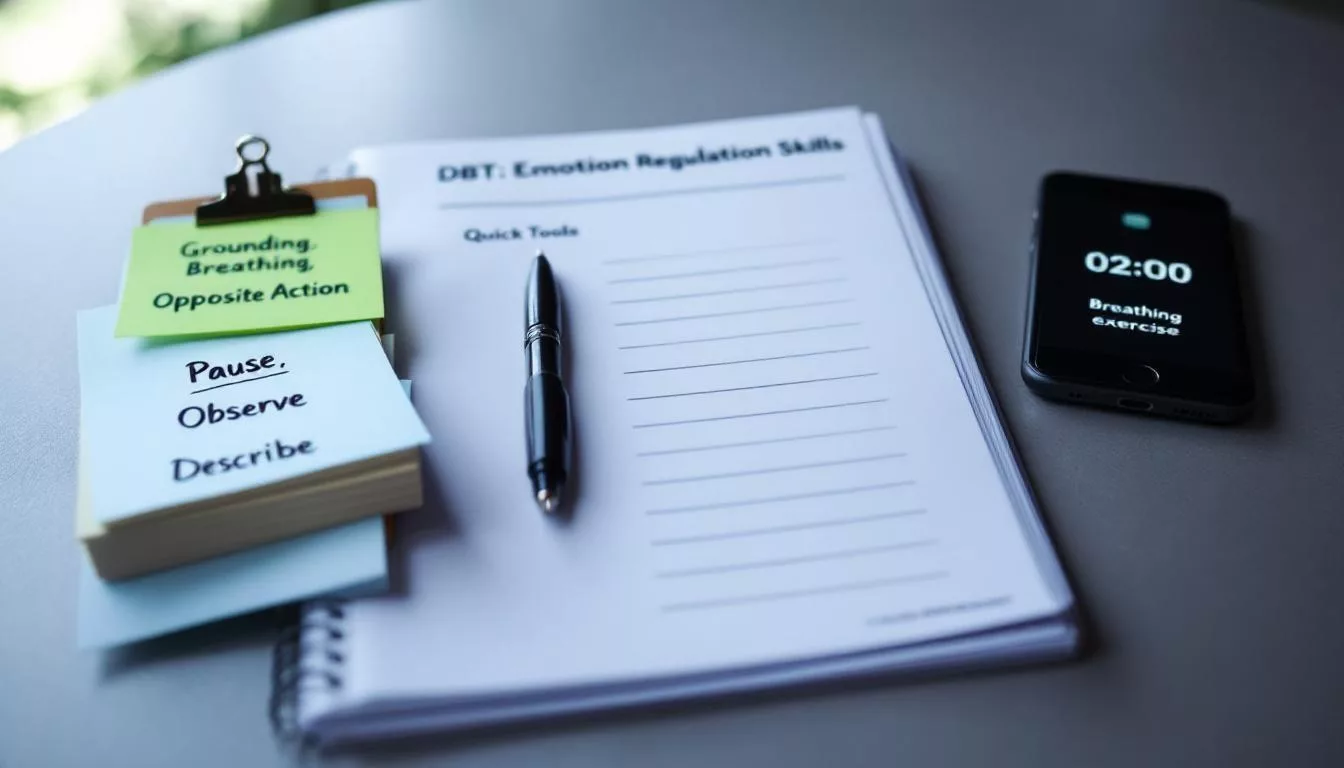
Intense emotions can hijack your decisions in seconds. When anger, anxiety, or shame takes over, you need tools that work fast-not theories that sound good in a therapist’s office.
DBT emotion regulation skills are built on decades of clinical research and designed for real moments when your emotions feel uncontrollable. At Healing Speak Counseling, we’ve seen how these practical techniques help people regain control when it matters most.
Why DBT Actually Works When Emotions Spiral
The Clinical Foundation Behind DBT
DBT emotion regulation emerged from Marsha Linehan’s work with people experiencing borderline personality disorder, a condition marked by intense, rapidly shifting emotions that standard therapy couldn’t address. The research backing DBT is substantial. Studies show DBT reduces emotional dysregulation symptoms within six months of consistent practice. What separates DBT from talk therapy or generic self-help is that it doesn’t ask you to process your feelings endlessly or understand why you feel a certain way before you can feel better. Instead, DBT gives you concrete actions to take right now.
Why Immediate Action Beats Analysis
When your nervous system is flooded, analyzing your childhood or exploring your thought patterns won’t help. You need something that works in the moment, and that’s what these techniques deliver. The skills work because they target the physical and cognitive systems driving your emotions simultaneously. You’re not waiting for insight or emotional acceptance to change your behavior. You’re changing your behavior, and your emotions follow. This isn’t theory. It’s how your nervous system actually works.
Three Techniques That Target Different Systems
ABC PLEASE addresses the physical foundation-adequate sleep, balanced nutrition, exercise, and limiting caffeine directly lower your baseline emotional reactivity, meaning you’re less likely to explode over minor frustrations. Opposite Action works differently. If shame tells you to hide and isolate, you move toward people instead, which interrupts the neurological feedback loop that reinforces shame. Check the Facts challenges the distorted thoughts fueling emotional intensity without requiring you to believe positive affirmations you don’t actually feel.
The Speed of Change When You Combine These Approaches
People who combine these three approaches see measurable shifts within weeks, not months. The reason is straightforward: you’re not waiting for insight or emotional acceptance to change your behavior. You’re changing your behavior, and your emotions follow. This neurological reality (the fact that action precedes emotional change) explains why DBT produces faster results than approaches that focus primarily on understanding or processing emotions. The next section walks you through the specific techniques and how to apply them when emotions threaten to take over.
Three Tools That Stop Emotions Before They Control You
ABC PLEASE: The Physical Foundation of Emotional Control
The gap between knowing you need to regulate emotions and actually doing it comes down to specificity. ABC PLEASE works because it targets the physical systems that amplify emotional reactivity. A stands for accumulating positive experiences, which means you schedule one small pleasurable activity daily. B is building mastery through accomplishing tasks that matter to you, even small ones like completing a work project or organizing a drawer. C means you plan your response to known triggers before they happen. P is the physical piece: sleep deprivation increases emotional sensitivity, so prioritizing seven to nine hours directly lowers your baseline reactivity. L means you limit caffeine and alcohol, which destabilize your nervous system and intensify anger and anxiety. E is exercise, which research shows reduces emotional dysregulation faster than many medications when you do it consistently. A is avoiding mood-altering drugs, and S is sleep again because it matters that much. The power of ABC PLEASE is that you don’t need to feel motivated to do it. You just do it, and your emotions stabilize as a side effect.
Opposite Action: Rewiring Your Emotional Response
Opposite Action works when your emotional urge pulls you toward behavior that makes things worse. If shame makes you want to hide from friends, you contact someone instead. If anxiety tells you to avoid a social situation, you attend anyway. If anger demands you lash out at someone, you speak calmly or step away. The neurological mechanism is real: your brain expects the emotional response to match the action, so when you act opposite to what the emotion demands, your brain recalibrates and the emotion weakens. Studies on exposure therapy practice show that people who practice opposite action during emotional distress see measurable shifts in emotional intensity.
Check the Facts: Separating Emotion from Reality
Check the Facts operates differently than opposite action by separating the emotion from the reality. Anxiety insists that everyone at the party will judge you, so you gather actual facts: most people focus on themselves, you’ve attended similar events before without incident, and even if someone judged you, it wouldn’t define your worth. You’re not reframing or finding silver linings. You’re asking whether the thought matches reality, and when it doesn’t, the emotion loses its grip.
Why These Three Approaches Work Together
The combination of these three approaches works because you don’t wait for the emotion to pass or try to accept it. You actively dismantle the physical, behavioral, and cognitive systems that fuel it. When you stabilize your sleep and exercise (ABC PLEASE), interrupt the behavioral loop that reinforces shame or anxiety (Opposite Action), and challenge the distorted thoughts driving emotional intensity (Check the Facts), you attack the problem from multiple angles simultaneously. This multi-system approach explains why people see faster results than they would from any single technique alone. The next section shows you exactly how these tools apply when real situations test your emotional control.
Real-World Scenarios Where These Skills Make a Difference
Managing Anger During Work Conflict
When anger flares during a work conflict, your first instinct is often to defend yourself or lash out-the exact response that escalates the situation. ABC PLEASE addresses this by stabilizing your baseline reactivity before the meeting even happens. If you’ve slept seven to nine hours, exercised that morning, and eaten balanced meals, your nervous system sits lower on the reactivity scale. This isn’t motivation or willpower; it’s physiology.
Sleep deprivation increases emotional reactivity, meaning someone who’s exhausted will respond to the same criticism with far more intensity than someone who’s rested. The night before a difficult conversation, prioritize sleep. The morning of, move your body for 15 minutes-a walk, a quick workout, or even stretching counts. When your colleague criticizes your work in the meeting, you’ll have actual neurological buffer.
Then apply Opposite Action: instead of defending or attacking back, you stay quiet for a few seconds, take a breath, and respond with one factual statement about what you’ll do differently. Your emotional urge screams to prove them wrong. You act opposite and simply listen. This interrupts the feedback loop that turns disagreement into conflict.
Check the Facts follows: you gather what actually happened (the feedback was about this project, not your overall competence) and separate it from the story your shame is telling (I’m a failure). Within the same conversation, you’ve used all three approaches. The anger that felt uncontrollable becomes manageable because you attacked it from three angles before it took over.
Handling Anxiety in Social Situations
Social anxiety operates differently. The anxiety tells you that everyone will judge you, that you’ll say something wrong, that you don’t belong at the party. Opposite Action here means going to the event anyway, even though every part of you wants to cancel. Exposure therapy shows that people who repeatedly face avoided situations see measurable decreases in anxiety intensity over weeks, not months.
The first time you go despite the dread, anxiety might stay at an 8 out of 10. The fifth time, it drops to a 5. The tenth time, it’s a 3. You must show up consistently. Check the Facts dismantles the catastrophic thinking: you’ve attended similar events before without incident, most people focus on themselves rather than scrutinizing you, and even if someone judged you negatively, it wouldn’t determine your worth or your future.
ABC PLEASE prevents you from showing up exhausted and caffeine-fueled, which amplifies social anxiety. Eat a real meal beforehand, sleep the night before, and skip the extra coffee. Your nervous system will be calm enough to actually enjoy parts of the event.
Coping with Shame and Self-Criticism
Shame works the hardest against you because it tells you to hide, isolate, and withdraw-the exact behaviors that deepen shame. You made a mistake at work, said something awkward in a conversation, or failed at something important. Shame demands isolation. Opposite Action demands you stay connected.
Contact someone you trust and tell them what happened. Not to get reassurance or sympathy, but to break the isolation that feeds shame. Simultaneously, Check the Facts separates the specific mistake from your identity: you made an error on a project; you are not fundamentally incompetent. You said something awkward; you are not fundamentally unlikeable. The mistake is real. The catastrophic interpretation of what it means about you is not.
ABC PLEASE here means moving your body regularly and maintaining sleep, because shame intensifies dramatically when you’re physically depleted. These three tools-physical stability, behavioral opposite action, and factual thinking-stop emotions from controlling your decisions in real moments.
Final Thoughts
The tools you’ve learned work because they’re based on how your nervous system actually functions, not on wishful thinking or positive affirmations. Consistent practice rewires your automatic responses-the first time you use Opposite Action during shame, it feels forced and uncomfortable, but the tenth time your brain recognizes the pattern and the emotional intensity drops faster. Research on habit formation shows that behavioral changes compound over weeks and months, not days, which means you train your nervous system to respond differently through deliberate, repeated action.
Life gets busy, emotions feel manageable again, and the daily practice of ABC PLEASE or Check the Facts falls away until a major stressor hits and you’re back where you started. Professional support prevents this cycle because a DBT provider holds you accountable, catches patterns you miss, and adjusts techniques when they’re not working. At Healing Speak Counseling, we specialize in DBT and work with people who’ve struggled with traditional therapy, understanding that crisis management isn’t enough.
The difference between temporary relief and lasting change comes down to having someone guide you through the messy middle months when progress feels invisible. If you’ve tried DBT emotion regulation skills alone and hit resistance, or if your emotions still feel uncontrollable despite effort, professional support represents the next logical step. We at Healing Speak Counseling help you move from surviving difficult emotions to actually managing them.