
After years of caring for others through their worst moments, you’ve started noticing changes in yourself that go far beyond typical job stress. The nightmares aren’t just occasional anymore. You find yourself emotionally numb during patient interactions that used to move you deeply. Simple conversations with colleagues feel overwhelming, and you’re hypervigilant even during your time off. If traditional therapy sessions have left you feeling unheard or unchanged, you might be dealing with something more complex than standard PTSD—and you’re not alone in this struggle.
Complex PTSD in helping professionals is an increasingly recognized phenomenon that affects nurses, physicians, therapists, social workers, and other caregivers who face repeated exposure to trauma. Unlike the single-incident trauma that leads to classic PTSD, complex PTSD develops from prolonged, repeated exposure to traumatic situations—exactly what many healthcare workers and helping professionals experience daily.
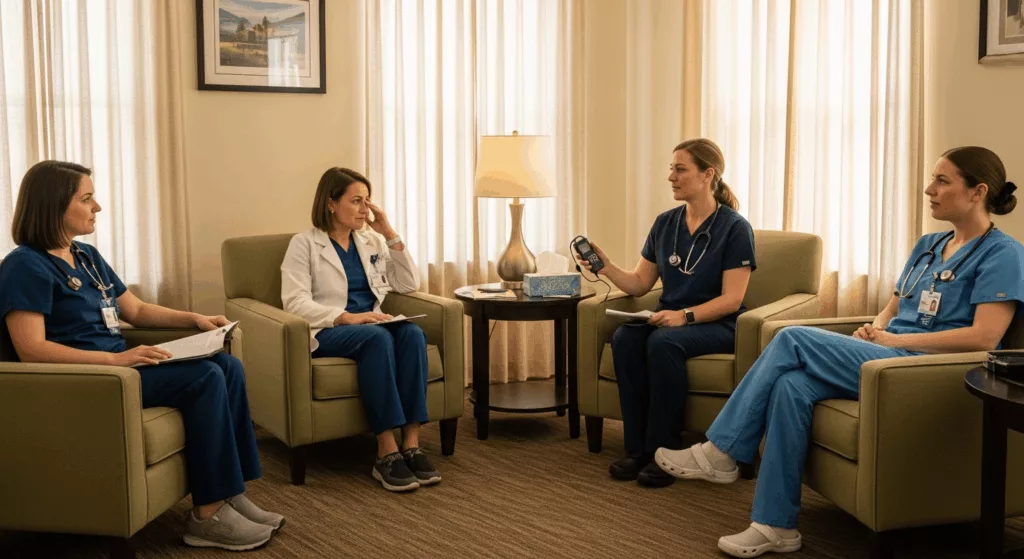
Understanding Complex PTSD vs. Simple PTSD in Healthcare Settings
Traditional PTSD typically results from a single traumatic event—a car accident, natural disaster, or isolated assault. The symptoms are intense but often center around that specific incident. C-PTSD healthcare workers face a different challenge entirely. Their trauma accumulates over time through repeated exposure to human suffering, death, violence, and systemic failures within healthcare systems.
According to Complex PTSD in healthcare workers: A systematic review, helping professionals develop distinct symptoms that traditional PTSD criteria don’t fully capture. While standard PTSD involves intrusive memories, avoidance, negative mood changes, and hyperarousal, complex PTSD includes additional core features:
- Emotional dysregulation: Difficulty managing intense emotions, including rage, sadness, and terror
- Negative self-concept: Persistent feelings of worthlessness, guilt, and responsibility for patient outcomes
- Interpersonal difficulties: Problems maintaining close relationships, often alternating between withdrawal and over-involvement
- Dissociative symptoms: Feeling disconnected from yourself or reality during stressful situations
- Loss of protective beliefs: Questioning fundamental beliefs about safety, meaning, and human nature
For healthcare workers, these symptoms often manifest differently than in other populations. A nurse might find herself emotionally shutting down during codes while simultaneously feeling overwhelming guilt about not “caring enough.” A physician may experience intrusive thoughts about patient deaths weeks after the events, coupled with a persistent sense that he’s fundamentally inadequate despite objective evidence of competence.
Why Helping Professionals Develop C-PTSD: Beyond Single Incidents
The development of complex PTSD helping professionals experience isn’t about weakness or inadequate coping skills. It’s the natural psychological response to an unnatural amount of trauma exposure. Healthcare environments create a perfect storm of conditions that foster complex trauma responses.
Repeated Trauma Exposure
Unlike civilians who might experience trauma occasionally, healthcare workers face it daily. Emergency room staff witness violent injuries, pediatric nurses care for abused children, and hospice workers regularly confront death. Each exposure adds to the cumulative trauma load, overwhelming natural resilience mechanisms.
Research from the APA research on therapist burnout and secondary trauma demonstrates that helping professionals experience “secondary trauma”—developing PTSD symptoms from repeatedly hearing about or witnessing others’ traumatic experiences. This creates a unique form of trauma that traditional diagnostic criteria struggle to capture.
Moral Injury and Systemic Trauma
Many helping professionals also experience moral injury—psychological damage from being forced to act against their moral beliefs or being prevented from providing the care they know patients need. This might involve:
- Being unable to provide optimal care due to resource limitations
- Witnessing preventable deaths due to system failures
- Making decisions that prioritize institutional needs over patient welfare
- Experiencing or witnessing discrimination within healthcare systems
These experiences create a different type of trauma than external threats. They attack the core identity and values that drew people to helping professions in the first place.
Cultural and Professional Barriers
Healthcare culture often discourages emotional vulnerability. The expectation to remain composed, make life-and-death decisions under pressure, and “leave work at work” creates additional stress for professionals already dealing with trauma exposure. Many report feeling that seeking help is viewed as professional weakness or incompetence.
The Unique Symptoms Healthcare Workers Experience
Trauma therapists burnout and complex PTSD in other helping professionals manifests in ways that often go unrecognized by both the professionals themselves and traditional mental health providers. These symptoms reflect the specific nature of trauma exposure in healthcare settings.
Emotional Numbing and Hypervigilance Cycles
Healthcare workers often describe feeling emotionally “shut down” during work while experiencing overwhelming emotions at home. A trauma surgeon might perform life-saving procedures with complete composure but find herself sobbing uncontrollably while watching a movie with mild medical content.
This emotional dysregulation reflects the brain’s attempt to protect itself from constant trauma exposure by alternately numbing and flooding with emotion. The hypervigilance that helps during medical emergencies becomes exhausting when it persists during off-hours.
Identity and Role Confusion
Many helping professionals experience profound confusion about their identity and worth outside their professional role. Years of defining themselves through their ability to help others creates vulnerability when that role is threatened by trauma symptoms, burnout, or job changes.
This manifests as:
- Difficulty setting boundaries between personal and professional life
- Feeling responsible for outcomes beyond their control
- Persistent guilt about taking time off or prioritizing self-care
- Loss of sense of purpose when not actively helping others
Relationship and Trust Issues
Constant exposure to human suffering and systemic failures can create lasting changes in how helping professionals view relationships and trust. They may become cynical about human nature while simultaneously feeling compelled to rescue others in their personal lives.
Common relationship patterns include:
- Difficulty trusting others with their own vulnerability
- Oscillating between isolation and over-involvement in others’ problems
- Feeling misunderstood by partners who haven’t experienced similar trauma
- Using caretaking as the primary way to connect with others
Why Traditional Talk Therapy Often Misses the Mark
Many helping professionals report frustration with traditional therapy approaches that seem designed for different types of trauma. Standard cognitive-behavioral approaches that work well for single-incident PTSD often fall short for complex trauma presentations common in healthcare workers.
Intellectual Understanding Without Emotional Processing
Helping professionals are often highly educated and psychologically sophisticated. They can analyze their symptoms, understand cognitive patterns, and articulate their experiences clearly. However, this intellectual understanding doesn’t necessarily translate into emotional healing.
Traditional talk therapy can become an intellectual exercise where clients discuss their trauma without actually processing it emotionally. A therapist might spend sessions analyzing why a nurse feels guilty about patient deaths without addressing the deeper nervous system dysregulation that maintains those feelings.
Therapist Mismatch and Understanding
Many therapists lack specific training in treating helping professionals or understanding healthcare culture. They may not recognize the unique pressures, ethical dilemmas, and trauma exposures that characterize these professions.
This creates several problems:
- Therapists may pathologize normal responses to abnormal work environments
- Treatment recommendations may be unrealistic for healthcare schedules and demands
- The therapist may not understand the professional identity issues central to healing
- Standard trauma protocols may not address the ongoing nature of trauma exposure
Avoiding Root Causes
Traditional therapy often focuses on symptom management rather than addressing the underlying nervous system dysregulation that maintains complex trauma responses. While coping strategies and insight can be helpful, they don’t necessarily change the fundamental ways trauma has affected brain functioning.
For healthcare workers dealing with ongoing trauma exposure, this approach can feel like putting a band-aid on a wound that continues to be reopened daily. They need interventions that create lasting neurological change, not just better understanding of their symptoms.
Evidence-Based Treatments That Actually Work: EMDR and Brainspotting
Fortunately, EMDR for medical professionals and other specialized trauma treatments have shown remarkable effectiveness for complex PTSD presentations. These approaches work by directly targeting the neurological impacts of trauma rather than relying solely on cognitive processing.
EMDR: Reprocessing Traumatic Memories
Eye Movement Desensitization and Reprocessing (EMDR) is considered the gold standard for trauma treatment by the EMDR International Association official guidelines. For helping professionals, EMDR offers several unique advantages:
Addresses Multiple Traumas Efficiently: Healthcare workers often have numerous traumatic memories rather than a single incident. EMDR can process multiple related memories in clusters, making it more efficient for complex trauma presentations.
Reduces Emotional Charge: EMDR helps desensitize traumatic memories so they can be remembered without triggering intense emotional responses. A nurse can recall a difficult patient death without experiencing the same level of guilt and distress.
Cognitive Restructuring: The therapy naturally helps clients develop more adaptive beliefs about themselves and their experiences. Self-blame often shifts to realistic understanding of systemic limitations and normal human responses to abnormal situations.
Minimal Verbal Processing Required: Unlike traditional talk therapy, EMDR doesn’t require extensive verbal processing of traumatic events. This appeals to helping professionals who may have intellectualized their experiences to the point where talk therapy feels repetitive or ineffective.
Brainspotting: Accessing Deeper Trauma
Brainspotting therapy Florida practitioners have found this approach particularly effective for helping professionals with complex presentations. Brainspotting therapy efficacy research study demonstrates its effectiveness for trauma that hasn’t responded to other interventions.
Brainspotting works by identifying specific eye positions that correlate with traumatic activation in the brain. These “brainspots” provide access to subcortical brain areas where trauma is stored, allowing for processing that bypasses cognitive defenses.
Key benefits for healthcare workers include:
- Accessing Body-Based Trauma: Much of healthcare trauma is stored in the body—the tension of performing CPR, the visceral response to witnessing suffering. Brainspotting accesses these somatic components directly.
- Processing Without Re-traumatization: The approach allows processing of traumatic material without requiring detailed verbal recounting, reducing the risk of re-traumatization during therapy sessions.
- Integration of Emotional and Cognitive Processing: Brainspotting naturally integrates emotional processing with cognitive understanding, creating more complete healing than approaches that target only one aspect.
- Addressing Dissociation: Many healthcare workers use dissociation as a survival mechanism during traumatic work situations. Brainspotting can help process trauma while respecting and working with these natural protective mechanisms.
Combining Approaches for Maximum Effectiveness
The most effective treatment for complex PTSD in helping professionals often combines multiple evidence-based approaches. This might include EMDR for specific traumatic memories, Brainspotting for deeper somatic processing, and elements of other specialized trauma treatment approaches for ongoing support.
Successful treatment also addresses the unique aspects of working in helping professions, including:
- Developing sustainable self-care practices within demanding work environments
- Rebuilding professional identity and sense of purpose
- Creating boundaries that protect against future trauma accumulation
- Processing moral injury and systemic trauma in addition to direct trauma exposure
Finding Specialized Care: What to Look for in a Trauma Therapist
Not all trauma therapists are equipped to work effectively with helping professionals experiencing complex PTSD. Finding the right provider can make the difference between treatment that creates lasting change and another disappointing therapeutic experience.
Essential Credentials and Training
Look for therapists with specific training in complex trauma and working with helping professionals. Key credentials include:
- EMDR Certification: Certified EMDR therapists have completed extensive training and consultation requirements
- Brainspotting Training: Look for Phase 1, 2, and advanced Brainspotting training
- Complex Trauma Specialization: Certified Clinical Trauma Professional (CCTP) or similar specialized credentials
- Understanding of Healthcare Culture: Experience working with healthcare professionals and understanding the unique stressors of helping professions
Treatment Philosophy and Approach
Effective therapists for helping professionals understand that traditional approaches may not be sufficient. Look for providers who:
- Use evidence-based treatments that go beyond traditional talk therapy
- Understand the difference between standard PTSD and complex trauma presentations
- Have experience with moral injury and secondary trauma in healthcare settings
- Offer efficient, solution-focused treatment that respects your time constraints
- Understand the identity issues specific to helping professionals
Practical Considerations
Healthcare workers often face unique logistical challenges in accessing therapy. Consider providers who offer:
- Flexible Scheduling: Evening and weekend appointments to accommodate healthcare schedules
- Telehealth Options: Secure, HIPAA-compliant online sessions for convenience and privacy
- Insurance Acceptance: In-network providers to make specialized care financially accessible
- Cultural Competency: Understanding of diverse healthcare worker populations and intersectional identities
If you’re in Florida, options like Flexible Trauma Therapy in Florida: EMDR & Telehealth Options can provide the specialized care you need with the convenience of telehealth access throughout the state.
Red Flags to Avoid
Be cautious of therapists who:
- Dismiss the unique aspects of healthcare trauma or suggest you “just need a vacation”
- Focus primarily on symptom management without addressing underlying trauma
- Don’t understand the ethical and professional pressures of healthcare work
- Suggest leaving your profession as the primary solution to trauma symptoms
- Use only traditional talk therapy approaches for complex trauma presentations
- Don’t have specific training in trauma treatment modalities
Key Takeaways: Moving Forward with Specialized Care
Understanding that your symptoms may represent complex PTSD rather than simple stress or standard PTSD is the first step toward effective treatment. Complex PTSD in helping professionals is a recognized condition that responds well to specialized treatment approaches designed specifically for repeated trauma exposure.
The most important points to remember:
- Your symptoms are a normal response to abnormal working conditions, not a sign of personal weakness
- Traditional talk therapy may not be sufficient for complex trauma presentations
- Evidence-based treatments like EMDR and Brainspotting can create lasting change
- Specialized therapists who understand healthcare culture are essential for effective treatment
- Treatment should address not just symptoms but the underlying nervous system impacts of trauma
According to SAMHSA trauma-informed care resources, healing is possible even from complex trauma presentations when the right treatment approach is used. Many healthcare workers find that specialized trauma treatment not only resolves their symptoms but actually enhances their professional effectiveness and personal relationships.
Taking the Next Step: You Deserve Specialized Care
If you’re a helping professional struggling with symptoms that go beyond typical work stress, you don’t have to continue suffering in silence. Complex PTSD is treatable with the right approach and provider. The specialized skills that make you excellent at caring for others—your empathy, dedication, and insight—are assets in your own healing journey when supported by effective trauma treatment.
Consider exploring EMDR Telehealth in Florida: Evidence-Based Trauma Therapy Online if you’re ready to move beyond traditional approaches that haven’t created the changes you need. Remember, seeking specialized treatment isn’t giving up—it’s using the same evidence-based approach to your own healing that you would recommend for any patient facing a complex medical condition.
Your dedication to helping others doesn’t mean you should accept less than the specialized care you deserve. What would you tell a colleague experiencing these symptoms? It’s time to extend that same compassion and professional standard of care to yourself.