
You’ve tried bubble baths, meditation apps, and ‘just breathe’ advice—yet you’re still running on empty after every shift. As a Florida nurse, you face unique stressors that generic self-care tips simply can’t address. Between hurricane season disruptions, extreme heat affecting patient acuity, and a healthcare system stretched beyond capacity, effective self-care for Florida nurses requires evidence-based strategies tailored to your specific challenges.
While well-meaning colleagues might suggest yoga or journaling, research shows that healthcare workers experiencing secondary trauma and burnout need specialized interventions that address the neurobiological impact of chronic stress. Let’s explore what actually works when traditional self-care falls short.
Why Traditional Self-Care Advice Falls Short for Florida Nurses
The self-care industry loves to promote one-size-fits-all solutions, but nurse burnout Florida statistics tell a different story. According to the American Nurses Association workplace violence and shortage report, Florida nurses face some of the highest burnout rates in the nation, with unique regional stressors that generic advice can’t touch.
Traditional self-care recommendations often ignore three critical realities of nursing in Florida:
- Shift Work Sleep Disorder: Rotating 12-hour shifts disrupt circadian rhythms more severely in Florida’s year-round intense sunlight, making standard “sleep hygiene” advice ineffective.
- Compassion Fatigue vs. Secondary Trauma: Many nurses aren’t just tired—they’re experiencing actual trauma symptoms from repeated exposure to patient suffering, medical emergencies, and workplace violence.
- Climate-Specific Stressors: Hurricane evacuations, extreme heat waves affecting patient loads, and seasonal population fluctuations create chronic unpredictability that surface-level coping strategies can’t address.
When a nurse working ICU night shifts during hurricane season tries to “just practice mindfulness,” they’re attempting to use a garden hose on a house fire. The intervention doesn’t match the intensity or specificity of the problem.
The Science Behind Effective Self-Care: What Research Actually Shows
Effective healthcare worker mental health interventions work at the neurobiological level, not just the behavioral level. Research on nurse burnout and mental health interventions reveals that successful programs address three key areas: nervous system regulation, cognitive processing, and social connection.
The Neuroscience of Nurse Burnout
Chronic exposure to medical trauma creates measurable changes in brain structure, particularly in the amygdala (fear processing) and prefrontal cortex (executive function). This isn’t weakness or “just stress”—it’s a predictable neurobiological response to sustained threat exposure.
When your nervous system is constantly activated by:
- Code blue emergencies
- Patient deaths and family grief
- Workplace violence or verbal abuse
- Staffing crises requiring unsafe patient ratios
- Personal protective equipment shortages
Your brain literally rewires itself for hypervigilance and emotional numbing. Traditional relaxation techniques often feel impossible because your nervous system is stuck in survival mode.
Evidence-Based Interventions That Actually Work
Successful nurse stress management programs incorporate trauma-informed approaches that work with, not against, these neurobiological changes:
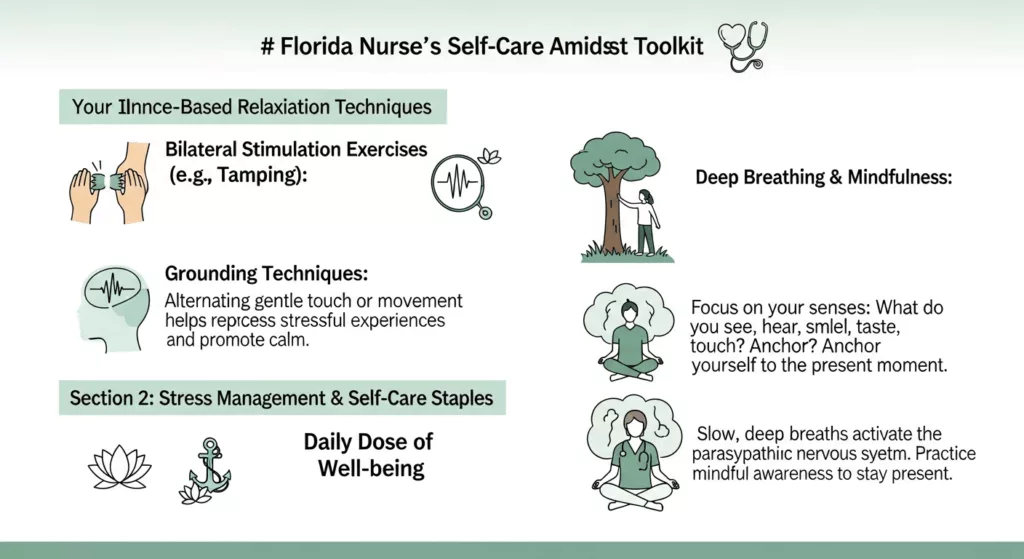
Bilateral Stimulation Techniques: Activities that engage both brain hemispheres—like walking while listening to music, alternating tapping movements, or bilateral breathing exercises—help integrate traumatic experiences and reduce hyperarousal.
Window of Tolerance Training: Learning to recognize when your nervous system is dysregulated and having specific tools to return to baseline, rather than trying to force relaxation when you’re activated.
Somatic Interventions: Body-based practices that release trapped trauma responses, such as progressive muscle release, vagal toning, or trauma-sensitive movement.
Climate-Specific Self-Care: Managing Florida’s Unique Healthcare Stressors
Working as a nurse in Florida presents challenges that colleagues in other states simply don’t face. Florida healthcare burnout often intensifies due to environmental and seasonal factors that require specialized coping strategies.
Hurricane Season Preparedness and Recovery
Hurricane season doesn’t just mean potential evacuations—it creates months of anticipatory anxiety, disrupted routines, and increased patient acuity as people delay medical care then flood emergency departments afterward.
Evidence-based hurricane season self-care includes:
- Anticipatory Stress Inoculation: Practice visualization exercises for emergency scenarios before hurricane season begins, reducing the shock response when protocols activate.
- Portable Comfort Kits: Maintain a small bag with sensory comfort items (essential oils, stress balls, photos) that can travel with you during evacuations or extended shifts.
- Communication Protocols: Establish check-in systems with family and friends that don’t rely on you initiating contact when you’re overwhelmed.
Heat Stress and Indoor Air Quality Management
Florida’s extreme heat affects more than just outdoor comfort—it impacts indoor air quality, patient behavior, and your body’s stress response systems.
During peak summer months, effective self-care strategies include:
- Hydration Beyond Water: Electrolyte replacement protocols that account for both heat stress and the dehydrating effects of air conditioning.
- Circadian Rhythm Protection: Using light therapy boxes to maintain healthy sleep patterns when transitioning between air-conditioned environments and extreme outdoor heat.
- Temperature Transition Techniques: Brief cooling protocols between shifts to help your nervous system adapt to temperature extremes without triggering stress responses.
Evidence-Based Techniques That Work: EMDR and Trauma-Informed Self-Care
When traditional self-care consistently fails, it’s often because the underlying issue isn’t stress—it’s trauma. Many Florida nurses are experiencing symptoms consistent with secondary trauma or complex PTSD, which require specialized interventions.
EMDR Self-Application Techniques
While full EMDR therapy requires professional guidance, nurses can use modified bilateral stimulation techniques for daily stress management. These self-care strategies nurses can implement immediately include:
Butterfly Hug Technique: Cross your arms over your chest and alternately tap your shoulders while breathing deeply. This bilateral stimulation helps process difficult shifts and reduce emotional intensity.
Walking Meditation with Bilateral Focus: During breaks, walk while consciously alternating attention between left and right sides of your visual field. This helps integrate stressful experiences and prevent them from becoming stuck trauma responses.
Resource Installation: Identify a positive memory or feeling of competence, then reinforce it with bilateral tapping while visualizing the experience. This strengthens your psychological resources for challenging situations.
Trauma-Informed Boundary Setting
Traditional advice often tells nurses to “leave work at work,” but this ignores how trauma memories can intrude involuntarily. Instead, trauma-informed approaches focus on:
- Transition Rituals: Creating specific routines that signal to your nervous system that the workday is ending and it’s safe to begin relaxing.
- Grounding Techniques: 5-4-3-2-1 sensory grounding (5 things you see, 4 you hear, 3 you touch, 2 you smell, 1 you taste) to return to present-moment awareness when traumatic memories intrude.
- Titrated Processing: Instead of avoiding difficult emotions, learning to process them in small, manageable doses to prevent overwhelming your system.
Professional EMDR and Brainspotting Resources
When self-application techniques aren’t sufficient, specialized trauma therapy can be life-changing. EMDR for Healthcare Workers: Evidence-Based Trauma Recovery provides comprehensive information about professional treatment options specifically designed for medical professionals.
Many Florida nurses report that EMDR therapy success rates exceed their expectations, particularly when working with therapists who understand healthcare-specific trauma.
Building Sustainable Self-Care Routines Between 12-Hour Shifts
The reality of nursing schedules means self-care must be efficient, effective, and flexible. Sustainable routines work with your schedule, not against it.
Micro-Recovery Techniques
Between 12-hour shifts, you don’t need hour-long spa sessions—you need micro-interventions that provide maximum nervous system reset in minimum time:
2-Minute Nervous System Reset:
- Stand with feet hip-width apart
- Take three deep breaths, extending exhales longer than inhales
- Shake out hands and arms vigorously for 30 seconds
- End with gentle neck rolls and shoulder shrugs
5-Minute Emotional Processing:
- Set a timer and allow yourself to feel whatever emotions arose during your shift
- Use bilateral tapping on your thighs while acknowledging difficult feelings
- End with three statements of what went well or what you handled competently
Shift-Specific Recovery Protocols
Different shifts create different types of stress and require tailored recovery approaches:
After Day Shifts: Focus on transitioning from high alertness to relaxation through progressive muscle relaxation and light exposure management.
After Night Shifts: Prioritize circadian rhythm support with blackout curtains, temperature control, and avoiding stimulating activities for at least 30 minutes before intended sleep.
Before Shifts: Use grounding techniques and positive visualization to prepare your nervous system for potential stressors without creating anticipatory anxiety.
Building Your Personal Recovery Menu
Create a personalized menu of evidence-based techniques categorized by time available and energy level:
High Energy/Long Time Available: Exercise, social connection, creative activities, nature exposure
Low Energy/Long Time Available: Restorative yoga, guided meditation, gentle stretching, comfort movies
High Energy/Limited Time: Dance to music, quick walk outside, energizing shower, brief phone call with loved ones
Low Energy/Limited Time: Deep breathing, bilateral tapping, aromatherapy, brief gratitude practice
When Self-Care Isn’t Enough: Recognizing the Need for Professional Support
Self-care is crucial, but it has limits. Sometimes what looks like burnout is actually clinical depression, anxiety, or trauma that requires professional intervention.
Red Flag Symptoms That Need Professional Attention
Seek professional help when experiencing:
- Persistent sleep disturbances that don’t improve with sleep hygiene
- Emotional numbing or inability to feel joy in previously enjoyable activities
- Intrusive memories or nightmares about work situations
- Substance use to cope with stress or sleep
- Relationship deterioration due to irritability or withdrawal
- Suicidal thoughts or feelings of hopelessness
These symptoms indicate your nervous system needs professional support to heal, not just better self-care strategies.
Finding Trauma-Informed Mental Health Support
Not all therapists understand healthcare-specific trauma. Look for providers who offer:
- Specialized training in treating helping professionals
- Experience with EMDR, Brainspotting, or other trauma therapy modalities
- Understanding of shift work and healthcare stressors
- Flexible scheduling that accommodates nursing schedules
The CDC workplace mental health resources provide additional guidance on finding appropriate professional support.
Insurance and Accessibility Considerations
Many Florida nurses worry about the cost of mental health treatment, but specialized trauma therapy is often covered by insurance. EMDR therapy insurance coverage in Florida is more accessible than many nurses realize, with multiple major insurers covering evidence-based treatments.
Additionally, the AHRQ clinician wellbeing and burnout prevention initiative has increased awareness and funding for healthcare worker mental health support.
Creating Your Evidence-Based Self-Care Action Plan
Effective self-care for Florida nurses requires a systematic approach that addresses both immediate stress relief and long-term resilience building.
Week 1-2: Assessment and Foundation
- Track your stress patterns, sleep quality, and emotional responses for two weeks
- Identify your primary stressors and current coping strategies
- Experiment with 2-3 evidence-based techniques from this article
- Establish basic nervous system regulation practices
Week 3-4: Integration and Refinement
- Build your personal recovery menu based on what worked in weeks 1-2
- Create transition rituals for before and after shifts
- Practice trauma-informed boundary setting
- Assess whether professional support might be beneficial
Month 2 and Beyond: Maintenance and Growth
- Refine your techniques based on seasonal and schedule changes
- Build in regular assessment of your mental health and stress levels
- Maintain connection with supportive colleagues and friends
- Continue learning about trauma-informed self-care approaches
Key Takeaways for Sustainable Self-Care
Effective self-care for Florida nurses goes far beyond bubble baths and breathing exercises. It requires evidence-based interventions that address the neurobiological impact of healthcare work, Florida-specific environmental stressors, and the realities of nursing schedules.
Remember these essential points:
- Traditional self-care often fails because it doesn’t address the trauma component of healthcare burnout
- Florida’s unique climate and seasonal challenges require specialized coping strategies
- Bilateral stimulation techniques and trauma-informed approaches are more effective than generic relaxation methods
- Sustainable self-care must be flexible and time-efficient to work with nursing schedules
- Professional support is necessary when self-care isn’t sufficient—and that’s completely normal
Your work as a nurse matters immensely, and so does your wellbeing. By implementing evidence-based self-care strategies tailored to your specific challenges, you can build genuine resilience rather than just managing symptoms.
If you’re finding that even these advanced self-care techniques aren’t sufficient, consider exploring trauma recovery for healthcare workers or connecting with specialized therapy services that understand the unique needs of helping professionals.
What evidence-based self-care technique will you try first? Your future self—and your patients—will thank you for prioritizing your mental health with the same expertise you bring to patient care.