


As a healthcare worker in Florida, you’ve spent years caring for others while carrying the weight of secondary trauma—witnessing suffering, making life-or-death decisions, and absorbing the emotional pain of countless patients. Traditional talk therapy might have left you feeling stuck, unable to process experiences that seem too complex for words alone. What if cutting-edge VR trauma therapy Florida could finally help you access and heal what conventional approaches couldn’t touch?
Virtual reality trauma therapy represents a revolutionary advancement in evidence-based mental health treatment, offering new hope for healthcare professionals, caregivers, and empaths who struggle with complex trauma. This innovative approach combines the proven effectiveness of established therapies like EMDR with immersive technology that can safely access traumatic memories stored deep in the brain.
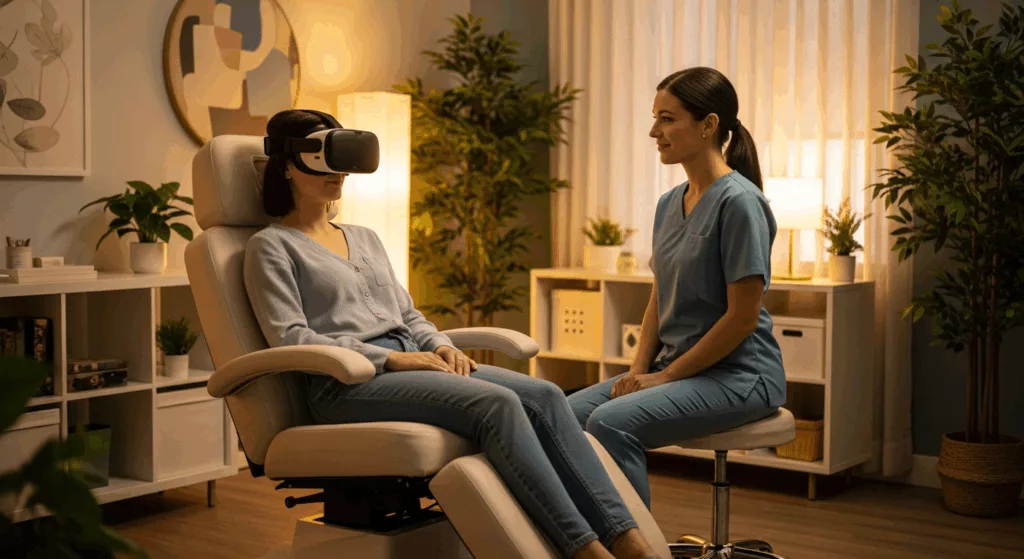
Understanding Virtual Reality’s Role in Modern Trauma Treatment
Virtual reality trauma therapy isn’t science fiction—it’s a scientifically validated treatment approach that’s transforming how we understand and treat post-traumatic stress disorder. Unlike traditional talk therapy, which relies primarily on verbal processing, virtual reality EMDR therapy engages multiple sensory pathways simultaneously to help the brain reprocess traumatic experiences.
The foundation of VR trauma therapy lies in controlled exposure principles. By creating safe, controlled environments where clients can gradually confront traumatic memories or triggers, virtual reality allows therapists to guide healing in ways that weren’t previously possible. For healthcare workers who’ve experienced repeated trauma exposure, this technology offers a pathway to process experiences that might otherwise remain locked in the nervous system.
Research published in the National Center for Biotechnology Information demonstrates that virtual reality exposure therapy can be as effective as traditional in-person exposure therapy for treating PTSD, with some studies showing even greater engagement and treatment completion rates.
What makes VR trauma therapy particularly powerful for helping professionals is its ability to recreate specific environments or scenarios in a controlled, therapeutic setting. A nurse who experienced trauma in a hospital ICU, for example, can gradually process those memories within a virtual hospital environment while remaining safely in the therapist’s office with full support and grounding techniques available.
The Technology Behind Healing
Modern VR trauma therapy systems use sophisticated hardware and software designed specifically for therapeutic applications. These aren’t gaming systems—they’re medical-grade technologies that allow precise control over environmental factors, pacing, and intensity levels.
The immersive nature of virtual reality activates the same neural pathways involved in actual traumatic experiences, but within a safe, controlled context where healing can occur. This neurological engagement is what makes VR therapy so effective for trauma that hasn’t responded to traditional talk therapy approaches.
The Science Behind VR-Enhanced EMDR and Brainspotting Therapy
Eye Movement Desensitization and Reprocessing (EMDR) has long been recognized as a gold-standard treatment for trauma and PTSD. The American Psychological Association’s guidelines on EMDR therapy establish its effectiveness for treating post-traumatic stress disorder across diverse populations.
When combined with virtual reality technology, EMDR becomes even more powerful. Evidence-based trauma therapy approaches like VR-enhanced EMDR work by engaging the brain’s natural information processing system while providing the bilateral stimulation that helps traumatic memories integrate properly.
In traditional EMDR, clients hold traumatic images in their mind while following the therapist’s finger movements or listening to alternating sounds. With VR enhancement, clients can be immersed in carefully controlled environments that allow for more complete processing while maintaining the bilateral stimulation essential to EMDR’s effectiveness.
Brainspotting, another advanced trauma therapy technique, also benefits significantly from VR integration. This approach accesses trauma stored in the subcortical brain—the deeper structures where our most profound wounds often reside. Virtual reality can help clients access these brainspots more effectively by providing environmental cues that activate specific neural networks associated with traumatic experiences.
Neuroplasticity and Virtual Reality
The science behind VR trauma therapy rests on our understanding of neuroplasticity—the brain’s ability to form new neural connections and pathways throughout life. Traumatic experiences often create rigid neural patterns that keep individuals stuck in cycles of hypervigilance, dissociation, or emotional numbing.
Virtual reality therapy works by creating new, positive neural pathways associated with previously traumatic triggers. For healthcare workers who may have developed trauma responses to specific medical environments or situations, VR therapy can help the brain learn new, healthier responses to these same triggers.
Why Traditional Therapy May Not Be Enough for Complex Trauma
Many healthcare professionals and caregivers find that traditional talk therapy, while valuable, doesn’t fully address their trauma symptoms. This isn’t a failure of the therapy or the therapist—it’s often because complex trauma involves parts of the brain that aren’t easily accessed through conversation alone.
Complex trauma, particularly the secondary trauma common among helping professionals, often involves:
- Trauma stored in non-verbal parts of the brain
- Multiple overlapping traumatic experiences
- Dissociative responses that make traditional processing difficult
- Somatic symptoms that require body-based interventions
- Hypervigilance patterns that interfere with traditional therapeutic approaches
The VA’s PTSD treatment guidelines recognize that complex trauma often requires specialized interventions beyond traditional talk therapy. This is where innovative trauma treatment Florida approaches like VR therapy become essential.
For healthcare workers specifically, traditional therapy can be challenging because:
- Cognitive approaches may not reach trauma stored in the nervous system
- Professional training to “stay strong” can interfere with emotional processing
- Multiple traumas may be interconnected in complex ways
- Hypervigilance developed for patient care can make relaxation difficult
- Time constraints make traditional therapy scheduling challenging
When Talk Therapy Reaches Its Limits
Talk therapy excels at helping people understand their experiences, develop coping strategies, and gain insight into patterns. However, trauma isn’t just a cognitive experience—it’s stored throughout the nervous system, in the body, and in parts of the brain that don’t respond well to words alone.
This is particularly true for healthcare workers who may have experienced repeated exposure to life-threatening situations, patient deaths, workplace violence, or moral injury from being unable to provide adequate care due to systemic constraints. These experiences often bypass the brain’s usual processing mechanisms, becoming stuck in ways that verbal processing alone cannot address.
Flexible trauma therapy approaches that combine multiple modalities often prove more effective for complex cases that haven’t responded to traditional methods.
VR Trauma Therapy Success Stories from Florida Healthcare Workers
Across Florida, healthcare professionals are discovering that PTSD virtual reality treatment offers breakthrough results where other approaches have fallen short. While specific client stories remain confidential, the patterns of success are clear and encouraging.
Healthcare workers often report that VR trauma therapy helps them process experiences that felt “stuck” for months or years. The immersive nature of virtual reality allows them to safely revisit and reprocess traumatic events within a controlled therapeutic environment.
Common outcomes reported by Florida healthcare workers using VR trauma therapy include:
- Significant reduction in nightmares and flashbacks
- Improved ability to work in previously triggering environments
- Better emotional regulation during high-stress situations
- Reduced dissociation and hypervigilance symptoms
- Enhanced sense of professional competence and confidence
- Improved relationships both at work and at home
The Unique Benefits for Helping Professionals
Healthcare workers often find VR trauma therapy particularly effective because it addresses their specific needs as helping professionals. The technology allows them to process trauma while maintaining the sense of control and competence that’s essential to their professional identity.
Many helping professionals struggle with feeling vulnerable in traditional therapy settings. VR therapy can feel less threatening because it maintains a sense of active engagement rather than passive vulnerability. This can be particularly important for individuals whose professional identity involves being the helper rather than the one receiving help.
The measurable, technology-based nature of VR therapy also appeals to healthcare workers who are accustomed to evidence-based, data-driven approaches in their professional lives. They can often see and track their progress in ways that feel familiar and reassuring.
Finding Qualified VR Trauma Specialists in Florida
Not every therapist offering VR trauma therapy in Florida has the specialized training necessary to effectively treat complex trauma cases. Finding qualified Florida trauma specialists who combine VR technology with proven therapeutic approaches requires careful consideration of several factors.
Essential qualifications to look for include:
- Specialized trauma therapy certifications (CCTP, EMDR, Brainspotting)
- Specific training in VR trauma therapy applications
- Experience treating healthcare professionals and caregivers
- Understanding of complex trauma and dissociative disorders
- Integration of VR with established evidence-based therapies
Quality VR trauma therapy isn’t just about having the technology—it’s about having therapists who understand how to integrate virtual reality with proven therapeutic approaches. The most effective practitioners combine VR tools with established modalities like EMDR, Brainspotting, or trauma-focused cognitive behavioral therapy.
Questions to Ask Potential VR Trauma Therapists
When seeking VR trauma therapy in Florida, consider asking potential therapists:
- What specific VR trauma therapy training have you completed?
- How do you integrate VR with other evidence-based trauma therapies?
- What experience do you have treating healthcare workers or caregivers?
- How do you ensure safety and grounding during VR sessions?
- What protocols do you follow for clients who experience dissociation?
- How do you measure progress and treatment outcomes?
It’s also important to ensure that any VR trauma therapy provider maintains proper licensure, follows ethical guidelines, and uses medical-grade VR equipment designed specifically for therapeutic applications rather than consumer gaming systems.
Specialists in evidence-based trauma therapy approaches often integrate VR technology as part of a comprehensive treatment approach rather than relying solely on the technology itself.
Insurance Coverage and Accessibility for Innovative Trauma Care
One of the most encouraging developments in VR trauma therapy is increasing insurance coverage for these innovative treatments. As research continues to demonstrate the effectiveness of virtual reality EMDR therapy and other VR-based interventions, more insurance providers are recognizing these approaches as legitimate, reimbursable treatments.
Currently, many insurance plans in Florida cover VR trauma therapy when it’s provided as part of established therapeutic modalities like EMDR or cognitive behavioral therapy. The key is finding providers who can properly code these services and who have established relationships with major insurance networks.
Making VR Trauma Therapy Accessible
Several factors are making VR trauma therapy increasingly accessible to Florida healthcare workers:
- Growing number of therapists trained in VR trauma applications
- Increasing insurance acceptance of innovative trauma treatments
- Telehealth integration allowing broader geographic access
- Flexible scheduling options accommodating healthcare worker shifts
- Sliding scale options at some specialized practices
For healthcare workers struggling financially, some Florida trauma specialists offer sliding scale fees or payment plans specifically for helping professionals who are dealing with trauma-related challenges that affect their ability to work.
The investment in VR trauma therapy often pays for itself through improved work performance, reduced sick days, decreased risk of burnout, and enhanced overall quality of life. Many healthcare workers find that effective trauma treatment actually improves their professional capabilities and career satisfaction.
Advocacy and Future Accessibility
Professional organizations for healthcare workers are increasingly advocating for better mental health coverage, including innovative treatments like VR trauma therapy. This advocacy is slowly but steadily expanding access to specialized care for helping professionals who need it most.
Understanding why healthcare workers often carry additional trauma burdens helps explain why specialized, accessible treatment approaches are so crucial for this population.
Key Takeaways for Healthcare Workers Considering VR Trauma Therapy
Virtual reality trauma therapy represents a significant advancement in evidence-based trauma treatment, particularly for healthcare workers and caregivers who haven’t found adequate relief through traditional approaches. The combination of proven therapeutic techniques with innovative technology offers new pathways to healing for even complex trauma cases.
For Florida healthcare workers considering VR trauma therapy:
- Research shows VR trauma therapy can be as effective as traditional exposure therapy
- The technology works best when integrated with proven approaches like EMDR or Brainspotting
- Finding qualified specialists with proper training is essential for safety and effectiveness
- Insurance coverage is increasingly available for these innovative treatments
- The immersive nature of VR can access trauma that verbal processing alone cannot reach
Remember that seeking help for trauma isn’t a sign of weakness—it’s a professional responsibility. Healthcare workers who address their own trauma are better equipped to provide compassionate, effective care to their patients. They’re also more likely to maintain long, satisfying careers without burning out.
If traditional therapy hasn’t provided the relief you need, VR trauma therapy might offer the breakthrough you’ve been seeking. The combination of cutting-edge technology with proven therapeutic approaches is helping healthcare workers across Florida reclaim their peace and rediscover their passion for helping others.
Managing dissociation and other trauma symptoms becomes more achievable with access to innovative, evidence-based treatment approaches designed specifically for complex cases.
Are you ready to explore how VR trauma therapy could help you process what traditional approaches couldn’t touch? The path to healing is available, and you deserve specialized care that matches the complexity of your experiences as a healthcare professional.


