
You’ve saved countless lives, but when your own mind starts disconnecting during a 12-hour shift, traditional self-care advice falls short. Managing dissociation healthcare workers experience isn’t just stress—it’s your nervous system’s protective response to repeated trauma exposure. That floating sensation, emotional numbness, or feeling like you’re watching yourself work from outside your body signals your brain is trying to protect you from overwhelming experiences.
Healthcare professionals face unique psychological challenges that most people never encounter. Witnessing suffering, making life-or-death decisions, and absorbing emotional trauma from patients creates a perfect storm for dissociative responses. Understanding these symptoms and implementing evidence-based strategies can help you stay grounded while continuing to provide exceptional patient care.
Recognizing Dissociation Symptoms in Healthcare Settings
Dissociation symptoms nurses and other healthcare workers experience often get dismissed as “just being tired” or “having a tough day.” But dissociation involves specific neurological responses that go far beyond normal stress reactions.
Common workplace dissociation symptoms include:
- Depersonalization: Feeling detached from yourself, like you’re watching your actions from outside your body during procedures
- Derealization: The hospital environment feels unreal, dreamlike, or foggy, even during familiar routines
- Emotional numbness: Inability to feel appropriate emotional responses to patient situations
- Time distortion: Hours pass without clear memory of specific tasks or conversations
- Autopilot functioning: Completing complex medical procedures while feeling mentally absent
- Memory gaps: Struggling to recall details from recent shifts or patient interactions
These symptoms often intensify during high-stress situations like codes, trauma cases, or patient deaths. Many healthcare workers report feeling “switched off” emotionally during these critical moments, only to experience delayed emotional responses hours or days later.
Physical manifestations accompany psychological symptoms:
- Feeling disconnected from your hands while performing procedures
- Sensation of floating or being “outside” your body
- Difficulty feeling physical sensations like hunger, thirst, or fatigue
- Dulled pain responses or hypervigilance to physical discomfort
When Dissociation Becomes Problematic
Mild dissociation can serve as a protective mechanism, allowing healthcare workers to function during traumatic situations. However, chronic or severe dissociation interferes with professional performance and personal relationships.
Warning signs that dissociation requires intervention include:
- Persistent symptoms lasting beyond individual shifts
- Difficulty connecting emotionally with family or friends
- Increased medication errors or safety concerns
- Substance use to “feel normal” again
- Panic attacks when dissociation suddenly stops
The Science Behind Dissociation in High-Stress Medical Environments
Understanding the neurobiological basis of dissociation helps healthcare workers recognize these responses as normal adaptations to abnormal circumstances. Research on healthcare worker trauma demonstrates how repeated exposure to patient suffering creates lasting changes in brain structure and function.
The dissociative response involves several key brain regions:
Prefrontal Cortex Shutdown: During overwhelming situations, the logical, decision-making part of your brain reduces activity. This explains why healthcare workers might struggle to recall specific details from traumatic cases while still performing procedures correctly.
Limbic System Hyperactivation: Your emotional processing center becomes overloaded with stress hormones like cortisol and adrenaline. The brain essentially “unplugs” conscious awareness to prevent emotional overwhelm.
Default Mode Network Disruption: This network helps maintain self-awareness and personal narrative. When disrupted, you lose the sense of being present in your own experiences.
Trauma Accumulation in Healthcare Settings
Healthcare workers don’t just experience single traumatic events—they face cumulative trauma exposure that builds over time. Each patient death, medical emergency, or family crisis adds to your nervous system’s stress load.
Secondary trauma occurs when absorbing emotional distress from patients and families. Your mirror neurons, designed to help you empathize and connect, can become overloaded when constantly exposed to others’ suffering.
The CDC recognizes workplace stress in healthcare settings as a significant occupational hazard requiring systematic interventions.
Evidence-Based Grounding Techniques for Healthcare Professionals
Grounding techniques healthcare workers can use need to be practical, quick, and effective during busy shifts. These evidence-based strategies help reconnect your mind with your body and present moment.
Physical Grounding Methods
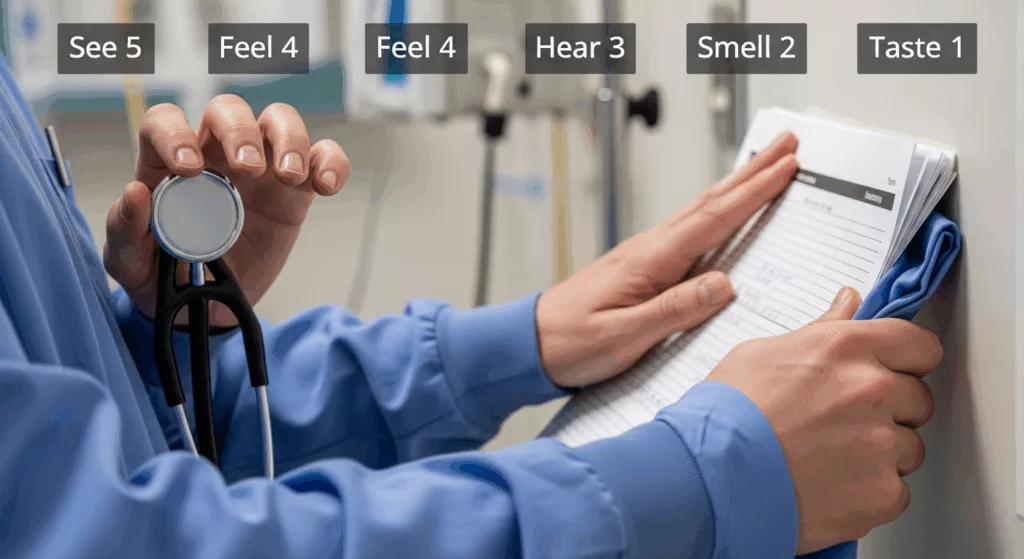
5-4-3-2-1 Sensory Technique: Perfect for use between patient rooms or during brief breaks. Identify:
- 5 things you can see (medical equipment, colors, textures)
- 4 things you can touch (stethoscope, badge, wall, chair)
- 3 things you can hear (monitors, conversations, air conditioning)
- 2 things you can smell (hand sanitizer, cleaning products)
- 1 thing you can taste (gum, coffee, mint)
Progressive Muscle Relaxation: Systematically tense and release muscle groups for 5-10 seconds each. Start with your feet and work upward. This technique activates the parasympathetic nervous system and reduces dissociative symptoms.
Cold Water Technique: Splash cold water on your wrists, face, or neck. The temperature shock activates the vagus nerve and brings immediate awareness back to your body.
Breathing-Based Interventions
Box Breathing: Inhale for 4 counts, hold for 4, exhale for 4, hold for 4. This military-tested technique regulates your autonomic nervous system and can be done while charting or walking between patients.
Physiological Sigh: Take a deep inhale through your nose, followed by a second, smaller inhale through your nose, then a long exhale through your mouth. This activates the parasympathetic nervous system more effectively than regular deep breathing.
Cognitive Grounding Strategies
Orientation Questions: Mentally answer: “What is my name? Where am I? What time is it? What day is it? What is my role here?” This re-establishes your sense of identity and location.
Professional Anchoring: Remind yourself of your training, competence, and purpose. “I am a skilled nurse. I have the training to handle this situation. My presence makes a difference.”
Shift Micro-Check-ins: Set phone alarms every 2 hours to briefly assess your mental state. Rate your present-moment awareness on a 1-10 scale and use grounding techniques if below 6.
When to Seek Specialized Trauma Therapy: EMDR and Brainspotting
Self-help strategies have limitations when dissociation becomes chronic or severely impacts your functioning. EMDR for medical professionals and other specialized therapies address the root neurological patterns causing dissociative responses.
EMDR (Eye Movement Desensitization and Reprocessing)
EMDR therapy helps healthcare workers process traumatic memories without becoming overwhelmed by them. The bilateral stimulation used in EMDR mimics REM sleep patterns, allowing your brain to integrate traumatic experiences properly.
EMDR is particularly effective for healthcare workers because:
- It doesn’t require detailed verbal processing of trauma
- Sessions can target specific workplace incidents
- Results often occur more quickly than traditional talk therapy
- It reduces both emotional reactivity and dissociative responses
Healthcare workers often see improvements in 6-12 sessions, though complex trauma may require longer treatment.
Brainspotting for Deep Trauma Processing
Brainspotting accesses trauma stored in deeper brain regions that traditional talk therapy might miss. This technique uses specific eye positions to locate and process traumatic memories held in the subcortical brain.
For healthcare workers, brainspotting offers several advantages:
- Processes trauma without conscious analysis or storytelling
- Accesses pre-verbal and somatic trauma responses
- Reduces hypervigilance and emotional numbing
- Helps restore natural emotional responses to patient care
Signs You Need Professional Support
Consider healthcare worker trauma therapy if you experience:
- Daily dissociative episodes lasting more than brief moments
- Inability to emotionally connect with loved ones
- Recurring nightmares about work situations
- Panic attacks triggered by specific medical equipment or procedures
- Substance use to cope with work-related stress
- Thoughts of leaving healthcare due to psychological symptoms
Complex trauma in healthcare workers often requires specialized treatment approaches that go beyond general counseling.
Creating Sustainable Coping Strategies Between Shifts
Trauma-informed self-care for healthcare workers involves more than bubble baths and meditation apps. Effective strategies address the unique challenges of shift work, sleep disruption, and ongoing trauma exposure.
Post-Shift Decompression Rituals
Transition Protocols: Create consistent routines that signal to your nervous system that you’re leaving work mode. This might include:
- Changing clothes immediately after work
- Listening to specific music during your commute
- Taking a shower to “wash off” the shift
- Writing three sentences about your day, then closing the notebook
Emotional Processing: Allow yourself 10-15 minutes to feel whatever emotions arose during your shift. Don’t judge or analyze—simply acknowledge what’s present.
Sleep Hygiene for Trauma Recovery
Quality sleep is crucial for processing traumatic experiences and preventing dissociative symptoms. Healthcare workers face unique sleep challenges requiring specialized approaches:
Sleep Environment Optimization:
- Blackout curtains and white noise machines for day sleeping
- Cool room temperature (65-68°F) supports deep sleep
- Remove work-related items from the bedroom
- Use blue light filtering glasses if checking messages before sleep
Pre-Sleep Routine: Avoid stimulating content like medical journals or work-related social media. Instead, try gentle stretching, reading fiction, or listening to calming music.
Nutrition for Nervous System Support
Chronic stress and trauma exposure deplete specific nutrients your nervous system needs to function optimally:
- B-complex vitamins support neurotransmitter production
- Magnesium helps regulate the stress response
- Omega-3 fatty acids reduce inflammation and support brain health
- Protein at each meal provides amino acids for neurotransmitter synthesis
Avoid excessive caffeine, which can worsen dissociative symptoms and disrupt sleep patterns already challenged by shift work.
Finding Trauma-Informed Mental Health Support in Florida
Not all therapists understand the unique challenges healthcare workers face. Finding specialized trauma treatment requires knowing what to look for and what questions to ask potential providers.
Essential Qualifications to Seek
Trauma-Specific Training: Look for therapists certified in trauma treatment modalities like EMDR, Somatic Experiencing, or Trauma-Focused CBT. General counseling training doesn’t adequately address complex trauma responses.
Healthcare Workplace Understanding: Therapists who have worked with medical professionals understand the culture, stressors, and ethical considerations unique to healthcare settings.
Evidence-Based Approaches: Effective trauma treatment should incorporate research-supported methods, not just general talk therapy.
What to Expect from Quality Trauma Therapy
Effective trauma therapy for healthcare workers should:
- Assess your specific trauma history and current symptoms
- Provide psychoeducation about trauma’s impact on the nervous system
- Teach practical coping strategies you can use during shifts
- Process traumatic memories using evidence-based techniques
- Address secondary trauma and compassion fatigue
- Help you develop sustainable self-care practices
Quality therapists will also understand confidentiality concerns related to your professional reputation and licensing.
Accessing Care Through Telehealth
Telehealth makes specialized trauma treatment accessible throughout Florida, eliminating travel barriers and scheduling conflicts common with traditional office visits. Look for providers who:
- Offer evening and weekend appointments to accommodate shift schedules
- Accept your insurance to make treatment financially accessible
- Use secure, HIPAA-compliant platforms to protect your privacy
- Provide crisis support between sessions if needed
Building Long-Term Resilience
Managing dissociation as a healthcare worker isn’t about eliminating all stress—it’s about building resilience and developing healthy responses to ongoing challenges. Long-term success requires both individual strategies and systemic changes.
Professional Support Networks
Connect with other healthcare workers who understand your experiences. Professional support groups, both online and in-person, provide validation and practical strategies from colleagues facing similar challenges.
Consider joining organizations like the American Psychological Association’s healthcare worker resources for ongoing education and support.
Advocacy and Systemic Change
Individual coping strategies work best when supported by trauma-informed workplace policies. Advocate for:
- Employee assistance programs that include specialized trauma treatment
- Mandatory debriefing after traumatic patient cases
- Adequate staffing to reduce individual stress loads
- Mental health days that don’t require justification
Key Takeaways for Healthcare Workers
Managing dissociation as a healthcare worker requires understanding that these symptoms represent normal responses to abnormal stress levels. Your brain is protecting you the best way it knows how, but you deserve better coping strategies that allow you to stay present and connected.
Remember:
- Dissociation is a treatable response to trauma, not a character weakness
- Evidence-based grounding techniques can provide immediate relief during shifts
- Specialized trauma therapy offers lasting solutions beyond basic stress management
- Professional support is available from therapists who understand healthcare culture
- Building resilience is an ongoing process, not a one-time achievement
Your commitment to healing others doesn’t mean you should suffer in silence. Secondary trauma affects all helping professionals, and seeking support demonstrates the same courage you show in your medical practice.
If you’re experiencing persistent dissociative symptoms that interfere with your work or personal life, consider reaching out to a trauma-informed therapist who specializes in treating healthcare professionals. You’ve dedicated your career to healing others—you deserve the same level of expert, compassionate care for your own recovery.
What steps will you take today to better support your mental health while continuing to provide exceptional patient care?