
You’ve finally found an EMDR-certified therapist who specializes in helping healthcare workers process trauma, but now you’re staring at insurance paperwork wondering if your benefits will actually cover this specialized treatment. As a helping professional who’s already stretched thin, the last thing you need is surprise medical bills while seeking the evidence-based care you deserve. The good news is that insurance coverage EMDR therapy in Florida is more accessible than many people realize, especially when you understand how to navigate the system effectively.
Most major insurance plans do cover EMDR therapy when it’s provided by licensed mental health professionals for approved conditions like PTSD, anxiety, and depression. However, the key lies in understanding your specific benefits, documentation requirements, and how to work with both in-network and out-of-network providers to maximize your coverage.
Understanding Insurance Coverage for Specialized Trauma Therapies
Insurance companies typically classify EMDR under psychotherapy services, which means it’s generally covered under your mental health benefits. Thanks to mental health parity laws and insurance coverage requirements, insurers must provide mental health benefits that are comparable to medical and surgical benefits.
For Florida healthcare workers seeking EMDR therapy insurance Florida coverage, most major carriers including Aetna, Blue Cross Blue Shield, Cigna, UnitedHealthcare, and Florida Blue include EMDR in their covered services when:
- It’s provided by a licensed mental health professional
- It’s used to treat a covered mental health condition
- It’s considered medically necessary
- Prior authorization requirements are met (if applicable)
The APA guidelines for EMDR therapy recognize it as an evidence-based treatment for trauma, which strengthens your case with insurance providers. This official recognition means insurers can’t easily dismiss EMDR as experimental or unproven.
Common Covered Conditions for EMDR Therapy
Insurance companies are most likely to approve trauma therapy insurance benefits for EMDR when treating:
- Post-Traumatic Stress Disorder (PTSD)
- Acute stress disorder
- Anxiety disorders
- Depression related to trauma
- Panic disorder
- Phobias
- Complex trauma or C-PTSD
For healthcare workers who’ve experienced workplace trauma, patient deaths, or burnout-related mental health issues, these conditions often qualify for coverage. The key is having proper documentation from your therapist linking your symptoms to these recognized diagnostic criteria.
What Insurance Companies Look for in EMDR and Trauma Treatment Claims
Insurance companies evaluate EMDR therapy claims based on several specific criteria. Understanding these requirements can significantly improve your chances of getting coverage approved and avoiding unexpected bills.
Medical Necessity Documentation
Your therapist needs to demonstrate that EMDR is medically necessary for your specific condition. This typically includes:
- Clear diagnostic criteria: A formal diagnosis that supports EMDR treatment
- Symptom severity: Documentation showing how symptoms impact your daily functioning
- Treatment rationale: Explanation of why EMDR is appropriate for your specific case
- Treatment goals: Measurable objectives for therapy
For example, if you’re a nurse experiencing flashbacks and hypervigilance after losing multiple patients during COVID-19, your therapist would document how these specific trauma symptoms interfere with your work performance and personal relationships.
Provider Qualifications
Insurance companies require that EMDR be provided by qualified professionals. This means:
- Licensed mental health professionals (LCSW, LMHC, psychologists)
- EMDR training certification from approved organizations
- Ongoing supervision or consultation (for newer EMDR therapists)
- Proper credentialing with the insurance company
At Healing Speak, our providers meet all these qualifications, including specialized certification in trauma treatment and EMDR therapy techniques that go beyond basic training.
Navigating Pre-Authorization and Documentation Requirements
Many insurance plans require pre-authorization for mental health services, including EMDR. This process can seem daunting, but understanding the steps helps ensure smooth approval.
The Pre-Authorization Process
Step 1: Initial Assessment
Your therapist conducts a comprehensive evaluation to determine if EMDR is appropriate for your condition. This assessment becomes the foundation for your pre-authorization request.
Step 2: Treatment Plan Submission
Your provider submits a detailed treatment plan that includes:
- Specific diagnosis and symptoms
- Proposed number of EMDR sessions
- Expected treatment duration
- Measurable treatment goals
- Alternative treatments considered
Step 3: Insurance Review
The insurance company reviews your case, sometimes requesting additional documentation or a peer review by their consulting mental health professionals.
Step 4: Approval Decision
You’ll receive written confirmation of approval, including any limitations on the number of sessions or treatment duration.
Essential Documentation Tips
To improve your chances of approval for specialized trauma treatment coverage:
- Be specific about trauma history: Detailed documentation of traumatic events and their impact
- Link symptoms to functioning: Show how trauma symptoms affect work, relationships, and daily activities
- Document previous treatments: If traditional therapy wasn’t effective, this supports the need for EMDR
- Include standardized assessments: Use validated trauma scales to measure symptom severity
For healthcare workers, it’s particularly important to document how trauma symptoms might impact patient care or workplace safety, as insurers recognize the importance of treating healthcare professionals effectively.
Out-of-Network vs. In-Network: Making the Financial Decision
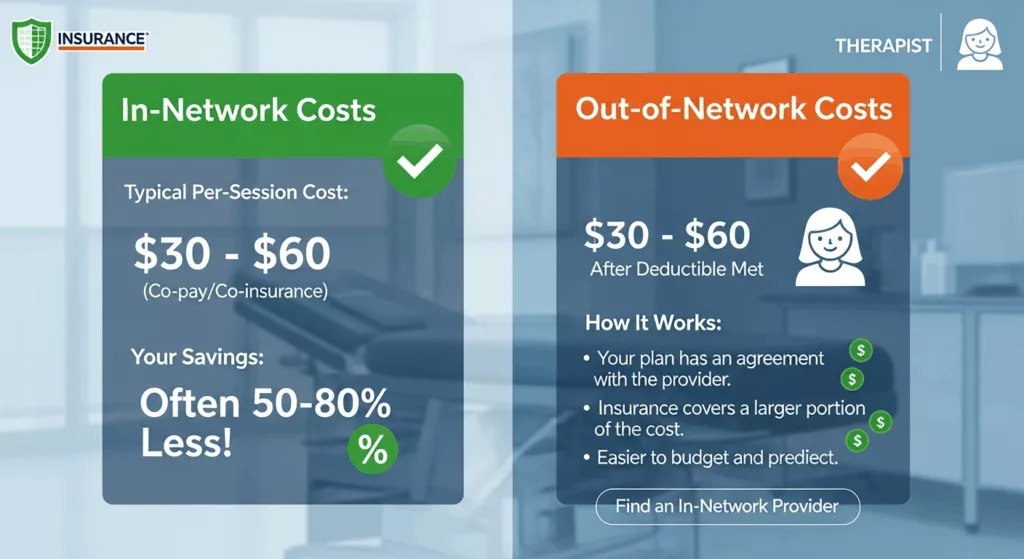
One of the biggest decisions Florida helpers face is whether to see an in-network or out-of-network EMDR therapist. Both options have significant financial implications for your trauma therapy insurance benefits.
In-Network Benefits
Choosing an in-network provider typically offers:
- Lower out-of-pocket costs: You’ll pay your standard copay or coinsurance rate
- Predictable expenses: Clearer understanding of your financial responsibility
- Direct billing: Provider handles insurance paperwork
- No claim forms: Automatic processing of benefits
For example, with an in-network provider, you might pay a $30 copay per session rather than the full $150 session fee. This can make a significant difference over the course of treatment.
Out-of-Network Considerations
Sometimes the best EMDR specialist for your needs isn’t in your network. Out-of-network benefits typically involve:
- Higher deductibles: Often double your in-network deductible
- Lower reimbursement rates: Insurance may cover 50-70% instead of 80-90%
- Balance billing: You’re responsible for the difference between insurance payment and provider fees
- Claim submission: You may need to submit reimbursement requests yourself
However, out-of-network treatment might be worth the extra cost if you find a specialist with extensive experience treating healthcare workers or caregivers dealing with complex trauma.
Financial Planning Strategies
To manage EMDR copay deductible costs effectively:
- Use HSA/FSA funds: These tax-advantaged accounts can cover copays, deductibles, and out-of-network costs
- Negotiate payment plans: Many providers offer monthly payment options
- Consider session frequency: Weekly vs. bi-weekly sessions impact total out-of-pocket costs
- Track your deductible: Once met, your benefits typically improve significantly
Questions to Ask Your Insurance Provider Before Starting Treatment
Before beginning EMDR therapy, arm yourself with specific information about your insurance navigation mental health benefits. Here are the crucial questions to ask your insurance company:
Coverage and Benefits Questions
- “Is EMDR therapy covered under my mental health benefits?”
- “What’s my copay for in-network mental health services?”
- “What’s my deductible for mental health treatment, and how much have I met this year?”
- “What’s my out-of-network mental health benefit percentage?”
- “Do I have a separate mental health deductible or does it combine with medical?”
- “Is there a limit on the number of therapy sessions per year?”
Authorization and Provider Questions
- “Do I need pre-authorization for EMDR therapy?”
- “How do I check if a specific provider is in-network?”
- “What happens if my therapist goes out-of-network during treatment?”
- “Can I get reimbursed for out-of-network EMDR therapy?”
- “What documentation do you need for out-of-network reimbursement?”
When calling, have your member ID ready and ask for a reference number for your call. This documentation can be helpful if there are later disputes about coverage.
Getting Written Confirmation
Always request written confirmation of your benefits, especially for out-of-network coverage. Email follow-ups work well: “Thank you for confirming that my plan covers EMDR therapy at 80% after my deductible. Can you please send me written confirmation of these benefits?”
This documentation protects you if there are later disagreements about coverage or if you need to appeal a denied claim.
Alternative Funding Options When Insurance Falls Short
Even with insurance coverage, the cost of EMDR therapy can be challenging for healthcare workers dealing with financial stress. Fortunately, several alternative funding options can help make treatment more accessible.
Employee Assistance Programs (EAPs)
Many healthcare employers offer EAPs that provide free short-term counseling. While these programs typically offer 3-8 sessions, they can:
- Provide initial assessment and stabilization
- Help you prepare for longer-term EMDR treatment
- Offer referrals to specialized trauma therapists
- Bridge the gap while you navigate insurance approval
Some EAPs also offer financial assistance or enhanced benefits for employees experiencing significant stress or trauma.
Flexible Spending and Health Savings Accounts
Both FSAs and HSAs can significantly reduce the cost of EMDR therapy:
- Tax advantages: Use pre-tax dollars to pay for treatment
- Covers all therapy expenses: Copays, deductibles, and out-of-network costs
- Family coverage: Can use funds for spouse and dependent therapy
- Related expenses: May cover travel costs for treatment
For a healthcare worker in the 22% tax bracket, using HSA funds for a $150 therapy session saves about $33 in taxes per session.
Professional and Community Resources
Several organizations offer financial assistance specifically for healthcare workers:
- Professional association grants: Nursing, medical, and other professional organizations sometimes offer mental health grants
- Hospital foundation assistance: Some hospital systems provide mental health support for employees
- Community mental health centers: Sliding scale fees based on income
- Training clinics: Supervised graduate students provide lower-cost EMDR therapy
The SAMHSA mental health treatment locator can help you find local resources that offer reduced-cost mental health services.
Provider Payment Options
Many EMDR therapists understand the financial challenges healthcare workers face and offer:
- Sliding scale fees: Reduced rates based on income
- Payment plans: Spread session costs over time
- Package deals: Reduced rates for multiple sessions paid in advance
- Professional courtesy discounts: Special rates for healthcare workers
At Healing Speak, we work with healthcare professionals to find sustainable payment arrangements that don’t add financial stress to your healing journey. Our goal is to make specialized trauma treatment accessible, not to create additional burdens.
Making EMDR Therapy Financially Sustainable
The most effective EMDR treatment is the one you can afford to complete. Research on EMDR therapy effectiveness shows that consistent treatment leads to better outcomes, making financial planning crucial for your success.
Budgeting for Treatment
Create a realistic budget that accounts for:
- Initial assessment costs (often higher than regular sessions)
- Weekly or bi-weekly session fees
- Potential for extended treatment if you have complex trauma
- Transportation or childcare costs
- Time off work if needed
Most healthcare workers find that 8-12 EMDR sessions provide significant improvement, though complex trauma may require more extensive treatment.
Maximizing Your Insurance Benefits
To get the most from your insurance coverage EMDR therapy benefits:
- Time your treatment strategically: If you’ve already met your deductible, maximize that benefit
- Understand your plan year: Benefits reset annually, so plan accordingly
- Use preventive benefits: Some plans offer enhanced coverage for preventive mental health care
- Consider intensive formats: Some patients benefit from intensive EMDR weekends covered differently than weekly sessions
According to federal requirements for mental health coverage, your insurance must provide mental health benefits equal to medical benefits, giving you strong ground to advocate for appropriate coverage.
Working with Specialized Trauma Treatment Providers
Finding the right EMDR therapist involves more than just insurance considerations. For healthcare workers dealing with personality disorders or complex trauma from workplace experiences, specialized expertise makes a significant difference in treatment outcomes.
When evaluating potential EMDR therapists, consider:
- Specialized training in healthcare worker trauma: Understanding of medical workplace stressors
- Experience with complex cases: Not all EMDR therapists work with severe trauma
- Additional certifications: Training in related approaches like Brainspotting or somatic therapy
- Cultural competence: Understanding of your specific background and identity
- Insurance navigation support: Providers who help with authorization and billing
At Healing Speak, we specialize in treating healthcare workers and other caregivers who are dealing with complex trauma. Our approach goes beyond basic EMDR to include comprehensive trauma treatment that addresses the unique challenges facing helping professionals.
We accept most major Florida insurance plans and provide extensive support with insurance navigation, pre-authorization, and documentation to ensure you can access the specialized care you need without financial surprises.
Your Next Steps Toward Healing
Understanding your insurance coverage for EMDR therapy is just the first step in your healing journey. As a healthcare professional who has dedicated your career to helping others, you deserve access to the same quality of care you provide to your patients.
Remember that investing in your mental health isn’t just personal—it’s professional. Addressing trauma symptoms through evidence-based treatment like EMDR Therapy Success Rates: Why Florida Professionals Choose It can improve your ability to provide compassionate care while protecting your own wellbeing.
The path forward involves three key actions: verifying your specific insurance benefits, finding a qualified EMDR therapist who understands healthcare worker trauma, and creating a financial plan that makes treatment sustainable.
If you’re ready to explore how EMDR therapy can help you process workplace trauma, recover from burnout, or address other mental health challenges, Healing Speak offers specialized care designed specifically for Florida healthcare professionals. We handle the insurance complexities so you can focus on healing.
Don’t let insurance uncertainty delay the treatment you need. Your healing matters—not just for you, but for everyone whose lives you touch through your work as a helper. Take the first step today by calling your insurance company with the questions outlined in this guide, then reach out to discuss how we can support your journey toward recovery and renewed professional fulfillment.