
As a helping professional, you’ve likely noticed how trauma responses can mirror personality disorder symptoms—but getting the distinction wrong can derail treatment entirely. Recent neuroscience research reveals why understanding personality disorders vs trauma responses isn’t just academic; it’s the key to effective, compassionate care for your clients and yourself. When a nurse experiences emotional dysregulation after years of workplace trauma, or when a therapist struggles with interpersonal relationships following narcissistic abuse, the underlying cause determines everything about their path to healing.
The distinction between personality disorders and trauma responses has profound implications for treatment outcomes. Misdiagnosing trauma responses as personality disorders can lead to years of ineffective treatment, increased stigma, and missed opportunities for genuine healing. Conversely, overlooking an underlying personality disorder while treating trauma symptoms alone may provide temporary relief without addressing deeper patterns.
Understanding the Diagnostic Complexity: Why the Distinction Matters
The overlap between trauma response symptoms and personality disorder presentations creates one of the most challenging diagnostic puzzles in mental health. Both conditions can involve emotional dysregulation, relationship difficulties, identity disturbance, and maladaptive coping strategies. However, their origins, trajectories, and treatment approaches differ significantly.
Trauma responses typically emerge following specific overwhelming events or chronic stress exposure. The PTSD diagnostic criteria and symptoms outlined by the National Institute of Mental Health include intrusive memories, avoidance behaviors, negative alterations in mood and cognition, and changes in arousal and reactivity. These symptoms develop as protective mechanisms in response to genuine threats.
Personality disorders, in contrast, represent enduring patterns of inner experience and behavior that deviate markedly from cultural expectations. These patterns are pervasive, inflexible, and typically have onset by early adulthood. The personality disorder diagnosis requires evidence that the pattern is stable across time and situations, not solely explained by substance use or medical conditions.
The Neuroscience Behind the Confusion
Recent neuroscience research illuminates why these conditions can appear so similar. Both trauma exposure and certain personality disorders affect similar brain regions—the amygdala, hippocampus, and prefrontal cortex. Chronic trauma can literally reshape neural pathways, creating lasting changes in how individuals process emotions, form memories, and regulate stress responses.
For empaths and helping professionals, this distinction becomes even more complex. Years of absorbing others’ emotions and experiencing vicarious trauma can create symptoms that closely resemble personality disorder criteria. A nurse who has difficulty maintaining boundaries after years of patient care may be experiencing trauma-related changes rather than an underlying personality disorder.
Core Characteristic Differences: Timing, Triggers, and Patterns
Understanding the fundamental differences between personality disorders and trauma responses requires examining five key clinical characteristics that distinguish these conditions.
1. Onset and Development Timeline
Personality Disorders: Typically emerge during adolescence or early adulthood, with observable patterns often present in childhood. The development is gradual and pervasive, affecting multiple life domains from an early age.
Trauma Responses: Have clear onset following traumatic events or periods of chronic stress. Symptoms may develop immediately after exposure or be delayed, but there’s an identifiable temporal relationship between the trauma and symptom emergence.
2. Stability Across Contexts
Personality Disorders: Patterns remain relatively consistent across different relationships, settings, and situations. An individual with Borderline Personality Disorder, for example, will likely show similar patterns of emotional dysregulation whether at work, with family, or in romantic relationships.
Trauma Responses: May be more context-dependent and triggered by specific reminders of the traumatic experience. A healthcare worker with PTSD from workplace violence might function well in social settings but experience significant symptoms in medical environments.
3. Response to Environmental Changes
Personality Disorders: Generally show less variation with environmental changes. While stress may exacerbate symptoms, the core patterns persist even in supportive, low-stress environments.
Trauma Responses: Often show significant improvement in safe, supportive environments and may worsen dramatically when triggered by trauma reminders or high-stress situations.
4. Nature of Interpersonal Difficulties
Personality Disorders: Interpersonal problems tend to be pervasive and follow consistent patterns. These difficulties often stem from fundamental challenges with trust, attachment, or emotional regulation that affect all relationships.
Trauma Responses: Relationship difficulties may be more specific to trauma-related triggers. A trauma survivor might have excellent relationships with some people while struggling with authority figures or individuals who remind them of their perpetrator.
5. Self-Concept and Identity
Personality Disorders: Often involve chronic, pervasive identity disturbance that has been present for years. Individuals may have fundamental uncertainty about their values, goals, or sense of self.
Trauma Responses: May involve changes to self-concept following trauma exposure, but there’s usually a clearer sense of “before” and “after.” The person can often remember feeling differently about themselves prior to the traumatic experience.
How Trauma Responses Can Mimic Personality Disorder Symptoms
The symptom overlap between trauma responses and personality disorders is extensive, creating significant diagnostic challenges. Understanding these similarities helps clinicians avoid misdiagnosis and ensures appropriate treatment approaches.
Emotional Dysregulation: The Common Thread
Both trauma responses and personality disorders frequently involve emotional dysregulation, but the underlying mechanisms differ. In PTSD vs personality disorder presentations, trauma-related dysregulation typically connects to specific triggers, while personality disorder-related dysregulation is more pervasive and chronic.
A therapist experiencing complex trauma from narcissistic abuse may show emotional volatility that resembles Borderline Personality Disorder. However, their dysregulation likely stems from hypervigilance, trauma-based triggers, and disrupted attachment rather than the chronic identity disturbance characteristic of personality disorders.
Relationship Patterns and Attachment Issues
Complex trauma, particularly in childhood, can create attachment patterns that closely resemble those seen in personality disorders. Individuals with trauma histories may struggle with trust, fear abandonment, or have difficulty maintaining consistent relationships.
The key difference lies in the origin and flexibility of these patterns. Trauma-based attachment difficulties often improve significantly with appropriate trauma treatment, while personality disorder-related patterns typically require longer-term, specialized interventions.
Identity and Self-Image Disturbance
Severe trauma can profoundly impact self-concept, leading to negative self-beliefs, shame, and identity confusion. Trauma survivors may struggle with questions like “Who am I?” and “What do I value?” particularly if the trauma occurred during formative developmental periods.
However, trauma-related identity disturbance often has specific themes related to the traumatic experience—feeling “damaged,” “unsafe,” or “different” from others. Personality disorder-related identity disturbance tends to be more fundamental and pervasive, affecting core aspects of self-concept across multiple domains.
Evidence-Based Assessment: What Mental Health Professionals Look For
Accurate differential diagnosis between personality disorders and trauma responses requires comprehensive assessment strategies that examine multiple factors over time.
Structured Clinical Interviews and Assessment Tools
Mental health professionals utilize specific assessment instruments to distinguish between these conditions. The trauma screening and assessment tools recommended by the International Society for Traumatic Stress Studies include structured interviews that examine trauma history, symptom onset, and functional impairment patterns.
For personality disorder assessment, clinicians use tools like the Structured Clinical Interview for DSM-5 Personality Disorders (SCID-5-PD) and the Personality Assessment Inventory (PAI). These instruments help identify enduring patterns while ruling out trauma-related explanations for symptoms.
Comprehensive Trauma History
A thorough trauma assessment examines not only obvious traumatic events but also complex trauma patterns that might not meet traditional PTSD criteria. For helping professionals, this includes:
- Childhood adverse experiences
- Vicarious trauma from professional work
- Medical trauma or workplace violence
- Ongoing exposure to human suffering
- Narcissistic abuse in personal or professional relationships
The Complex PTSD and personality disorder differential diagnosis research published in leading psychiatric journals emphasizes the importance of examining developmental trauma history when symptoms appear to suggest personality pathology.
Symptom Pattern Analysis
Clinicians examine how symptoms manifest across different contexts and over time. Key questions include:
- Do symptoms worsen with specific triggers or stress?
- Is there evidence of pre-trauma functioning?
- How do symptoms respond to safety and support?
- Are there clear trauma-related themes in symptom presentation?
Response to Initial Interventions
Sometimes the diagnostic picture becomes clearer through treatment response. Trauma-related symptoms often show rapid improvement with appropriate trauma interventions, while personality disorder symptoms typically require longer-term, more intensive treatment approaches.
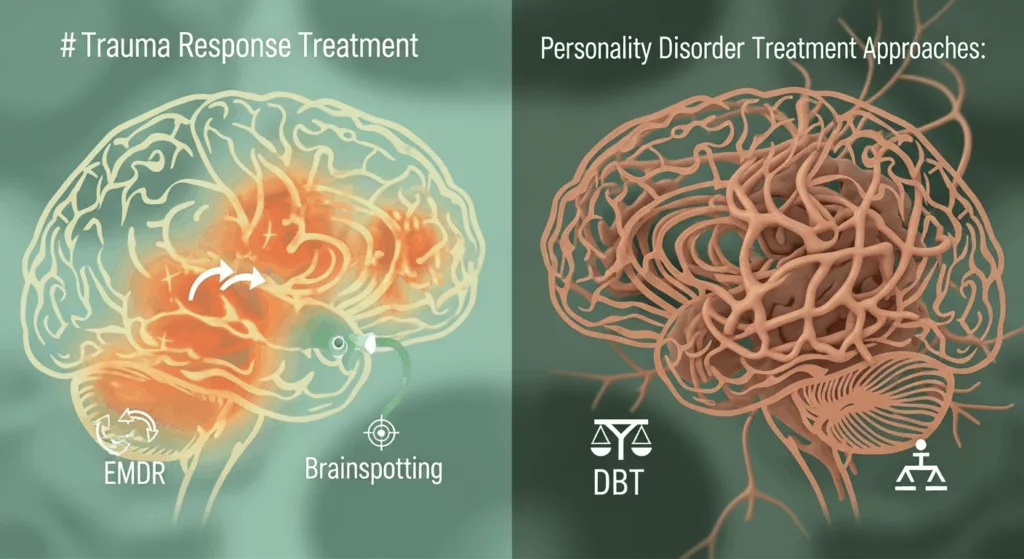
Treatment Approaches: EMDR, Brainspotting, and Trauma-Informed Care
The distinction between personality disorders and trauma responses fundamentally shapes treatment planning and intervention selection. Understanding these differences allows clinicians to provide more effective, efficient care.
Trauma-Focused Interventions
EMDR (Eye Movement Desensitization and Reprocessing) represents the gold standard for trauma treatment. This evidence-based approach helps the brain reprocess traumatic memories, reducing their emotional charge and integration into healthy memory networks. For helping professionals with trauma histories, EMDR can provide relatively rapid symptom relief when trauma responses are the primary concern.
Brainspotting offers another powerful trauma treatment modality, particularly effective for complex trauma and cases where traditional talk therapy hasn’t provided sufficient relief. This approach accesses trauma stored in subcortical brain regions, often reaching trauma material that remains outside conscious awareness.
The principles of trauma-informed care emphasize safety, trustworthiness, collaboration, and cultural humility—essential elements for treating trauma responses effectively.
Personality Disorder Treatment Approaches
Personality disorders typically require specialized, longer-term interventions. Dialectical Behavior Therapy (DBT) has shown particular efficacy for Borderline Personality Disorder, teaching skills in emotion regulation, distress tolerance, interpersonal effectiveness, and mindfulness.
Other evidence-based approaches include:
- Mentalization-Based Therapy (MBT)
- Schema Therapy
- Transference-Focused Psychotherapy (TFP)
- Good Lives Model adaptations
Integrated Treatment for Complex Cases
Many individuals present with both trauma histories and personality disorder features, requiring integrated treatment approaches. Complex trauma treatment often involves:
- Initial stabilization and safety planning
- Trauma processing using evidence-based techniques
- Skills building for emotional regulation and interpersonal effectiveness
- Integration and meaning-making
For empaths and helping professionals, treatment must also address the unique challenges of maintaining professional boundaries while processing personal trauma.
The Role of Trauma-Informed Therapy
Trauma-informed therapy approaches recognize that many symptoms traditionally attributed to personality disorders may actually represent adaptive responses to traumatic experiences. This perspective reduces stigma and opens possibilities for more hopeful, effective treatment approaches.
The trauma-informed cognitive behavioral therapy guidelines from the American Psychological Association emphasize the importance of understanding symptoms within their trauma context before assuming personality pathology.
Special Considerations for Helping Professionals
Healthcare workers, therapists, teachers, and other helping professionals face unique challenges in distinguishing between personality disorders and trauma responses. The nature of their work creates ongoing exposure to traumatic material, making accurate assessment more complex.
Vicarious Trauma and Secondary Stress
Helping professionals often develop trauma symptoms through their work exposure, even without direct personal trauma. These symptoms can include:
- Emotional numbing or hypervigilance
- Difficulty maintaining boundaries
- Increased cynicism or hopelessness
- Sleep disturbances and intrusive thoughts
- Physical symptoms of chronic stress
These work-related trauma responses can easily be misinterpreted as personality disorder features, particularly when they affect interpersonal relationships and professional functioning.
The Empath Challenge
Empaths often struggle with symptoms that can appear similar to personality disorders, including emotional lability, difficulty with boundaries, and intense interpersonal relationships. However, these patterns often represent natural empathic abilities combined with trauma responses rather than underlying personality pathology.
For more information on recognizing when trauma-specific treatment is needed, see our guide on 5 Signs You Need Trauma Therapy (Not Traditional Talk Therapy).
Moving Forward: Finding the Right Specialized Support in Florida
Understanding the distinction between personality disorders and trauma responses is only the first step. Finding qualified professionals who can provide accurate assessment and appropriate treatment is equally crucial.
What to Look for in a Trauma Specialist
When seeking help for trauma-related concerns, look for providers with:
- Specialized training in trauma assessment and treatment
- Certification in evidence-based trauma therapies like EMDR or Brainspotting
- Experience working with complex trauma and personality disorders
- Understanding of helping professional culture and challenges
- Trauma-informed approach that emphasizes safety and collaboration
The Importance of Proper Assessment
A comprehensive assessment should include:
- Detailed trauma history including childhood experiences
- Examination of symptom patterns and triggers
- Assessment of functioning across multiple life domains
- Consideration of cultural and professional context
- Collaborative treatment planning based on findings
For helping professionals in Florida seeking specialized trauma care, telehealth options can provide access to qualified specialists regardless of geographic location. Our Flexible Trauma Therapy in Florida: EMDR & Brainspotting services are designed specifically for busy helping professionals who need effective treatment that fits their schedules.
Treatment Accessibility and Insurance Considerations
Specialized trauma treatment should be accessible to those who need it. Look for providers who:
- Accept major insurance plans
- Offer flexible scheduling including evenings and weekends
- Provide telehealth options for convenience
- Use efficient, solution-focused approaches
- Are transparent about treatment timelines and expectations
Many helping professionals benefit from Telehealth Therapy for Florida Empaths: Complete 2024 Guide approaches that provide specialized care without the need for office visits during busy work schedules.
Key Takeaways for Mental Health Professionals
The distinction between personality disorders and trauma responses requires careful clinical assessment and has profound implications for treatment success:
- Timing and context matter: Examine symptom onset in relation to traumatic experiences and environmental factors
- Pattern analysis is crucial: Look for consistency versus context-dependent symptom presentation
- Multiple assessment methods: Use structured interviews, trauma histories, and observation of treatment response
- Treatment approach alignment: Match interventions to the underlying condition for optimal outcomes
- Helping professional considerations: Account for vicarious trauma and empathic sensitivity in assessment
Finding Hope and Healing
Whether you’re dealing with trauma responses or personality disorder features, effective treatment is available. The key lies in accurate assessment and appropriate intervention selection. For many helping professionals, symptoms that appear to suggest personality disorders may actually represent treatable trauma responses.
Understanding these distinctions offers hope—trauma responses often improve more rapidly with appropriate treatment than many personality disorder features. With the right support and evidence-based interventions, healing is possible.
If you’re a helping professional in Florida struggling with symptoms that might be trauma-related, consider seeking assessment from a specialist who understands both trauma responses and personality disorders. The difference in diagnosis can mean the difference between years of ineffective treatment and relatively rapid relief through targeted trauma interventions.
For those interested in solution-focused approaches, our Solution-Focused Brief Therapy services can provide efficient treatment that creates lasting change without unnecessary prolonging of therapy.
Remember: getting the right diagnosis and treatment approach isn’t just academic—it’s your path to genuine healing and renewed hope.
Are you ready to explore whether your symptoms might be trauma-related rather than personality disorder features? The first step is reaching out for specialized assessment with a qualified trauma professional who can help you find your path to healing.